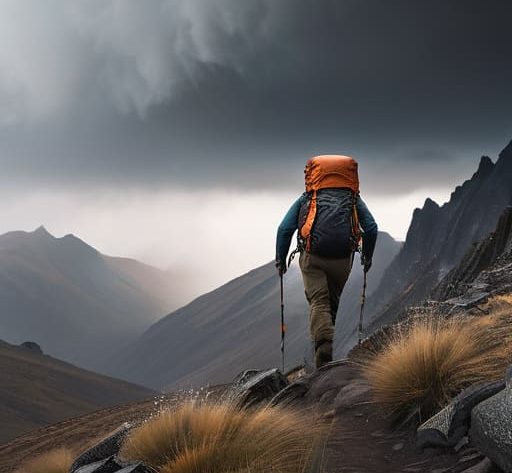
I remember standing on a col in the Cairngorms three years ago, watching a group of otherwise capable walkers try to “power through” a sudden gust that felt less like a breeze and more like a physical blow to the chest. They had the expensive, Gore-Tex-everything setups, but they hadn’t accounted for how wind affects hiking safety when your body heat is being stripped away faster than you can sweat it out. It wasn’t a lack of gear that nearly turned that afternoon into a recovery mission; it was the optimism that they could outrun a weather front that had already decided the rules.
I’m not here to sell you a new way to layer or a high-tech windbreaker that promises to defy physics. I’m going to tell you what actually happens when that wind hits the ridge, how it messes with your sense of balance, and why a forecast of twenty knots feels very different when you’re standing on an exposed summit. This is about the uncomfortable realities of mountain weather—the stuff that keeps you from making a decision you can’t undo. I’ll stick to what I’ve actually felt on my skin and what I’ve seen play out over twenty-two years in the hills.
Table of Contents
Decoding Mountain Weather Forecasting Before You Leave

Most people look at a weather app, see a little wind icon, and think they’ve got the full picture. They haven’t. When I’m looking at mountain weather forecasting, I’m not just looking at the average speed; I’m looking at the gusts and the direction. A steady 20mph is one thing, but a 40mph gust hitting you perpendicular on a narrow col is a different beast entirely. It changes your center of gravity and tests your stability on windy trails in ways a valley breeze never will.
You also need to stop looking at the temperature in isolation. If the forecast says 5°C but there’s a sustained wind, you aren’t experiencing 5°C. You need to calculate the wind chill factor before you even lace up your boots. I’ve seen plenty of walkers get caught out because they dressed for the thermometer rather than the actual thermal reality of the ridge. If you aren’t accounting for how that moving air strips heat from your skin, you aren’t planning for the mountain; you’re planning for a garden.
High Altitude Wind Hazards and the Myth of Stability

The thing about high-altitude wind is that it doesn’t behave like the breeze you feel in the glen. Down in the valley, a twenty-knot gust feels like a nuisance; on a summit ridge, it’s a physical force that wants to push you off your line. People often fall into the trap of thinking that if the clouds look steady, the air is too. That’s a dangerous assumption. I’ve seen too many groups get caught out because they mistook a momentary lull for a permanent change in conditions. In reality, the air is often just gathering itself for the next gust.
When you’re dealing with high altitude wind hazards, you have to account for how quickly the temperature actually feels. This is where the wind chill factor becomes more important than the thermometer reading. I’ve spent years in the Cairngorms where the air temperature was a manageable four degrees, but the wind was stripping the heat from my skin so fast I could feel my dexterity failing in my fingers within minutes. Maintaining stability on windy trails isn’t just about your footing; it’s about managing your internal temperature before the wind turns a manageable afternoon into a fight for survival.
Five Ways the Wind Will Try to Break Your Plan

- Watch your wind chill, not just the thermometer. I’ve seen temperatures sit at a comfortable 6°C in the valley, but once you’re on a ridge with a 40mph gust, that’s effectively sub-zero. If you aren’t accounting for the wind chill factor when you’re deciding which jacket to pack, you’re already making a mistake.
- Don’t trust your sense of balance on exposed terrain. I’ve spent twenty years watching people get caught out because they underestimated how a sudden gust can shift your centre of gravity. If the wind is gusting, stay well away from the edge of any crags or steep drops; one sideways shove and you’re in a situation that no amount of training can easily fix.
- Protect your ability to communicate. High winds don’t just make things loud; they make them impossible. If you’re leading a group or hiking with a partner, you need to establish hand signals or whistle codes before the wind picks up. Once the gale starts howling, shouting “stop” or “come here” is a waste of breath and energy.
- Manage your moisture levels or you’ll freeze. The wind is incredibly efficient at stripping heat through convection, but it’s the sweat that kills you. I’ve worn the same Rab waterproof shell for the last four seasons in everything from light drizzle to horizontal sleet, and the rule remains: if you start feeling damp from exertion, stop and vent immediately. If you let that moisture sit against your skin while the wind is blowing, you’ll be shivering before you reach the next col.
- Secure your gear before it becomes a projectile. It sounds basic, but I’ve seen more people lose their dignity and their equipment to a gust than I care to admit. Check your lid, tighten your hip belt, and make sure anything dangling from your pack is tucked in. A flying map or a lost glove might seem like a nuisance, but in a high-wind scenario, it’s a distraction you simply cannot afford.
The Cost of One Optimistic Decision
People tend to treat wind like a background noise, something you just put up with until you reach the summit, but on a ridge, wind isn’t just weather—it’s a thief. It steals your heat, it steals your balance, and if you aren’t careful, it steals the daylight by forcing you to move half as fast as you planned. I’ve seen too many groups get caught because they looked at a 30mph forecast and thought, ‘That doesn’t sound too bad,’ forgetting that 30mph feels a lot different when you’re standing on a narrow scramble in a horizontal sleet shower.
Bridget Halloran
The Decision is Yours

At the end of the day, wind safety isn’t about having the most expensive hardshell or a fancy barometer; it’s about respecting the gap between a forecast and the reality on the ridge. You have to account for the wind chill that turns a damp layer into a frozen one, the way a gust can catch a pack and pull you off balance, and the subtle signs that the weather is shifting faster than your app says it will. I’ve seen too many people get stuck because they ignored the cumulative effect of a steady breeze, thinking they could just push through. Remember that a wind speed reading in the valley is a lie once you climb above the treeline; plan for the worst-case scenario, not the one that makes for a better Instagram photo.
There is a specific kind of quiet that comes when you decide to turn back just as the wind starts to pick up, and while it might feel like a defeat in the moment, it is actually the most professional decision you can make. The hills aren’t going anywhere, and the birds will still be nesting in the crags long after the front has passed. Learning to read the air and trust your gut over your ego is what separates a hobbyist from someone who truly understands the mountains. Go out, test your gear, and watch the sky, but never forget that the most important piece of kit you carry is your judgment.
Frequently Asked Questions
How do I know if a "moderate breeze" in the valley is going to turn into a gale once I'm actually on the ridge?
You can’t trust the valley reading. If the forecast says “moderate breeze” at 200m, assume it’s doubling or tripling by the time you hit the ridge. I’ve seen countless groups get caught out because they looked at the village weather station and thought they were fine. Watch the trees; if the canopy is tossing around even when it feels calm below, that wind is already building. If the clouds are moving fast and low, get off the summit.
At what point does the wind chill factor make my current layering system useless, regardless of how much I'm sweating?
It’s when the wind speed starts stripping the heat from your skin faster than your metabolic rate can replace it. I’ve been in this situation on the Cairngorms—wind hitting 40mph with a temperature that says 5°C, but feeling like -5°C. If you’re sweating, you’re losing your primary insulation. Once that moisture hits your base layer and the wind picks up, you’re in the danger zone. Stop, vent, and get your shell on before the chill wins.
When should I make the call to turn back due to wind, and how do I distinguish between 'uncomfortable' and 'dangerous'?
The line between uncomfortable and dangerous is usually drawn by your ability to stay upright and your ability to stay warm. If the gusts are making it a struggle to keep your feet planted, or if you’re finding yourself constantly adjusting layers just to stop shivering, you’ve crossed it. I’ve turned groups around because the wind was making communication impossible; if you can’t hear each other, you can’t coordinate, and that’s when mistakes happen.