I once spent four hours in a freezing, sodden hollow on the edge of the Lake District, watching a group of very bright, very capable people try to figure out how to estimate walking times while their headlamps flickered against a rising mist. They had used a standard pace calculator from a glossy guidebook, assuming a steady four kilometres per hour, but they hadn’t accounted for the reality of a saturated peat bog or the sheer mental drag of navigating a descent in a gale. They weren’t lost, exactly, but they were exhausted, cold, and losing the daylight—and that is exactly when the margin for error disappears.
I’m not here to give you a mathematical formula that works in a vacuum. Instead, I’m going to show you how to build a buffer that actually works when the wind picks up and the terrain turns against you. We are going to talk about the variables that textbooks ignore: the weight of a wet pack, the slowing effect of fatigue, and the unforgiving math of fading light. I’ll give you the practical, unvarnished methods I use when I’m leading groups, so you can stop guessing and start planning with confidence.
Table of Contents
Naismiths Rule for Hiking and the Reality of Elevation Gain
Most people start their day looking at a map, seeing a distance of ten kilometers, and thinking, “Right, that’s a four-hour walk.” That is a dangerous way to think. It ignores the vertical reality of the landscape. When I’m planning a route, I always go back to Naismith’s Rule for hiking. The basic math is straightforward: allow one hour for every five kilometers of distance, plus one hour for every 600 meters of ascent. It’s a blunt instrument, but it’s a starting point that prevents you from being caught on a ridge when the light fails.
However, a formula doesn’t account for the reality of calculating walking speed on inclines when you’re carrying a twenty-kilo pack or navigating a boggy peat hag. I’ve spent years watching groups fall behind because they treated a steep scramble like a flat stroll. You have to account for the friction of the terrain and the inevitable fatigue that sets in after the first thousand meters of climb. If you aren’t factoring in that extra time for the vertical work, you aren’t planning a walk; you’re planning an emergency.
Calculating Walking Speed on Inclines vs the Flat Path
The problem with most people’s planning is that they treat a map like a flat piece of paper rather than a three-dimensional obstacle. If you take a standard pace for a flat, well-maintained trail and apply it to a steep ascent, your schedule will fall apart before lunch. Calculating walking speed on inclines isn’t just about working harder; it’s about the physics of energy expenditure. Every hundred meters of vertical gain adds a significant tax to your time that a simple distance calculation won’t show you.
I’ve spent twenty years watching groups struggle because they failed to account for pace adjustment for uneven terrain. On a groomed path, you might cruise at 4km/h, but once you hit a scramble or a boggy peat moor, that speed can drop by half. I remember leading a group in the Cairngorms last October—we had used a standard distance and elevation gain formula, but we hadn’t factored in the fatigue of a 600m climb through wet heather. We ended up losing forty minutes we hadn’t budgeted for. Always assume the terrain will fight you more than the map suggests.
Five Realities the Math Won't Tell You
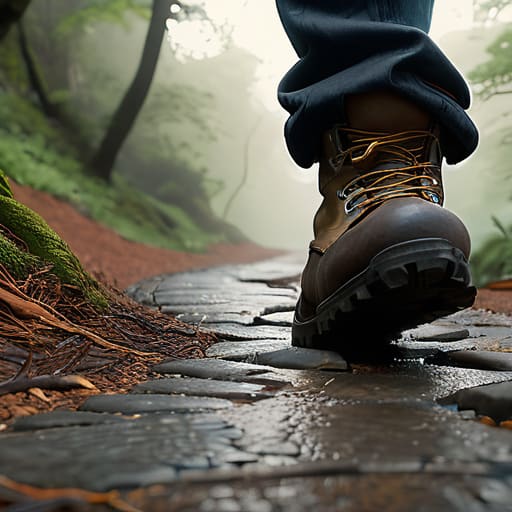
- Account for the “Micro-Stops.” I’ve spent twenty years watching groups follow a perfect Naismith calculation only to fall two hours behind because they didn’t factor in the five-minute pauses to adjust laces, check a map, or catch a breath. If you aren’t stopping, you’re rushing; if you are stopping, you’re losing time. Add a 10% buffer just for the things that aren’t walking.
- The Weight Penalty. I’ve carried everything from a 5kg daypack to a 16kg multi-day kit, and your pace isn’t a constant. A heavy pack changes your center of gravity and your metabolic cost, especially on descents where your knees take the brunt. If you’re carrying a full load for a long distance, your “flat ground” speed is going to drop significantly by the afternoon.
- Weather is a Variable, Not a Constant. A forecast saying “light rain” means something very different on a sheltered woodland path than it does on a wind-scoured ridge. I’ve seen perfectly timed itineraries fall apart because the wind speed doubled, forcing people to lean into the gusts just to stay upright. If the wind is gusting over 30mph, stop looking at your watch and start looking at your energy levels.
- Navigation is Slow Work. You can walk a straight line on a well-maintained footpath, but once you hit a boggy section or a featureless plateau where you need to consult a compass every fifty yards, your pace will crater. I always tell my clients to treat navigation-heavy sections as if they are moving through thick heather—it’s slow, it’s deliberate, and it’s not a sprint.
- The Daylight Deadline. Never estimate your arrival time based on when you hope to be at the summit; estimate it based on when you absolutely must be off the ridge. I’ve seen too many people make the “one optimistic decision” to push for one more peak, only to find themselves navigating technical terrain in the blue hour. If your math says you arrive at sunset, your math is wrong. Aim to arrive an hour before the light fails.
The Optimism Trap
Most people don’t plan for the mountain they’re actually walking; they plan for the mountain they see in a sunny photograph, forgetting that an extra five hundred feet of ascent in a headwind or a soaked, heavy pack can turn a brisk afternoon stroll into a desperate race against the light.
Bridget Halloran
The Margin for Error

At the end of the day, math is just a starting point, not a guarantee. You can crunch the numbers using Naismith’s Rule, account for your vertical gain, and factor in the incline, but a spreadsheet won’t tell you when a sudden mist rolls over the ridge or when a heavy pack starts to chafe. I’ve seen too many people treat their estimated arrival time as a fixed appointment rather than a fluid suggestion. Always build in a buffer—at least an hour, ideally two—to account for the things you can’t calculate: a twisted ankle, a wrong turn at a cairn, or simply the exhaustion that sets in when the wind picks up. Planning for the best is easy; planning for the reality of the terrain is what keeps you safe.
Ultimately, respecting the clock is a way of respecting the mountain. When you stop viewing time as an enemy to be beaten and start seeing it as a finite resource to be managed, the hills become much more approachable. There is a specific kind of peace that comes from knowing exactly where you are in relation to the fading light, allowing you to actually look up at the landscape rather than constantly checking your watch in a panic. Don’t let a single optimistic decision turn a beautiful trek into a survival situation. Go out, move steadily, and always leave yourself enough daylight to make the right choices.
Frequently Asked Questions
How do I factor in the "fatigue tax" that sets in during the final third of a long day?
You have to budget for the fatigue tax, or it will bankrupt your schedule. By the final third of a long day, your pace isn’t just slower; it’s unpredictable. I’ve seen too many groups hit a technical descent at 4:00 PM with empty tanks and heavy packs. I add a 20% buffer to my estimated times for anything after six hours of movement. It’s better to arrive at camp early and frustrated than late and shivering.
Should I be calculating my pace based on my average speed or my slowest group member's speed?
If you’re leading, you calculate based on the slowest member. Period. I’ve seen too many groups split apart because the “fast” walkers pushed ahead, leaving the slower ones to navigate tricky terrain or fading light alone. If you plan for the average, you’re planning for a disaster when fatigue sets in. I always build a twenty-percent buffer into my timings to account for that slowest pace, plus the inevitable stops for water and gear adjustments.
How much extra time do I actually need to buffer for frequent stops like birdwatching or gear adjustments?
If you’re stopping to check a raptor nest or adjust a heavy pack, Naismith’s Rule won’t save you. I’ve seen too many groups lose their daylight because they treated “walking time” as “moving time.” For every twenty minutes of stationary activity—whether that’s binocular work or a kit check—add fifteen minutes of buffer. If you’re birdwatching, double it. You aren’t just losing the time you stood still; you’re losing the momentum needed to get back up to pace.