I remember a night in the Cairngorms back in 2014, huddled under a tarp in a relentless sleet storm, listening to the rhythmic, hollow thud-thud of a client shivering on a cheap, lightweight foam pad. They had spent hundreds of pounds on a high-tech tent and a down jacket, but they’d skimped on the one thing separating them from the frozen earth. When people ask me how to choose a sleeping mat, they usually start by looking at the price tag or the color, completely ignoring the physics of heat loss. You can have the most expensive kit in the world, but if your R-value doesn’t match the ground temperature, you aren’t sleeping; you’re just waiting for morning while your body heat drains into the soil.
I’m not here to sell you on the latest ultralight trend or repeat the marketing fluff you’ll find on a manufacturer’s website. Instead, I’m going to break down the actual mechanics of insulation, loft, and stability based on twenty-two years of sleeping on uneven ground. I will tell you exactly what the numbers mean when the temperature drops below zero and which features actually matter when you’re exhausted and shivering.
Table of Contents
Deciphering Sleeping Pad Insulation Ratings and Thermal Realities
You’ll see numbers everywhere—R-values, thermal scores, temperature minimums—and most of it is designed to make you feel like you’re buying a scientific instrument. In reality, an R-value is just a measure of how much a mat resists heat loss. If you’re planning a summer trek in the lowlands, an R-value of 2 is fine. But if you’re sitting on a ridge in the Cairngorms in late September, that same mat becomes a heat sink, pulling the warmth straight out of your core and into the frozen ground. I’ve spent many a night shivering because I made the optimistic mistake of thinking a summer mat could handle a sudden drop in ambient temperature.
When looking at sleeping pad insulation ratings, don’t just look at the number; look at your itinerary. I’ve used the Therm-a-Rest NeoAir XTherm for three seasons now, primarily on high-altitude bivouacs where the ground stays frost-hard even in August. It’s a lightweight option, but you have to weigh that against backpacking gear weight considerations and the sheer necessity of staying warm. If you’re choosing between self-inflating vs air mattresses, remember that foam-filled mats offer more predictable insulation, but they won’t save you if the ground is truly biting.
Backpacking Gear Weight Considerations vs the Cost of Sleep
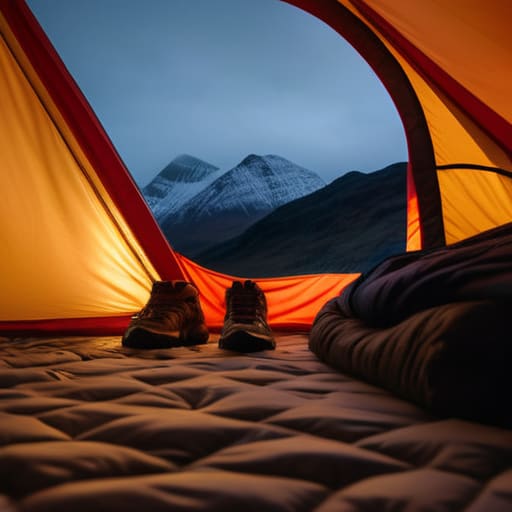
I’ve spent enough nights on scree slopes and peat bogs to know that the math in your head is rarely the math your body feels at 3:00 AM. When you’re looking at backpacking gear weight considerations, it is tempting to shave every possible gram off your kit. I once spent three days on a traverse in the Cairngorms with a lightweight, ultra-thin pad that weighed next to nothing. It was a mistake. By the second night, the cold from the frozen ground had seeped through the minimal insulation, and I spent the entire night twitching to stay warm instead of actually resting.
You have to decide where you sit on the spectrum of camping mattress comfort levels. If you are doing fast-and-light scrambles where every ounce dictates your pace, a thin air mattress makes sense. But if you are planning a multi-day trek where recovery is part of the job, weight becomes secondary to sleep quality. A heavier, more robust pad isn’t just a luxury; it’s a tool for maintaining the cognitive function you’ll need when the weather turns.
Five Things the Spec Sheet Won't Tell You
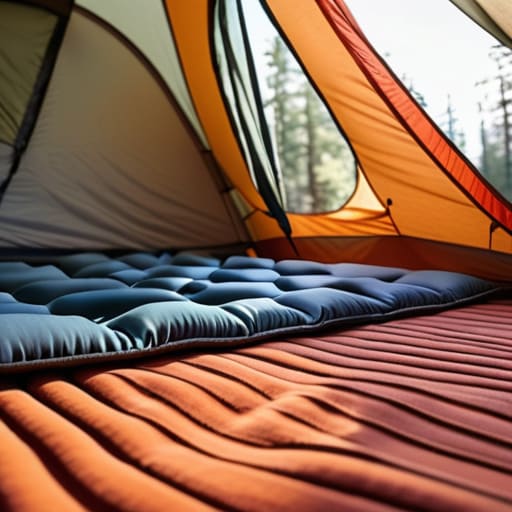
- Check your width against your sleeping position. I’ve spent too many nights on high-altitude plateaus waking up because I’ve rolled off a narrow, ultralight pad and onto the frozen ground. If you’re a side sleeper, that extra two centimetres of width is the difference between a restful night and a cold, cramped mess.
- Don’t trust the R-value in a vacuum. A rating of 3.0 might be fine for a summer night in the Lake District, but if you’re camping on granite or damp soil, that heat is being sucked out of you faster than the math suggests. I always factor in a buffer for the ground temperature, not just the air.
- Test the noise level before you commit. I’ve used a specific lightweight inflatable pad for three seasons of heavy trekking, and while the weight is perfect, it makes a crinkling sound every time you shift. If you’re a restless sleeper, that “high-tech” fabric will keep you awake more than the temperature will.
- Evaluate the puncture risk for your specific terrain. If you’re heading into scree slopes or rocky ridges, an ultralight, thin-walled pad is a liability. I’ve seen too many trips cut short because a single sharp stone turned a piece of essential kit into a useless scrap of nylon.
- Consider the inflation method. If you’re planning on long, multi-day routes where every gram counts, a pump sack is non-negotiable. Blowing up a pad manually is a massive waste of moisture and energy—and when you’re exhausted at the end of a twelve-hour day in the rain, the last thing you want to do is breathe your own warm, humid air into your gear.
The R-Value Reality Check
“Stop looking at the numbers in a vacuum; an R-value of 3.0 might feel fine in a summer meadow, but if you’re caught on a high plateau with a sudden temperature drop and a damp sleeping bag, that same mat becomes a heat sink that will pull the warmth straight out of your body while you sleep.”
Bridget Halloran
The Final Decision
At the end of the day, choosing a mat isn’t about finding the most expensive piece of kit or the one with the most impressive marketing jargon. It is a calculation of risk versus recovery. You have to balance the R-value against the ground temperature, the weight against your total pack load, and the comfort against the reality of how much energy you will need to move the next morning. If you ignore the insulation requirements because you’re chasing a few grams, you’ll pay for it in shivering through the night. If you pick a mat that is too bulky for your pack, you’ll find yourself making poor decisions elsewhere because your load is poorly distributed. Get the math right on the thermal protection and the dimensions, and you’ve won half the battle.
I have spent many nights on high, exposed ridges, listening to the wind hammer against the flysheet and knowing that my ability to face the next day’s climb depends entirely on the thin layer of air between me and the earth. A good mat is more than just gear; it is your primary tool for physiological recovery. When the weather turns or the terrain gets technical, you don’t want to be thinking about your sleeping setup—you want to know it’s already sorted. Choose something that works for the conditions you are actually going into, not the ones you are hoping for. Sleep well, stay warm, and stay safe.
Frequently Asked Questions
How much of a difference does the mat's thickness actually make when I'm sleeping on uneven, rocky ground versus a flat campsite?
If you’re on a manicured campsite, a thin mat is fine. But if you’re wild camping on a scree slope or a root-choked forest floor, thickness is everything. I’ve spent many a night on a 2cm pad feeling every single pebble in my lower back; it ruins your sleep and, more importantly, your ability to move the next morning. On uneven ground, you need that extra loft to bridge the gaps between stones.
If I'm planning a multi-day trek in the shoulder seasons, should I prioritize a heavier, more durable foam mat or a lightweight inflatable one?
If you’re hitting the hills in the shoulder seasons, you aren’t just fighting the air temperature; you’re fighting the ground sucking the heat right out of your spine. I’ve spent fifteen years sleeping in damp tents, and I’ve learned that an inflatable mat is a single puncture away from a very long, very cold night. For multi-day treks, I’d take a lightweight inflatable for the bulk of it, but always carry a thin, closed-cell foam pad as a backup. I’ve used my Therm-a-Rest NeoAir XLite for six seasons in everything from summer heat to late-October frost; it’s reliable, but it won’t save you if you’re sleeping on sharp scree.
How do I know if an R-value is actually reliable for the specific terrain I'm hitting, rather than just a number on a spec sheet?
The number on the spec sheet assumes a static, laboratory-controlled environment. It doesn’t account for the dampness of a peat bog or the heat-sapping chill of a granite slab in the Cairngorms. I’ve spent three nights on wet, rocky ground with a mat rated for “three-season” use, and I still woke up shivering. If you’re sleeping on rock or frozen ground, ignore the “ideal” rating and add at least 1.0 to your R-value.