I remember standing on a ridge in the Cairngorms back in 2014, my fingers so numb I could barely feel the threading on my stove, staring at a pathetic, sputtering blue flame that refused to actually boil anything. I had followed the manual, I had the “premium” canister, and I had plenty of optimism, but the reality was a freezing, hungry mess. People love to sell you on high-tech, expensive canister systems as if a higher price tag solves physics, but they rarely explain the brutal reality of how gas performs in cold weather when the pressure drops and the ambient temperature hits single digits.
I’m not here to repeat the marketing fluff you’ll find on a manufacturer’s website. Instead, I’m going to tell you what actually happens when the mercury falls and your gear is tested by real-world conditions. I’ll be looking at pressure, fuel types, and the little habits—like keeping your canisters inside your jacket—that actually make the difference between a hot meal and a miserable night in a tent. This isn’t about gear lists; it’s about understanding the limits of your kit before you’re too cold to care.
Table of Contents
Understanding Fuel Volatility in Winter and Why Engines Stall
It comes down to physics, really. When we talk about fuel volatility in winter, we aren’t just talking about the liquid getting sluggish; we’re talking about the fuel’s ability to turn into a gas that can actually burn. For an engine—or even a simple camping stove—to work, that fuel needs to vaporize. As the temperature drops, the gasoline vapor pressure plummets. If the molecules aren’t moving fast enough to create that necessary vapor, you aren’t getting combustion; you’re just getting a cold, wet liquid sitting uselessly in your lines.
I’ve seen it happen on a ridge when the wind picks up and the temperature takes a sudden, sharp dive. You think you’ve prepared, but the fuel simply isn’t “jumping” into the air inside the chamber. This drop in combustion efficiency in cold climates is why your engine might sputter and die just when you need it most. It isn’t a mechanical failure in the traditional sense; the machine is fine, but the chemistry has failed you. You aren’t fighting a broken part; you’re fighting the laws of thermodynamics.
The Science of Gasoline Vapor Pressure Temperature and Cold Starts
It comes down to the chemistry of what’s actually inside your tank. When we talk about gasoline vapor pressure temperature, we’re really talking about how much effort the fuel has to put in just to turn into a gas so it can actually burn. In the height of summer, that happens almost effortlessly. But when the mercury drops, the fuel becomes sluggish. It doesn’t want to atomize; it wants to stay a liquid. If the vapor pressure is too low, your engine is essentially trying to breathe through a straw filled with syrup, and that’s why you’re standing there turning the key to nothing.
This is exactly why you see such significant winter grade gasoline differences at the pump. Refineries tweak the blend to include more light-end hydrocarbons that evaporate more easily at lower temperatures. It’s a deliberate attempt to compensate for the physics of the cold. I’ve seen plenty of people try to save a few pennies by using summer blends in late autumn, only to find themselves stranded when the first frost hits. You aren’t just fighting the wind or the snow; you’re fighting the fundamental way molecules behave when they get cold.
Five ways to stop your stove from failing when the temperature drops
- Keep your fuel canisters close to your body. I’ve spent many a miserable evening in the Cairngorms trying to coax a dead stove back to life; if you keep your canisters in the bottom of your rucksack, they’ll be far too cold to pressurize. Tuck them into an inside jacket pocket or a sleeping bag when you aren’t using them.
- Pre-heat the stove base if you can. I’ve used the MSR WhisperLite series for over twelve years in sub-zero conditions, and I’ve learned that if the metal is ice-cold, the fuel won’t transition to gas properly. A little bit of warmth applied to the burner assembly before you light it makes a massive difference in how steady that flame stays.
- Don’t rely on liquid fuel if you aren’t prepared for the maintenance. While I’ve carried pressurized canisters for most of my freelance work, they are temperamental when the mercury dips. If you are moving into serious winter territory, a liquid fuel stove is more reliable because you can physically manipulate the temperature of the fuel, but you’ll pay for it in the extra weight and the cleaning time.
- Watch your fuel levels more closely than usual. In the summer, I might not glance at my canister until I’m halfway through a meal, but in the cold, the efficiency drops off a cliff. You’ll find yourself burning through more volume just to get the same amount of heat, so if your gauge says you’re halfway, start planning your next refill immediately.
- Check your seals and O-rings before you leave the trailhead. Cold air makes rubber brittle, and I’ve had more than one canister leak because a seal that worked fine in July turned into a piece of stiff plastic in November. I check mine every single time I pack for a winter trip—it takes ten seconds and prevents a very expensive, very cold disaster.
The Cost of a Bad Forecast
I’ve stood on a ridge in a January gale watching a group wait for a stove that simply wouldn’t catch, all because they assumed the fuel would behave the same way in sub-zero temperatures as it did during their summer training hikes; the physics of vapor pressure doesn’t care about your itinerary, and it certainly doesn’t care if you’re cold.
Bridget Halloran
The Reality of the Ridge
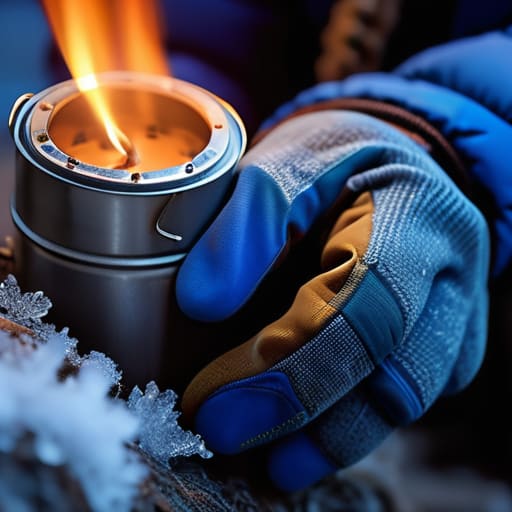
At the end of the day, understanding the chemistry of vapor pressure boils down to one practical reality: your gear doesn’t care about your itinerary. Whether it’s a canister stove struggling to find a flame or a small engine failing to turn over in a frost, the physics remain the same. You can’t out-optimism a drop in temperature. If you’re heading into a sub-zero environment, you have to account for the fact that your fuel is going to be less efficient and harder to ignite than it was during your summer training hikes. I’ve spent too many evenings huddled in a bivvy bag waiting for a temperamental burner to catch because I assumed the fuel would behave the way it does in July. Don’t make that mistake. Plan for the reduced performance, carry more than you think you need, and always keep your fuel canisters close to your body to keep them warm.
The mountains aren’t trying to be difficult; they just are. There is a specific kind of quiet that comes when you realize the weather has shifted and your equipment is starting to protest, but if you respect those limitations, you can navigate through it. The goal isn’t to conquer the cold with brute force, but to work with the conditions you actually have, rather than the ones you hoped for. When you prepare for the technical failures of your kit, you stop worrying about the stove and start focusing on the path ahead. That is where the real experience lies—in the measured decisions that bring you home safely.
Frequently Asked Questions
If I'm using a liquid fuel stove instead of a canister, does the cold affect my performance as much?
If you’re running a liquid fuel stove, you’ve already bypassed the biggest headache. Canister gas relies on internal pressure that collapses when the temperature drops, but liquid fuel—like white gas or kerosene—doesn’t care nearly as much. As long as you’re willing to do the work of priming the generator, you’ll get a consistent flame even when the mercury hits sub-zero. I’ve used my MSR WhisperLite in -10°C for three years straight; it’s more reliable than any canister I’ve carried.
Should I be storing my spare fuel canisters inside my sleeping bag or tent to keep them from freezing overnight?
Don’t do that. I’ve spent too many nights in a tent with a canister near my feet to suggest it’s a good idea. It’s a massive safety risk, and frankly, it’s inefficient. If you’re worried about the pressure dropping, tuck the canister inside your jacket against your base layer for twenty minutes before you light up. I’ve used my MSR IsoPro canisters in sub-zero conditions for over a decade; keep them near your body heat, not your sleeping bag.
Is there a specific type of fuel or an additive I should look for when I'm planning a trip into sub-zero temperatures?
If you’re heading into sub-zero territory, stop looking for “magic” additives and start looking at the canister. I’ve spent fifteen winters relying on isobutane-propane mixes; the higher the propane content, the better it performs when the mercury drops. I’ve used my MSR IsoPro canisters in -10°C for three seasons straight, and they’re reliable, provided you keep the canister inside your jacket against your body. If it’s freezing, heat is your best additive.