I once spent a night huddled in a bivvy bag in the Cairngorms, shivering so violently I couldn’t even zip up my jacket, all because I’d trusted a shiny new sleeping bag’s “temperature rating” without understanding how it actually interacted with my mat. Most gear manufacturers treat a complete guide to sleeping systems like a marketing opportunity, throwing around numbers that mean nothing once the wind starts howling across a ridge. They want you to buy the most expensive down filling, but they rarely mention that a high-end bag is completely useless if you haven’t accounted for the thermal conductivity of the ground beneath you.
I’m not here to sell you on the latest ultralight hype or repeat a glossy press release. Instead, I’m going to give you the unvarnished truth about how layers, insulation, and R-values actually function when the temperature drops and the rain starts hitting your tent. I will tell you exactly how many nights I’ve spent in these setups and under what specific conditions they held up—or failed. This is a no-nonsense breakdown of what you actually need to stay warm, stay safe, and actually sleep when you’re miles from the nearest road.
Table of Contents
Down vs Synthetic Sleeping Bags Choosing Your Insulation Strategy
The debate between down vs synthetic sleeping bags usually boils down to a trade-off between weight and moisture. I’ve spent a decade choosing down for long-distance treks where every gram matters; I’ve carried a 650-fill power down bag through the Cairngorms for three seasons, and the weight savings are undeniable. However, down has a single, non-negotiable weakness: it hates water. If you get caught in a heavy soak and your bag gets damp, that loft collapses, and you’re essentially sleeping in a cold, heavy sponge.
Synthetic insulation is different. I used a synthetic bag during a particularly miserable week of fieldwork in the Lake District last autumn—constant, driving mist and near-constant dampness. While it was significantly bulkier and heavier than my down setup, it kept its thermal insulation efficiency even when the air felt like it was weeping into my kit. If you are planning a trip where the forecast looks “unsettled”—which is often code for “wet”—don’t prioritize a lightweight down bag over a reliable synthetic one. It’s better to be slightly heavier and dry than light and shivering.
The Truth About Temperature Ratings for Camping and Reality
If you look at the tag on the loft of a bag, you’ll see a number. If that number says “0°C,” do not, under any circumstances, believe that you will be warm when the thermometer hits zero. Most manufacturers use a “survival” rating, which is a polite way of saying you won’t die of hypothermia, but you will certainly be awake, shivering, and miserable until sunrise. I’ve spent many a night on a damp ridge in the Cairngorms where a bag rated for freezing temperatures felt like little more than a thin sheet because I hadn’t accounted for the wind chill or the heat loss through the ground.
When you are building a backpacking sleep setup, you have to stop looking at the bag in isolation. Your thermal insulation efficiency is a calculation involving the bag, your clothing, and—most importantly—your insulated sleeping pads. I’ve used the same Therm-a-Rest mat for six years in everything from humid valleys to frost-heaved plateaus, and I can tell you that if your pad’s R-value is too low, even the most expensive down bag in the world won’t stop the ground from sucking the heat right out of your bones.
The Small Decisions That Actually Keep You Warm
- Don’t forget the R-value of your mat; I’ve spent many a miserable night on a high-altitude plateau realizing that a high-quality down bag is useless if you’re lying directly on a frozen slab of earth that sucks the heat straight out of your spine.
- Layer your clothing before you get into the bag; I’ve learned the hard way that if you wait until you’re shivering to put on your thermal base layers, you’ve already lost the battle, and your body will spend the rest of the night fighting to heat up the clothes instead of heating you.
- Manage your moisture like your life depends on it, because it does; I’ve used the same merino wool base layer for six seasons straight, and the reason it works is that it handles sweat far better than synthetic blends, preventing that damp, clammy chill that sets in when the temperature drops at 3:00 AM.
- Treat your sleeping bag like a living thing by keeping it inside your tent or under a tarp; I once saw a group leave their gear out during a sudden mist, and by morning, the loft was gone and the insulation was a sodden, useless weight.
- Always plan for the “optimistic error” by carrying one more layer than the forecast suggests; I’ve sat through three different “mild” autumn nights in the Cairngorms that turned into sub-zero wind tunnels, and the only reason I didn’t end up in a hypothermia protocol was having a dedicated, dry down jacket specifically for sleeping.
The Gap Between a Rating and a Rest
A sleeping bag’s temperature rating is a number on a piece of paper, but your actual warmth is a calculation of how much moisture you’ve sweated out during the hike, how much ground you’re lying on, and whether you’ve had the sense to pack a proper mat. I’ve woken up shivering in a ‘four-season’ bag because I underestimated the thermal conductivity of a granite slab, and I’ve learned that the most expensive down in the world won’t save you if you haven’t accounted for the dampness in your own breath.
Bridget Halloran
The Final Layer
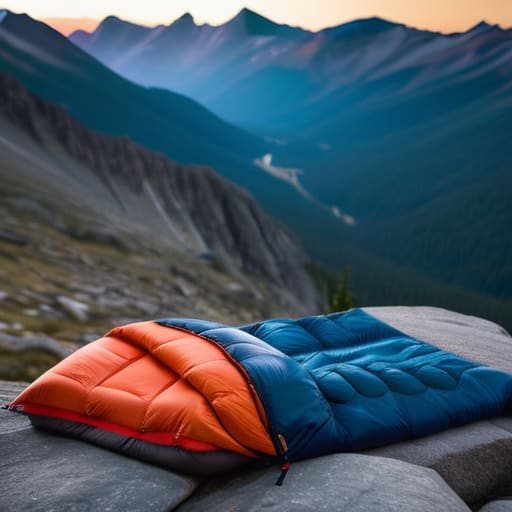
At the end of the day, a sleeping system isn’t just a list of specs on a website; it is a calculated decision based on where you are going and how much you are willing to carry. You have to weigh the warmth of down against the reliability of synthetic when things get damp, and you must never trust a manufacturer’s temperature rating at face value. If you ignore the math of your sleeping pad’s R-value or assume a summer bag will hold up when a ridge-top wind picks up, you aren’t just being optimistic—you’re being reckless. Get the insulation right, choose your loft based on the actual forecast rather than the season, and make sure your gear matches your reality.
I have spent many nights shivering in a tent because I thought I could “tough it out” with a lighter setup, and I have also spent many nights perfectly warm because I prepared for the worst-case scenario. The mountains don’t care about your gear list, but they certainly react to it. When you get your system right, you stop worrying about the cold and start actually hearing the landscape—the wind in the trees or the first call of a peregrine at dawn. Build a system that lets you sleep without fear, so that when you wake up, you have the energy to face whatever the weather decides to throw at you next.
Frequently Asked Questions
How do I calculate the combined warmth of my sleeping bag and my sleeping pad so I don't wake up shivering?
You can’t just add the numbers on the labels and hope for the best; that’s how you end up shivering at 3:00 AM. You have to look at the R-value of your pad and the comfort rating of your bag together. I’ve spent many a night on granite slabs where a bag alone meant nothing because the ground sucked the heat straight out of me. If your pad’s R-value isn’t at least 3.0 for three-season use, your bag’s rating is irrelevant.
Is it worth the extra weight of a down bag if I'm mostly camping in damp, coastal environments?
If you’re spending your time in the damp, salt-heavy air of coastal Wales or the Highlands, don’t touch down. I’ve spent a decade watching people’s down bags turn into useless, heavy clumps of wet feathers after a single misty night. I’ve used the Rab Neutrino for three years in dry alpine conditions and it’s brilliant, but for coastal humidity, I stick to synthetic. It’s heavier, yes, but it actually keeps you alive when it’s sodden.
How much space am I actually going to lose in my pack if I choose a high-loft sleeping bag?
You’ll lose more space than you think. I’ve spent twenty years packing for multi-day traverses, and a high-loft down bag is a different beast entirely. If you go for a high-fill power bag, it compresses beautifully—I’ve used my 800-fill quilt for three seasons of heavy pack-loading and it stays small. But if you opt for a bulky synthetic bag, you aren’t just losing room; you’re forcing your pack to bulge, shifting your center of gravity.