I’ve spent twenty-two years watching people make the mistake of buying gear based on a shiny brochure rather than the reality of a damp tent floor. Most people think learning how to choose a sleeping bag is about hunting down the lowest weight or the most expensive down fill, but they’re usually looking at the wrong numbers. I remember a group I was leading in the Cairngorms three years ago; one lad had bought a top-of-the-line, ultralight bag that was rated for “comfortable” temperatures that clearly didn’t account for a sudden, soaking October mist. He spent the night shivering in a state of quiet panic while the rest of us stayed dry, simply because he prioritized grams over actual, reliable warmth.
I’m not here to sell you on the latest marketing hype or tell you that every ounce matters more than your sanity. Instead, I’m going to give you the unvarnished truth about temperature ratings, loft, and how moisture actually behaves when you’re tucked in for the night. I’ll tell you exactly what I look for, what I’ve personally tested in horizontal rain, and why the most expensive option is often the wrong one for your specific kit list.
Table of Contents
Decoding the Temperature Rating Guide Without Dying

The biggest mistake I see people make is looking at a single number on a bag and assuming that’s the reality of their night. Manufacturers are allowed to use different standards, but most follow the ISO or EN guidelines, which provide two distinct figures: the comfort rating and the limit rating. The comfort rating is what a standard woman can expect to sleep soundly in; the limit rating is the temperature at which a standard man can sleep without shivering. If you are looking at a bag with a limit rating of 0°C and you plan to camp in those conditions, you aren’t going to have a restful night. You’ll be awake, twitching, and trying to reclaim heat that you’ve already lost to the ground.
When you are navigating a temperature rating guide, you have to account for your own metabolic rate and the specific environment. I’ve spent many nights in the Cairngorms where a bag rated for “three-season” use felt like little more than a thin sheet because the wind was cutting through the tent fly. You cannot rely on the rating alone; you have to factor in your sleeping pad’s R-value and how much moisture is in the air. Never trust a single number when the forecast is uncertain.
Comfort vs Limit Ratings the Math of a Restless Night

Most manufacturers will slap a single number on a bag and call it a day, but if you rely on that number alone, you’re likely going to spend your night shivering. You need to understand the distinction between comfort vs limit ratings. The comfort rating is what a standard woman can expect to sleep soundly in; the limit rating is the threshold where a standard man might still survive, but he won’t be sleeping. I’ve spent many a night in the Cairngorms where the thermometer read exactly what the bag’s “limit” said, yet I was still vibrating from the cold.
When you are weighing up your backpacking gear essentials, don’t aim for the limit. If you are planning a shoulder-season trip, aim for a comfort rating that sits at least five degrees below your expected lowest temperature. I’ve used my current down quilt for three seasons now, primarily in damp, windy conditions in the Lake District, and I’ve learned that even the best insulation can’t compensate for a rating that is too optimistic. Always buffer your choice.
Five things the manufacturer won't tell you about your bag
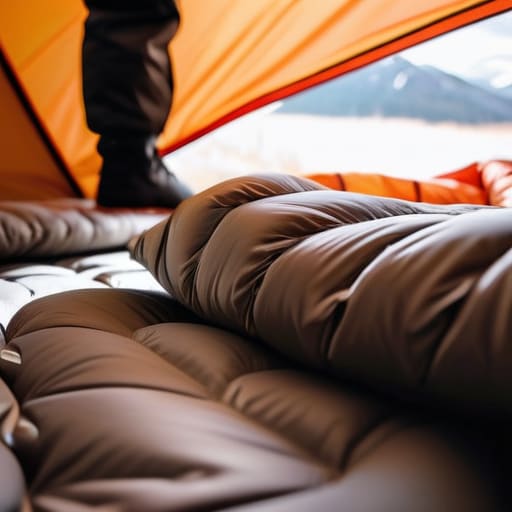
- Stop obsessing over the weight and start looking at the loft. I’ve spent ten years carrying bags that weighed next to nothing, only to find that once the damp set in or the temperature dropped ten degrees below the ‘limit’, the insulation was too thin to actually trap any heat. A bag that is 200g heavier but has more structural loft will save you much more than a few grams on a steep ascent.
- Check the zipper’s placement and quality. I’ve been caught in a light drizzle on a ridge in the Cairngorms with a zipper that snagged on the inner lining, effectively turning my sleeping bag into a very expensive, cold wet sack. If the zipper doesn’t have a substantial storm flap or if it feels flimsy under your thumb, leave it on the shelf.
- Consider your sleeping shape relative to your actual body. If you’re a restless sleeper who moves, a mummy bag that is technically ‘rated’ for your temperature might feel like a coffin. I’ve used the same down mummy bag for five years in various conditions, and if I can’t stretch my legs without compressing the insulation, I’m going to wake up shivering.
- Test the packability against your actual kit list. It’s easy to look at a compressed stuff sack in a shop, but you need to know how that volume sits in your pack alongside your tent and stove. I once bought a bag that compressed beautifully but ended up being so long it forced me to carry my pack awkwardly, throwing off my balance on technical terrain.
- Look at the fabric’s durability, not just its softness. If you are camping on anything other than a manicured site, you need a shell that can take a bit of grit. I’ve used a specific nylon-ripstop shell for three seasons of heavy use in the Lake District, and while it’s lost its initial sheen, it hasn’t picked up a single snag from a stray twig or a rough sleeping mat.
The Cost of Optimism
I’ve spent too many nights shivering in a bag that was technically rated for the temperature, but failed because I ignored how the wind was cutting through the tent fabric or how damp the ground had become. Don’t choose a bag based on a number in a brochure; choose it based on the worst night you can actually imagine having out there.
Bridget Halloran
The Final Decision
At the end of the day, picking a sleeping bag isn’t about finding the most expensive piece of technical kit; it’s about matching your gear to the reality of your environment. You need to look past the marketing fluff and focus on the actual temperature you expect to encounter, ensuring you understand the vital distinction between comfort and limit ratings. Don’t let a manufacturer’s optimistic number trick you into under-preparing. Whether you are weighing up the compression benefits of down versus the reliability of synthetic, or deciding if that extra weight for a higher loft is worth the climb, remember that your gear is only as good as your judgment when the sun goes down and the wind starts picking up.
I’ve spent many nights in small, damp tents, listening to the weather turn while huddled in whatever insulation I had brought along. I have learned that a well-chosen sleeping bag doesn’t just keep you warm; it provides the mental quiet you need to recover for the next day’s ascent. When you have the right setup, you aren’t just surviving the night—you are recharging for the mountain. Choose with caution, test your kit in your own garden or a local campsite before you head into the wild, and always leave a little room for the unexpected. The hills will still be there in the morning, provided you’ve prepared well enough to meet them.
Frequently Asked Questions
Should I prioritize a high R-value sleeping pad over a heavier, warmer sleeping bag?
Prioritize the pad. Every time. I’ve spent nights in a top-tier, sub-zero bag feeling like I was lying on a sheet of ice because the R-value was too low. The ground is a heat thief; it will suck the warmth right out of you, no matter how much down you’re wrapped in. I’ve used the Therm-a-Rest NeoAir XTherm for five seasons in everything from damp valleys to frozen ridges, and that insulation is non-negotiable.
Is it actually worth the extra money to go for down insulation instead of synthetic?
It depends on how much you value your sleep versus your pack weight. I’ve used the Rab Neutrino (850 fill power) for three seasons on multi-day traverses in the Cairngorms, and the warmth-to-weight ratio is unbeatable. However, if you’re someone who tends to sweat through your layers or you’re camping in high humidity, down is a liability. Once it gets wet, it’s useless. If you can’t guarantee dry storage, pay for the synthetic.
How much extra weight am I really looking at if I decide to carry a dedicated liner for damp conditions?
If you’re looking at a standard silk liner, you’re adding about 150g. If you go for a synthetic one designed to handle moisture, expect closer to 300g. I’ve used the Sea to Summit Reactor liner for three seasons of wet, misty camping in the Lake District; it’s a bit heavier than silk, but it keeps the loft when everything else is damp. That extra 150g is a fair price for not waking up in a cold, clammy mess.