I remember a night in the Cairngorms back in 2014, huddled in a tent that had become a damp, heavy-duty sponge because I’d misjudged the drainage of the glen. I spent six hours staring at the ceiling, listening to the wind howl, wondering if a hammock might have kept me dry or if I’d just ended up swinging like a pendulum in a gale. People often get caught up in the “lifestyle” photos of ultralight setups, but when you’re staring at a patch of frozen, uneven scree or a forest floor thick with biting insects, knowing how to choose between hammock and ground becomes a matter of personal margin for error. It isn’t about which one looks better on Instagram; it’s about which one won’t leave you shivering and exhausted when the sun goes down.
I’m not here to sell you on a specific brand or a way of life. I’m going to tell you exactly what happens when the temperature drops and the terrain turns hostile. I will weigh the pros and cons based on decades of actual field use, from the weight of the setup to the reality of setting up in a downpour. If I haven’t spent a night in a specific rig, I won’t tell you I have. This is about the practical reality of where you lay your head.
Table of Contents
The Ground Sleeping System
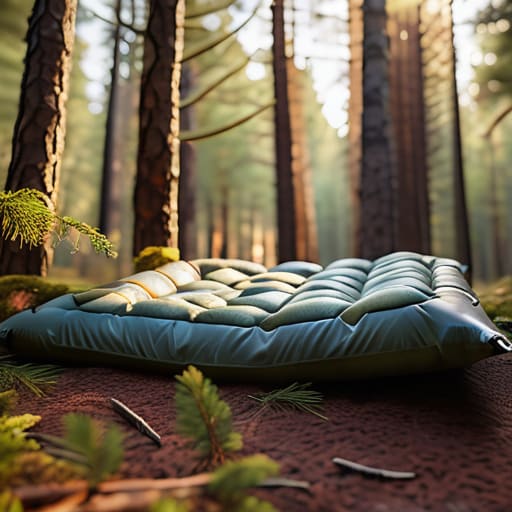
A ground sleeping system is a configuration of a sleeping pad, an insulated mat, or a self-inflating mattress designed to create a thermal barrier between your body and the earth. Its primary objective is to provide a stable, level platform that minimizes conductive heat loss by trapping air within the pad’s structure.
I’ve spent many nights on the floor of a tent, and the reality is that a good pad is your most important piece of kit for staying alive when the temperature dips. It isn’t just about comfort; it is about the physics of heat transfer. I remember a trip in the Cairngorms three years ago where a group member ignored the R-value of his thin foam mat; by 4:00 AM, the ground had effectively sucked every bit of warmth from his core. When you are sleeping on the ground, you are betting your night’s rest on how well that barrier can stop the earth from stealing your energy.
The Hammock System
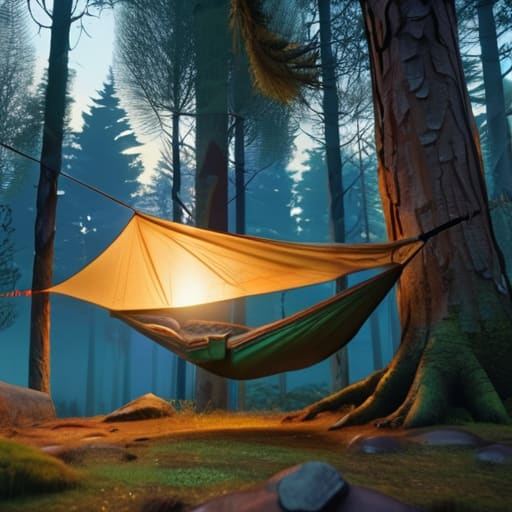
A hammock sleeping system involves suspending a fabric cradle between two trees or anchors, utilizing an integrated bug net and a lightweight tarp for weather protection. The core mechanism relies on suspending your body weight entirely off the terrain, which allows for sleeping in environments where the ground is uneven, wet, or covered in debris.
In my experience leading groups through dense woodland, the ability to choose how to sleep depends entirely on the canopy above you. A hammock removes the struggle of fighting with rocks or roots, but it introduces a whole new set of variables, like wind shear and the necessity of an underquilt. I’ve used my current lightweight suspension setup for over four hundred nights in varied conditions, and I can tell you that while it feels like floating, you are actually trading ground stability for vertical versatility. If the trees aren’t there, or if the wind starts howling through the branches, that versatility becomes a liability very quickly.
Comparison of Sleeping Setup Options
| Feature | Hammock | Ground Tent | |
|---|---|---|---|
| Best For | Trees and uneven terrain | Flat ground and heavy weather | N/A |
| Key Feature | Suspension and airflow | Structural protection | N/A |
| Setup Difficulty | Requires two anchor points | Requires flat space | N/A |
| Portability | Extremely lightweight/compact | Bulkier and heavier | N/A |
| Temperature Control | Difficult (requires underquilt) | Easier (insulation from ground) | N/A |
| Price | Generally lower | Generally higher | N/A |
| Comfort Profile | Swaying/cocoon-like | Stable/traditional | N/A |
Thermal Insulation for Sleeping Avoiding the Cold Radiating From Below

The real danger in sleeping systems isn’t the air temperature; it’s the heat you lose to the medium you’re resting on. Whether it’s the unyielding granite of a mountain ledge or the damp, conductive chill of a forest floor, the ground is a relentless heat sink. If you don’t account for how your setup manages that thermal transfer, you’ll spend your night shivering regardless of how expensive your sleeping bag is.
In a hammock, you’ve effectively bypassed the ground, but you’ve traded one enemy for another: convective heat loss. I’ve spent many a night in the Lake District with an ultralight setup, only to realize that the air moving underneath me was stripping warmth faster than my quilt could replace it. You need an underquilt or a dedicated pad to stop that “cold sink” effect.
Ground sleeping is more straightforward but requires more calculated layering. I’ve used the Therm-a-Rest NeoAir Xlite for five seasons in everything from summer valleys to sub-zero ridge camps; it’s reliable, but you are entirely dependent on the R-value of your mat. If that mat fails or punctures, you are essentially sleeping on a sheet of ice.
For pure thermal control in unpredictable weather, the hammock with a proper underquilt wins, provided you aren’t afraid of the extra weight.
Camping Setup Terrain Requirements When the Ridge Denies Your Choice
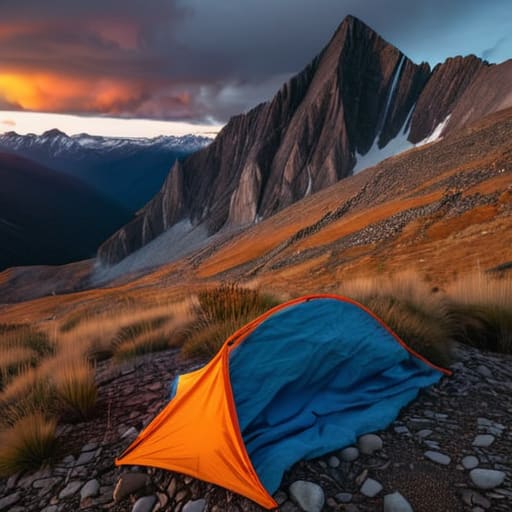
You can have the warmest sleeping bag in the world, but it won’t matter if you have nowhere to put it. When you’re scrambling for a spot to pitch before the light fails or a front moves in, the terrain dictates your kit, not your preference. I’ve seen too many people arrive at a beautiful, high-altitude ledge only to realize they’ve brought a system that requires a flat, manicured lawn to function.
A ground system—tent, mat, and all—is a hostage to the topography. You are looking for a level patch of earth, which, in the real mountains, is a luxury. If the ground is sloped, you’re either sliding into your tent wall or waking up with your head lower than your feet. Conversely, a hammock system moves the equation from the ground to the canopy. You aren’t looking for flatness; you’re looking for structural integrity in the trees. If you’re on a rocky ridge or a scree slope where nothing grows, a hammock is nothing more than a heavy, useless piece of nylon.
For this specific category, the ground system wins for sheer versatility across most mountain landscapes, provided you don’t mind a bit of uneven sleeping.
## The Margin of Error
“People treat the choice between a hammock and a ground system like a matter of comfort, but in my experience, it’s actually a matter of geography; you don’t choose based on what you like, you choose based on what the landscape is willing to give you when the wind starts howling and the light is failing.”
Bridget Halloran
Making the Call
Ultimately, your choice comes down to the specific margin of error you are willing to accept. If you are heading into dense woodland where the ground is a mess of roots, rocks, or damp peat, a hammock with a proper underquilt is your best bet for staying dry and level. However, if you are planning to traverse more open terrain or ridges where trees are sparse and the wind can strip the heat right out of your setup, a traditional ground system with a high-quality, insulated sleeping pad is the only reliable way to go. I have spent too many nights shivering because I tried to force a hammock setup into a landscape that simply wouldn’t support it. Don’t let a lightweight kit list override the reality of the terrain you are actually walking into.
At the end of the day, the gear is just a tool to help you bridge the gap between a long day on your feet and a restorative night’s sleep. Whether you are suspended in the canopy or tucked into a tent on the forest floor, the goal remains the same: to be rested enough to make good decisions when the weather turns. The mountains don’t care how much your setup weighs or how much you spent on it; they only care if you are prepared. Choose the system that makes you feel secure, not just the one that looks good in a catalog. Once you have that sorted, the rest of the trip—the birds, the views, and the quiet—will take care of itself.
Frequently Asked Questions
How much extra weight am I actually carrying if I switch from a standard sleeping pad to a full hammock setup with an underquilt?
If you’re swapping a standard inflatable pad for a hammock and underquilt, you aren’t just adding weight; you’re changing the entire math of your pack. A lightweight pad and bag might sit around 1.2kg. A decent cocooning underquilt and a structural hammock setup will push you closer to 2.2kg. I’ve carried both setups through three seasons of Scottish mist; that extra kilogram feels like nothing on the ascent, but it’s a heavy tax when you’re navigating a ridge in a gale.
If the wind picks up on a ridge, is a hammock more likely to become a sail and pull my pegs out than a low-profile tent?
In short: yes. A hammock is essentially a large, suspended sail. If you’re caught on a ridge with a sudden gust, that wind gets underneath the fabric and tries to lift you right out of the line. I’ve seen lightweight setups fail because the wind caught the suspension lines like guy-wires. A low-profile tent, properly staked and weighted, stays hugged to the earth. If the forecast says anything more than a light breeze, stick to the ground.
How do I manage condensation issues in a hammock when the humidity is high or it's raining steadily?
Condensation isn’t just a nuisance; it’s the dampness that creeps into your down sleeping bag when you aren’t looking. I’ve spent three nights in a heavy mist in the Cairngorms with nothing but a single tarp, and the moisture buildup was relentless. To manage it, you need airflow. Don’t seal yourself in a tight cocoon; keep your tarp pitched with enough gap to let the air move, or you’ll wake up in a puddle.