I remember a Tuesday in late October, somewhere in the Cairngorms, when the wind was coming off the plateau with enough force to strip the skin off your face. I was leading a group that had spent three hours arguing about how to choose a campsite versus wild camping, convinced that “wild” meant something more poetic than just being wet, cold, and tired in a ditch. They wanted the ruggedness of a mountain bivvy but hadn’t accounted for the fact that the temperature was dropping faster than their morale. That’s the problem with most outdoor advice; it sells you the dream of the solitary ridge at sunset, but it forgets to mention the reality of trying to pitch a tent in a gale while your fingers have gone numb.
I’m not here to sell you on the romanticism of the wilderness or the convenience of a paved pitch with a heated shower. I’m here to talk about the actual logistics of staying safe and sane. I will give you the unvarnished truth about when to bite the bullet and book a managed site, and when you can actually trust your kit to hold up in the wild. No fluff, no marketing jargon—just the hard-earned lessons from twenty-two years of seeing exactly where things go wrong.
Table of Contents
Navigating Wild Camping Legalities and Regulations
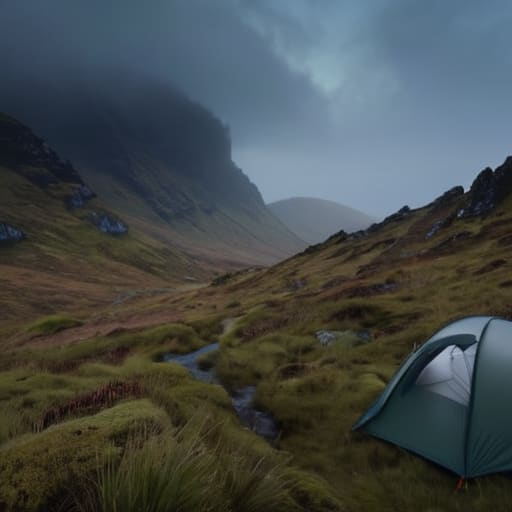
The thing about wild camping is that “freedom” is a heavy word, and it comes with a set of rules that aren’t always written on a signpost. Depending on where you are—whether it’s the Scottish Highlands or the English Lake District—the wild camping legalities and regulations change drastically. In Scotland, you have much more latitude under the Land Reform Act, but even there, you aren’t just dropping a tent anywhere. You have to respect the land, stay away from buildings, and avoid high-traffic areas. In England and Wales, you’re often technically trespassing unless you’re on specific access land or have landowner permission. I’ve seen too many people assume the hills are a lawless frontier, only to find themselves being moved on by a farmer or a ranger before they’ve even finished their tea.
Regardless of the law, the golden rule is always the same: leave no trace principles. If you aren’t leaving the site looking exactly as you found it—and I mean truly, invisibly as you found it—you’re doing it wrong. This isn’t just about being polite; it’s about protecting the very habitats we go out to see. I’ve spent years tracking raptor nests, and there is nothing more disruptive to a breeding pair than a campsite set up too close to a nesting ledge. If you can’t manage your waste or your footprint, you shouldn’t be out there.
The Reality of Camping Amenities and Services
When you book a site with a shower block and a hard-standing pitch, you’re paying for the luxury of not having to think. Managed sites provide the infrastructure—water, waste disposal, and often a bit of electricity—that allows you to focus entirely on the landscape rather than your logistics. It’s a significant part of your camping budget planning, but that cost buys you a safety net. If your stove fails or you realize your sleeping mat has a slow puncture, there is someone within shouting distance who can help.
Wild camping is the opposite; it is a constant negotiation with your own kit. Without those camping amenities and services, every single decision becomes a weight calculation. You aren’t just carrying a tent; you are carrying your own water filtration, your own fuel, and your own sanitation solutions. I’ve spent many nights on the high ridges where the only “amenity” is the wind, and if you haven’t mastered your off-grid camping gear requirements, you’ll find out very quickly that a lack of facilities is a much heavier burden than it looks on a spec sheet.
Five ways to stop being too optimistic about your night out
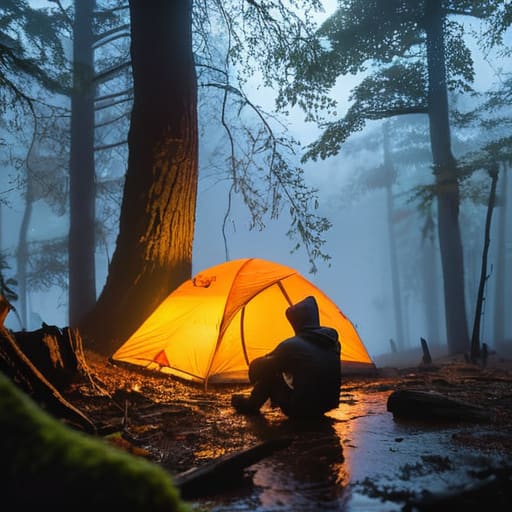
- Check the wind direction before you commit to a wild pitch. I’ve spent too many nights huddled in a tent that felt like a kite because I picked a spot that looked flat but sat right in a wind tunnel. If the forecast says gusts are coming from the west, you don’t just look for flat ground; you look for a lee side that actually works.
- Don’t mistake ‘freedom’ for ‘convenience’ when the sun starts dropping. Wild camping is brilliant until you realise you’re two hours from the nearest water source and your headlamp is dying. If you aren’t experienced at managing your light and your water weight, stick to a managed site where the tap is ten yards from your tent.
- Respect the birds, even when you’re tired. I’ve spent years logging raptor nests, and there is nothing worse than a camper pitching a tent right in the middle of a sensitive breeding area just because it had a ‘good view.’ If you’re wild camping, stay well away from obvious cliff-side scrapes or dense thickets where nesting birds are active.
- Audit your kit for the actual environment, not the brochure. I’ve used my old Terra Nova shelter in everything from gentle drizzle to a three-day gale on the Cairngorms, and it holds, but a cheap, lightweight tent will fail you the moment the temperature drops below what you expected. If you’re going wild, your gear needs to be proven, not just ‘lightweight.’
- The ‘Daylight Math’ rule. If you are choosing a wild camp, you need to be pitched and settled at least an hour before dusk. Most people make the mistake of pushing for ‘one more mile’ to get a better view, only to end up fumbling with tent pegs in the dark, which is exactly when people trip, break things, or make bad decisions.
The Cost of Convenience
Choosing a campsite is a calculation of comfort and predictable facilities, but wild camping is a calculation of risk and how much daylight you’ve left to find a flat patch of ground before the temperature drops. One lets you sleep in a warm shower; the other demands you account for every single decision you made three hours earlier.
Bridget Halloran
Making the Call
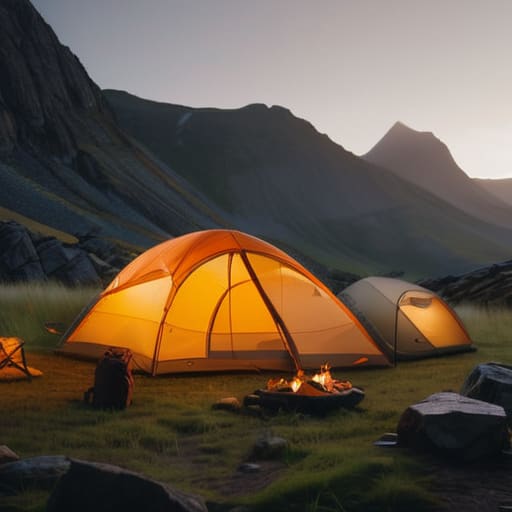
At the end of the day, the choice between a managed site and a wild pitch comes down to how much you are willing to trade for comfort. If you choose a campsite, you are paying for the certainty of a flat surface, a toilet that (hopefully) works, and a clear understanding of the local rules. If you choose to wild camp, you are trading that security for solitude, but you are also accepting the responsibility of managing your own waste, your own shelter, and your own safety when the wind picks up. You have to weigh the convenience of amenities against the physical and mental load of being entirely self-sufficient. There is no wrong answer, provided you have accounted for the gap between your plan and the actual conditions on the ground.
I have spent twenty-two years watching people navigate these decisions, and the ones who have the best time are rarely the ones with the most expensive gear; they are the ones who respect the environment they are stepping into. Whether you are tucked into a well-trodden pitch or waking up to a view that no one else is seeing, remember that the landscape doesn’t care about your intentions. It only responds to your preparation. Treat the wild with the respect it demands, and it will give you something far better than a luxury campsite ever could: a genuine sense of connection to the world that remains unfiltered and raw.
Frequently Asked Questions
How much extra weight am I actually adding to my pack if I decide to carry a proper stove and water filtration for wild camping instead of relying on campsite facilities?
You’re looking at roughly 600 to 800 grams of extra weight, depending on your setup. I’ve carried the MSR PocketRocket for six years in everything from Highland summer drizzle to freezing Lake District mornings; it’s a reliable 85g, but once you add the fuel canister and a lightweight titanium pot, the math changes. Add a Sawyer Squeeze—which I’ve used on every multi-day trek since 2015—and you’re adding about 50g. It’s a small price for not being tethered to a campsite tap.
At what point in a weather forecast should I decide that my plan to wild camp is no longer a calculated risk, but just a bad decision?
You decide when the forecast stops being a variable and starts being a threat. If the wind speeds on the ridge exceed what your tent can actually handle—and I’ve seen enough lightweight flysheets shredded in 40mph gusts to know the limit—you turn back. If the “slight chance of rain” turns into a sustained low-pressure system with dropping temperatures, your “calculated risk” is just optimism. If you’re questioning it, you’ve already reached the limit.
If I’m heading into an area with high raptor activity, how can I ensure my wild camping spot isn't encroaching on a sensitive nesting site?
I’ve spent fifteen years tracking peregrine and golden eagle nests, and I’ve seen too many “scenic” spots turn into high-stress zones for birds. If you’re in raptor territory, stay well away from crags and steep, broken ground; that’s where the action is. Check the BTO or local raptor logs if you can, but generally, if the terrain looks like a perfect ledge, keep moving. Give them a massive buffer—at least a few hundred metres—to ensure your presence doesn’t trigger a flight response.