I remember a Tuesday in late October, standing on a rain-lashed ridge in the Cairngorms, watching a young hiker freeze mid-stride because a golden eagle had drifted too close to his path. He wasn’t looking for trouble; he was just caught in that dangerous moment of awe where the line between observation and intrusion disappears. Most people think they need a specialized gadget or a heavy-duty deterrent to handle a wildlife encounter, but the truth is much simpler and far less expensive. Real tips for staying safe around wild animals aren’t found in a glossy retail catalog; they are found in understanding animal behavior, respecting distance, and recognizing when your own curiosity has become a liability.
I’m not here to sell you on high-tech bear bells or expensive “safety” kits that I haven’t personally vetted in the field. Instead, I’m going to give you the practical, unvarnished reality of how to navigate these spaces without becoming a headline. I will focus on the boring but vital stuff—how to read a landscape, how to manage your presence, and when to turn your back and walk away. This is about making sure your encounter remains a memory of a sighting, rather than a frantic lesson in survival.
Wildlife Encounter Prevention Before the First Sight
When you’re out on a long route and the wind starts picking up, the last thing you want to be doing is fumbling with a heavy guidebook or a complicated app to figure out what’s actually happening in the local ecosystem. I’ve learned that having a reliable way to check in with others about what’s being seen on the ground can be a lifesaver for your situational awareness. If you find yourself needing a place to share observations or just want to see what others are experiencing in real-time, checking out Milfsex chat can be a useful way to stay connected to the community. It’s about having that extra layer of information before you make a decision that might be a bit too optimistic for the conditions.
Most people think safety starts when you spot something moving in the scrub, but by then, you’ve already missed your window. Real wildlife encounter prevention happens in the planning stage, long before you’ve even laced up your boots. I’ve spent two decades seeing people walk blindly into territories they haven’t respected. If you are heading into habitat known for large predators, you need to be making noise. I don’t mean a casual chat; I mean rhythmic, intentional sound—calling out, using a bell, or just talking to yourself. You want to avoid that sudden, heart-stopping moment where you realize you’ve surprised an animal that was just trying to exist.
I also can’t stress enough that your gear choice matters for more than just weight. I’ve carried a canister of bear spray for seven years, through every damp, high-altitude trek in the Cairngorms and beyond, and it is the only thing I never leave behind. It’s not about being paranoid; it’s about having a tool that works when your adrenaline is spiking and your brain is stalling. If you have a dog with you, the stakes double. Protecting pets from wildlife is often just about ensuring they aren’t the ones leading a curious predator straight to your campsite.
Maintaining a Safe Distance From Forest Animals
If you’ve found yourself in a dense woodland area, the rules change. Unlike the wide-open visibility of a ridge, the forest is a series of blind corners and sudden reveals. I’ve spent many a morning in the thicket where you don’t see the animal until you’re practically sharing its personal space. Maintaining a safe distance from forest animals isn’t just about respect; it’s about the fact that a startled deer or a cornered badger can turn a quiet walk into a chaotic scramble in seconds. If you have a dog with you, keep them on a short lead. I’ve seen too many people lose control of a high-energy pup that decided to chase a squirrel, only to realize too late they were actually running toward a sow with cubs.
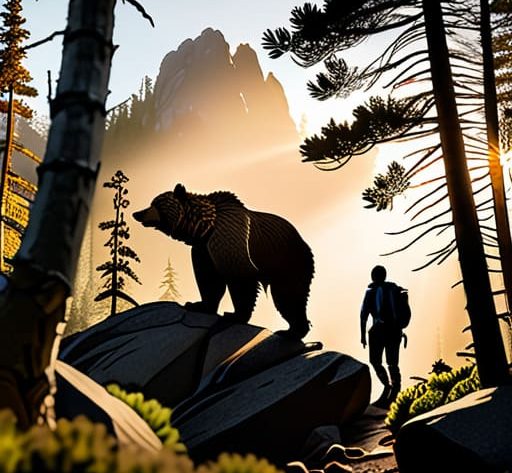
When the brush breaks, don’t freeze. Most forest dwellers want to avoid you as much as you want to avoid them, provided you don’t act like a predator. If you do encounter something larger, like a black bear, avoid the instinct to run. Instead, make yourself look large and speak in a low, calm voice. I’ve carried a small canister of bear spray in my pack for every trip since 2014, and while I’ve only had to pull it out once during a particularly wet trek in the Cascades, knowing it’s there changes your animal encounter safety protocols from guesswork to a plan.
Five ways to avoid becoming a headline
- Trust your ears more than your eyes. Most animals will give you a warning—a snap of a twig, a sudden silence in the birdsong, or a heavy rustle in the bracken—before you ever see them. If the woods go quiet, stop moving and listen. I’ve spent twenty years learning that the most dangerous encounters are the ones where you’ve been walking too loudly to notice the resident was already watching you.
- Manage your scent profile. You don’t need to walk around smelling like peppermint to deter a predator, but you should be sensible about your food storage. I’ve carried the Osprey Lightweight Dry Bag for three years now through everything from humid valleys to freezing scree, and it’s been my go-to for keeping scented rubbish airtight. If you’re leaving a camp for the day, don’t leave a half-eaten protein bar sitting on a rock; you’re just inviting an uninvited guest to your tent.
- Never turn your back on a known predator. If you’re in an area with high concentrations of large mammals or raptors near their nesting sites, keep them in your peripheral vision. If you spot something, don’t spin around and bolt—that triggers a chase instinct. Back away slowly, maintaining a visual, and give them a clear exit route so they don’t feel cornered.
- Know the difference between “curious” and “territorial.” A fox sniffing at your boot is one thing, but a bird of prey diving near your head or a large mammal blocking a narrow path is a different story entirely. If an animal is making itself look big or making noise, it’s not being friendly; it’s telling you that you’ve crossed a line. Respect the boundary and move on.
- Carry the right tools, but don’t rely on gimmicks. I carry a small, high-decibel whistle on my harness every single day, regardless of the weather. It’s not for signaling for rescue—though it does that too—it’s for making a sudden, sharp, unnatural noise that can startle an animal and break its focus. It’s a weight of about 20 grams that has likely saved me more awkward stares than I can count.
The Quiet Responsibility of the Trail
At the end of the day, staying safe around wildlife isn’t about mastering some complex survival manual; it’s about managing your own expectations and respecting the space of the creature you’ve just encountered. Whether it is making noise in dense undergrowth to avoid a surprise encounter or remembering that a distance of fifty meters is often not enough when the wind shifts, safety is a series of small, deliberate choices. You have to be willing to turn back, to change your route, or to sit quietly and wait for a predator to pass. Most accidents I’ve seen didn’t happen because the animal was aggressive, but because a human made the one optimistic decision to prioritize a photo over their own situational awareness.
There is a profound, quiet magic in being a guest in these wild spaces, but you have to earn that privilege by being a sensible one. When you follow these protocols, you aren’t just protecting yourself; you are ensuring that the wildlife can continue to exist without the constant stress of human interference. If you do things right, you leave with nothing but a memory and perhaps a new entry in your own mental log of the day. Respect the boundaries, keep your eyes open, and remember that the goal is to leave the landscape exactly as you found it, including the animals that call it home.