I remember standing on a ridge in the Cairngorms three years ago, watching the light die behind a wall of grey mist, realizing my “fail-safe” GPS tracker was sitting uselessly in a pack because I’d been too optimistic about the battery life. Most of the advice you find online about how to hike solo safely focuses on buying the most expensive satellite messenger or a high-tech gadget that promises to save your life. But after twenty-two years of watching people make mistakes, I can tell you that a shiny piece of kit won’t fix a poorly timed decision made when you’re tired and hungry.
I’m not here to sell you a lifestyle or a brand of ultralight gear that breaks the first time it hits granite. Instead, I’m going to talk about the unglamorous, vital realities: how to read a shifting forecast, when to accept that the day is over, and how to manage your own mental fatigue when no one is there to pull you along. I’ll give you the hard truths based on what I’ve actually used in the rain and the wind, because the goal isn’t just to finish the walk—it’s to make sure you’re the one walking back out.
Table of Contents
Building Situational Awareness Before the Clouds Roll in
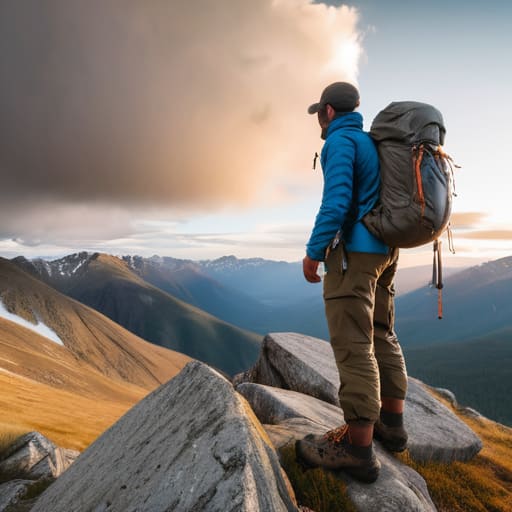
Situational awareness isn’t some abstract concept you find in a manual; it’s the constant, quiet habit of reading the landscape before it starts reading you. I spent nine years as a ranger watching people walk straight into trouble because they were looking at their feet instead of the horizon. When you’re alone, you don’t have a partner to say, “The wind has shifted,” or “That cloud looks heavy.” You are the only sensor on the mountain. This means developing your trail navigation skills to a point where checking a map or a GPS feels as instinctive as checking your pulse. You need to know exactly where you are in relation to the nearest escape route before the visibility drops to ten meters.
I’ve sat through many afternoons where the pressure dropped so sharply you could feel it in your teeth. That is your cue. Don’t wait for the first heavy drop of rain to start thinking about your next move. Part of your solo hiker situational awareness must include a mental tally of your daylight and your energy levels. If the weather is turning and you’re halfway through a ridge, the decision to turn back isn’t a failure; it’s the only logical conclusion.
Mastering Trail Navigation Skills When the Path Vanishes
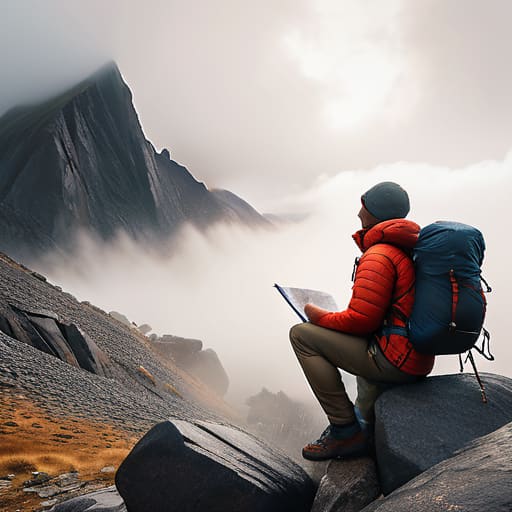
The moment you lose the tread of the path is the moment your heart rate spikes, and that’s exactly when you need to stop. I’ve seen too many people try to “scout” their way through a mist by pushing further into broken terrain, only to find themselves halfway down a scree slope they can’t climb back up. If the visibility drops, you don’t keep moving to find the trail; you stop, sit, and check your bearings. Relying solely on a smartphone is a mistake I’ve had to correct too many times. Batteries die in the cold, and GPS signals can be temperamental in deep corries.
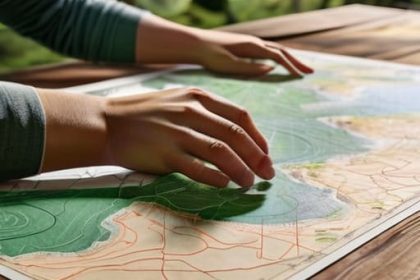
True trail navigation skills require a redundant system. I never head out without a physical map and a compass, and I’ve used my Silva expedition compass in driving rain and sub-zero temperatures for over fifteen years without a single failure. You need to be able to orient that map even when your fingers are numb. If you are moving into more remote territory, carrying emergency communication devices for hikers, like a satellite messenger, is the only way to bridge the gap when your decision-making starts to fray under pressure.
The Margin for Error: Five Ways to Keep Your Solo Trip from Turning Sour
- Respect the ‘Decision Window.’ I’ve seen more people walk into trouble because they thought they could reach the summit before the front hit, rather than turning back when the wind first picked up. Set a hard turnaround time in your head—not based on how you feel, but on the daylight and the forecast—and stick to it. The mountain isn’t going anywhere, but your window of safety is.
- Carry a redundant navigation system that doesn’t rely on a lithium battery. I’ve spent twenty-two years watching phones die in the damp or freeze shut in sub-zero temperatures. I carry my OS map and a compass every single time; I’ve used this specific Silva compass in everything from driving rain to freezing mist for the last six years, and it hasn’t failed me yet. If your tech dies, your plan shouldn’t.
- Manage your caloric and thermal debt before you feel it. When you’re solo, there is no one to notice you’ve stopped shivering or that you’re moving more sluggishly. I don’t wait for the cold to bite; I layer up when I feel the first hint of a chill and eat small, frequent snacks to keep the furnace running. Once you’re truly cold and hungry, your ability to make sound decisions evaporates.
- Leave a ‘Dead Man’s Plan’ with someone reliable. This isn’t just a text saying “I’m going hiking.” It needs to be a specific route, a list of expected waypoints, and a definitive ‘if I’m not back by X time, call the mountain rescue’ instruction. If you go missing, the search starts where your plan ends.
- Pack for the worst-case weather, not the morning’s sunshine. I carry a lightweight emergency bivvy—I’ve used this specific SOL bivvy in three different gale-force storms over the last two seasons—because being stuck overnight is a very real possibility when a simple slip turns into a twisted ankle. If you’re carrying gear only for a sunny stroll, you’re not hiking; you’re gambling.
The Cost of Optimism
Most solo accidents don’t happen because of a sudden storm; they happen because you looked at a clear sky at 10:00 AM and decided that a three-hour detour was worth the risk. The mountain doesn’t care about your itinerary, and it certainly won’t wait for you to realize you’ve misread the clouds.
Bridget Halloran
The Decision is Yours
At the end of the day, solo hiking isn’t about mastering a single piece of kit or memorizing a map; it’s about the cumulative weight of your choices. It’s about checking the barometer when you’d rather be climbing, trusting your compass when the mist turns the world grey, and—most importantly—having the discipline to turn back when your gut tells you the window is closing. You need to be your own most rigorous safety officer, managing your energy, your layers, and your timeline with the same scrutiny you’d apply to a professional expedition. Remember, the goal isn’t just to reach the summit; it’s to make it back to the car with your sense of adventure intact and your gear dry.
There is a specific, quiet kind of magic in being alone on a ridge, watching a peregrine dive or feeling the scale of a valley beneath your boots. It’s a profound way to connect with the world, but that connection requires respect. The mountains aren’t trying to kill you, but they are entirely indifferent to your plans. If you approach them with humility and preparation, the outdoors will continue to be a place of immense reward. Respect the gap between a sunny morning and a sudden storm, and you’ll find that the most successful solo hikes are the ones where you planned for the worst so you could actually enjoy the best.
Frequently Asked Questions
How much weight should I realistically carry if I'm factoring in extra layers and a way to signal for help?
Don’t get caught in a weight trap. If you’re carrying an extra down jacket and a PLB (Personal Locator Beacon), aim for a base pack weight under 8kg. I’ve carried a 12kg pack through a sudden mist on the Cairngorms; by hour six, every gram felt like a kilogram of lead. If you’re too heavy, you’ll move slower, get colder, and make the exact kind of tired, bad decisions that lead to trouble.
What’s the best way to track my location without relying entirely on a phone battery that might die in the cold?
I’ve spent three days on a ridge in sub-zero temperatures with a dead iPhone, and it’s a lonely feeling. Don’t trust your phone as your primary lifeline; cold kills lithium batteries faster than a sudden gale. I carry a Garmin inReach Mini—it’s 100g, and I’ve used it weekly for three years in everything from drizzle to sleet. It handles the SOS and tracking independently. Pair that with a dedicated GPS unit or a reliable paper map and compass.
At what specific point in a weather shift should I decide that the risk of staying on the ridge outweighs the goal of reaching the summit?
The moment you feel the urge to “just push on” because the summit is visible, you’ve already lost the argument. If the wind picks up enough to make your breathing heavy or the first heavy drops of rain start hitting your face, that’s your signal. On a ridge, visibility can drop from a mile to ten feet in minutes. If you can’t see the next waypoint clearly, or if the wind is making your footing feel uncertain, turn back.