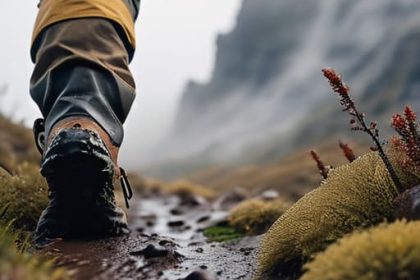
I remember a Tuesday in the Cairngorms back in 2014—the kind of day where the mist doesn’t just roll in, it swallows you whole. I was leading a group that had made the classic mistake of thinking a light drizzle meant they could skip the heavy layers. When the temperature plummeted and the wind started scouring the ridge, the conversation shifted instantly from “how much further?” to “how do we stay warm?” This is where most people get stuck, staring at a gear list and wondering how to choose a survival bag versus blanket when the decision actually matters. A shiny foil sheet might look good in a shop window, but on a granite plateau in a gale, it’s often little more than a glorified, noisy piece of litter.
I’m not here to recite a manufacturer’s brochure or tell you that everything in their catalogue is life-saving magic. I’ve spent two decades seeing exactly what happens when gear meets actual mountain weather. In this guide, I’ll break down the weight, the wind resistance, and the heat retention of both options based on the gear I’ve actually carried through horizontal rain and freezing sleet. I will tell you when a blanket is sufficient and when a bag is the only thing standing between you and a very dangerous night on the hill.
Table of Contents
The Emergency Blanket
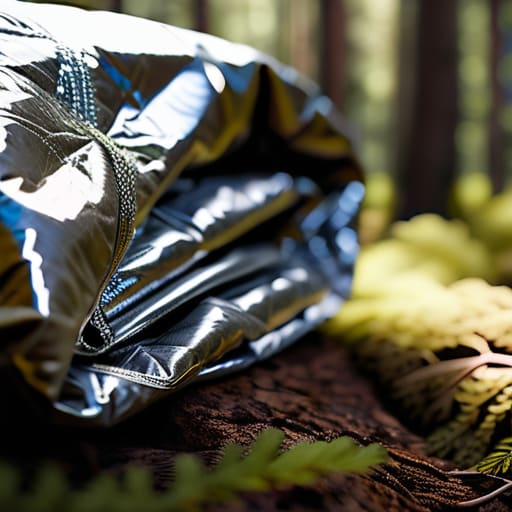
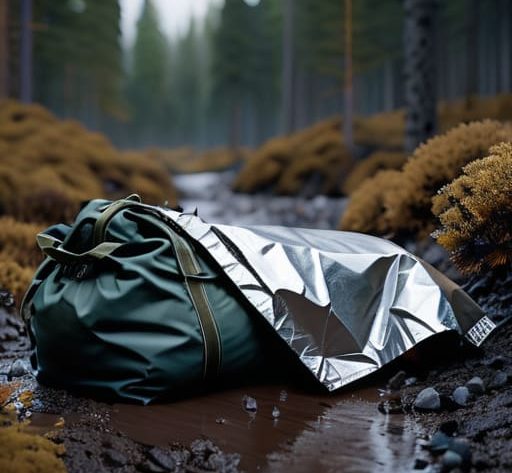
An emergency blanket is a lightweight, highly reflective sheet of thin metallised film designed to reflect your own body heat back toward you. Its primary function is to provide a minimalist thermal barrier that fits into the smallest possible pocket or first aid kit without adding any significant weight to your pack.
I’ve seen plenty of hikers treat these like a silver party favor, but in practice, they are incredibly temperamental. I’ve used several different brands over the last fifteen years, mostly during quick stops in the scree slopes of the Cairngorms, and they are only effective if you are shielded from the wind. If you try to wrap one around yourself while standing on an exposed ridge in a gale, the material will shred or flap so violently that you won’t feel any warmth at all; they are tools for static survival, not for active movement.
The Survival Bag
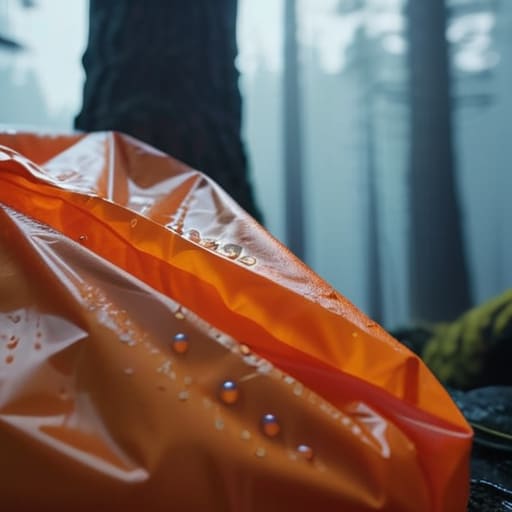
A survival bag is a waterproof, often windproof enclosure that functions as a wearable, lightweight sleeping bag designed to trap heat and block the elements. Unlike a flat sheet, the core mechanism here is the creation of a contained microclimate around your entire body, significantly reducing the risk of convective heat loss.
In my twenty-two years on the hills, I have found that the difference between a long night and a medical evacuation often comes down to this specific bit of kit. I’ve spent many a night huddled in a bivvy during a sudden weather shift, and there is a massive psychological advantage to being inside a bag rather than wrapped in a sheet. It stops the wind from stripping the heat right out of your clothes, which is exactly what you need when you’ve made the optimistic decision to push for one more mile and the daylight has just vanished.
Comparison of Emergency Thermal Protection Options
| Feature | Survival Bag | Emergency Blanket | N/A |
|---|---|---|---|
| Primary Function | Full-body enclosure and shelter | Reflective heat retention | N/A |
| Key Feature | Integrated hood and waterproof material | Lightweight and highly compact | N/A |
| Best For | Extended stationary survival | Quick warmth during movement | N/A |
| Durability | High (tear-resistant) | Low (fragile/easily torn) | N/A |
| Protection Level | Windproof and waterproof | Primarily heat reflective | N/A |
| Ease of Use | Requires careful positioning | Instant wrap-around use | N/A |
| Price | Moderate | Very Low | N/A |
Bivvy Bag vs Space Blanket the Cost of One Optimistic Decision
I’ve sat in too many damp leeches of a valley, watching a group try to huddle under a thin sheet of foil while the wind turned a light drizzle into a sideways gale. The reason this comparison matters isn’t about the price tag; it’s about the narrow margin between a long night in the rain and a genuine medical emergency. When you’re cold, your decision-making fails, and that’s usually when the “optimistic” choice—thinking you can just tough it out—becomes a liability.
A space blanket is essentially a piece of highly reflective film; it’s lightweight, yes, but it has zero structural integrity. If you’re caught in a gust on a ridge, it will wrap around your face or tear away, leaving you exposed. A bivvy bag, like the heavy-duty orange ones I’ve carried on winter traverses for the last six years, creates a microclimate. It acts as a physical barrier against the wind and moisture, actually holding your body heat in rather than just reflecting it while you shiver.
For staying alive when the weather turns, the bivvy bag wins. A blanket is a supplement; a bag is a system.
Heat Retention Efficiency and the Reality of Emergency Thermal Protection
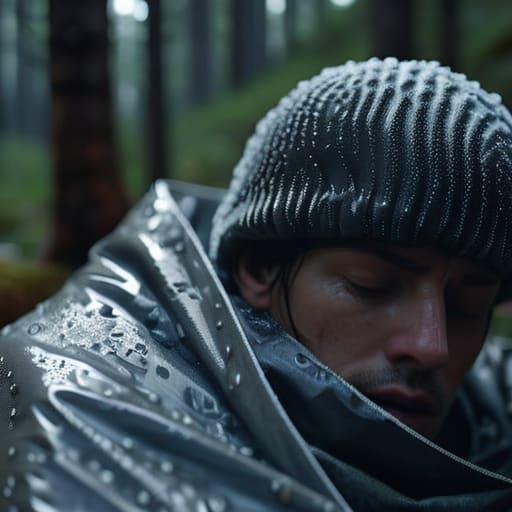
Heat isn’t something you can negotiate with once the temperature drops. In my experience, most people underestimate how quickly a body loses its ability to thermoregulate when you’re wet or stationary. The difference between these two items isn’t just about warmth; it’s about whether you are trapping heat or merely reflecting it while your own breath turns you into a damp sponge.
A space blanket works on the principle of radiant heat reflection, which is fine if you are tucked into a sleeping bag and shielded from everything. But if you’re out on a ridge, the wind will find every gap in that thin foil, and you’ll lose heat through convection faster than the blanket can replace it. A survival bag (or bivvy) is a different beast entirely. I’ve spent several nights in the Sierra and the Lakes using my 300g emergency bivvy during sudden shifts in weather, and the way it creates a microclimate around your core is incomparable. It creates a dead-air space that actually works with your layers.
For pure heat retention efficiency when you’re stuck in the elements, the survival bag is the clear winner.
The Margin of Error
I’ve sat in the dark on a scree slope watching people try to wrap themselves in a foil blanket like a burrito, only to watch the wind turn it into a silver sail that does nothing but strip the heat right out of them. A blanket is a tool for a momentary pause; a bivvy bag is a tool for when the plan has actually failed.
Bridget Halloran
The Final Decision
At the end of the day, the choice comes down to your margin for error. If you are carrying a lightweight kit for fast scrambles or day hikes where the worst-case scenario is a short wait for help, a space blanket is a logical, weight-saving addition to your kit. But if you are heading into terrain where the weather can turn or where you might be stuck for hours—perhaps waiting for a rescue or a break in a storm—the bivvy bag is the only real choice. I have spent twenty-two years seeing how quickly a “quick detour” becomes an unplanned night out, and in those moments, weight is secondary to actual protection. A blanket will flutter and fail when the wind picks up, whereas a bag creates a microclimate that actually works.
Don’t let the gear choice feel like a burden; let it be your insurance policy. The mountains don’t care how much you spent on your technical shell or how much you weigh your pack to the gram; they only care if you are prepared for the moment the plan fails. Carry the tool that matches your actual risk, not just your intended route. When you respect the gap between a sunny afternoon and a freezing ridge, you aren’t just packing gear—you are packing the ability to go home.
Frequently Asked Questions
If I'm carrying a heavy multi-day pack, is the weight difference between a foil blanket and a proper bivvy bag actually significant enough to matter?
If you’re carrying a heavy pack, every gram feels like a kilogram by hour eight. A foil blanket weighs next to nothing—maybe 50g—while a decent bivvy bag will sit at 300g or more. In a vacuum, that weight difference is negligible. But if you’re already over-encumbered, you might be tempted to skip the bag. That’s the mistake. I’ve used my 350g emergency bivvy in driving sleet for six hours straight; that extra weight is what keeps you from shivering uncontrollably.
How do I decide if I should carry both, or if one is enough to cover me if I'm forced to spend a night out due to a weather shift?
If you’re asking that question, you’re already thinking about the wrong thing. You shouldn’t be deciding between “one or both” based on weight; you should be deciding based on your margin for error. If you’re doing solo, fast-paced scrambles, a lightweight bivvy is your lifeline. But if you’re carrying a group or heading into unpredictable high-altitude weather, carry the bivvy and a secondary blanket. One is for shelter; the other is for when things go sideways.
Can a space blanket actually be used effectively if I'm still moving or trying to find shelter, or is it strictly for when you've stopped?
If you’re still moving, a space blanket is more of a nuisance than a tool. I’ve seen people try to wrap them around their shoulders while scrambling, and they just end up snagging on heather or flapping like a frantic silver flag, which draws attention and wastes energy. They are designed for when you stop. If you aren’t stationary and sheltered, you’re better off focusing on your pace and your layers.