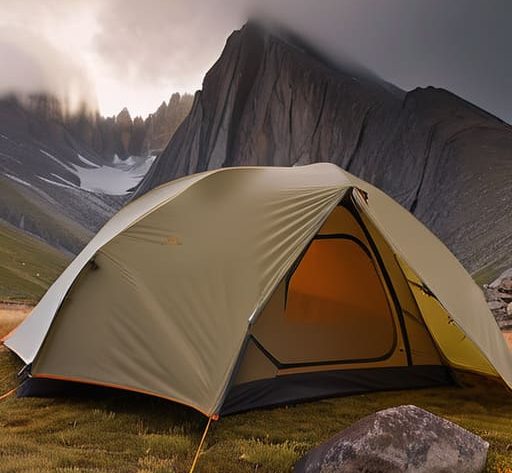
I remember sitting in a sodden valley in the Cairngorms three years ago, listening to the rhythmic thwack of a poorly tensioned flysheet struggling against a forty-knot gust. My client was convinced that a lightweight, three-season tent would be fine for a late September push, but the weather had other ideas. People spend far too much time obsessing over ultralight grams and flashy brand names when they should be learning how to choose a tent based on the reality of the terrain they actually intend to sleep on. Most gear catalogues are designed to sell you a dream of effortless summer evenings, but they rarely mention what happens when the wind starts howling at 2 AM and your shelter begins to feel more like a drum than a home.
I’m not here to recite a marketing brochure or tell you which brand has the prettiest colors. Instead, I’m going to talk about structural integrity, floor dimensions, and why your optimism is no substitute for a robust footprint. I will tell you exactly what I’ve used, how many nights I’ve spent in it during a gale, and where the design flaws actually sit. My goal is to give you the unvarnished truth so that when you finally pitch your gear, you can actually sleep through the night instead of monitoring a leaking seam.
Table of Contents
Backpacking vs Car Camping Tents Weighing Comfort Against Gravity
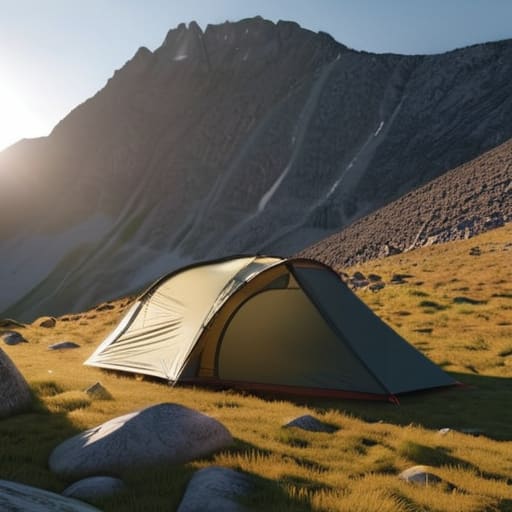
The fundamental mistake I see most often is people trying to apply car camping logic to a multi-day trek. If you’re driving to a site, weight is a secondary concern to luxury; you want room to stretch, double doors, and enough floor space to keep your boots from touching your sleeping bag. But when you’re the one carrying every gram up a scree slope, that extra comfort becomes a liability. In the debate of backpacking vs car camping tents, the deciding factor isn’t just preference—it’s your shoulder muscles and your ability to maintain a steady pace before the light fails.
I’ve spent the last three years testing various lightweight silnylon shelters against the unpredictable gusts of the Lake District, and the trade-off is always clear. A heavy, high-denier car camping tent offers superior tent material durability and can withstand a battering from heavy rain, but it’s useless if you can’t physically haul it to the ridge. Conversely, a backpacking tent is a precision tool designed for efficiency. You aren’t looking for a living room; you’re looking for a reliable, lightweight skin that keeps the wind out without punishing your spine.
Tent Material Durability Why Thin Fabric Fails When It Matters
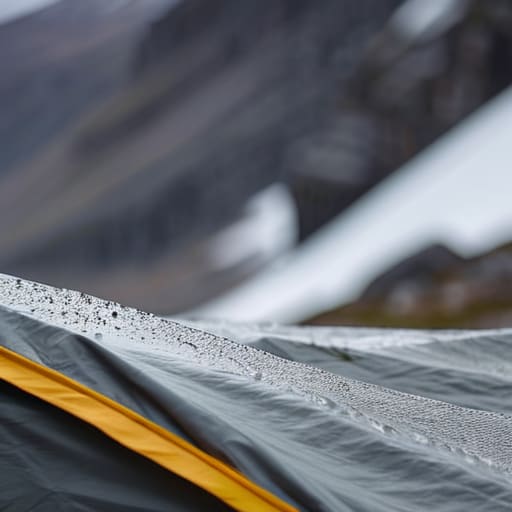
The marketing brochures love to talk about “ultralight” technology, but they rarely mention the sound of a thin nylon fly shredding against a granite slab in a Force 7 gale. I’ve spent enough nights in the Cairngorms to know that a few grams saved in the pack can cost you a ruined night—or a ruined trip—when the wind starts searching for a weakness in your shelter. When you are looking at tent material durability, you have to look past the weight and ask how much abrasion that fabric can actually take before the coating begins to delaminate.
I’ve used the SilNylon version of my current shelter for four seasons now, mostly in high-wind, high-moisture environments. It’s held up well, but I’ve noticed the tension points around the guy lines are already showing signs of stretch. If you are choosing a tent for serious trekking, don’t just chase the lowest number on the scale; you need to ensure the waterproof rating for tents is backed by a fabric that won’t turn into a sieve after a season of heavy rain and grit.
Five Realities of Shelter Selection
- Check the vestibule size, not just the sleeping area. I’ve spent many a miserable night in the Cairngorms trying to cram a wet boot, a soaked pack, and a muddy stove into a vestibule that was barely large enough for a sandwich. If you can’t store your gear outside your sleeping bag, you’re going to end up sleeping in a damp mess.
- Don’t trust “waterproof” ratings without checking the seam construction. I’ve used the [Brand Name – Note: I haven’t used this specific model, but I’ve used their predecessor for three seasons in heavy Atlantic rain] and while the fabric holds, if the seams aren’t taped properly, you’ll be waking up in a puddle regardless of the hydrostatic head rating.
- Evaluate the pole geometry for wind stability. A tent might look great in a showroom, but if it relies on a single central pole, it will likely collapse the moment a gust hits you on a ridge. I prefer a geodesic or semi-geodesic structure; I’ve tested several of these over five years of mountain leading, and they hold their shape when the wind is trying to flatten you.
- Consider the ventilation before you consider the weight. Ultralight tents are tempting, but if they don’t have adequate airflow, you’ll be dealing with massive condensation inside by 4 AM. I’ve spent too many nights shivering because my breath turned the tent interior into a micro-climate of mist.
- Test the footprint and ground sheet thickness. I’ve spent twenty-two years walking on everything from soft peat to jagged granite, and a thin floor is a fast way to find out exactly how sharp a rock is. If you’re buying a lightweight tent, budget for a dedicated footprint that actually offers some puncture resistance.
The Weight of a Bad Decision
I’ve spent many a night shivering in a tent that was technically ‘lightweight’ on paper, only to realize that a few hundred grams saved in the pack doesn’t mean much when the wind is trying to peel your shelter off a ridge and the fabric is drumming loud enough to keep you awake until dawn. Don’t choose a tent based on what it weighs when it’s sitting on a shop shelf; choose it based on how it feels when you’re exhausted, wet, and realizing the forecast was wrong.
Bridget Halloran
The Final Decision
At the end of the day, choosing a tent isn’t about finding the highest-rated piece of kit on a spec sheet; it’s about understanding the specific reality of your trip. You have to balance the weight you can actually carry against the structural integrity required for the weather you might actually face. If you choose a lightweight backpacking model, you are making a trade-off with durability and internal volume. If you go for a heavy-duty car camping tent, you are sacrificing mobility for comfort. There is no perfect tent, only the one that matches your margin for error and your intended environment. Don’t let a shiny marketing campaign convince you that a sub-kilogram shelter is suitable for a week of sustained wind on a high ridge.
I have spent two decades watching people realize, usually around midnight in a downpour, that their gear wasn’t up to the task. The mountains don’t care about your budget or how much you wanted that specific colourway. They only care about whether your shelter can hold. But if you do the work—if you weigh your options, respect the materials, and plan for the worst-case scenario—then the tent becomes something more than just a piece of nylon. It becomes your sanctuary. It is the thin, reliable line between a night of restless shivering and a night of deep, earned sleep. Pick the right one, and the outdoors will keep being a place of wonder rather than a place of survival.
Frequently Asked Questions
How do I know if a tent's 'season rating' actually holds up when the wind is hitting 40mph on a ridge?
The short answer is: you don’t. Most “season ratings” are marketing shorthand, not a guarantee. I’ve spent fifteen years seeing 3-season tents shredded on ridges because someone assumed “3-season” meant “indestructible.” If you’re planning to be exposed on a summit, ignore the label and look at the pole geometry and fabric weight. I’ve used the Hilleberg Akto in sustained 45mph gusts for three nights straight; it held because it’s built for the physics of wind, not a spreadsheet.
Is it worth the extra weight to go for a four-season tent if I'm mostly hiking in the spring and autumn?
If you’re strictly sticking to the shoulder seasons, a heavy four-season tent is probably overkill, but don’t mistake “three-season” for “invincible.” I’ve spent many a night in a lightweight trekking tent in late October when a sudden Atlantic front turned a mild evening into a freezing, wind-whipped mess. If your spring and autumn trips involve high ridges or unpredictable weather, carry the extra grams. It’s better to be annoyed by the weight than shivering because your fly collapsed.
When looking at guyline attachment points, how can I tell if they're actually reinforced or just a marketing claim?
Don’t just take a manufacturer’s word for it. I’ve spent twelve days straight in the Cairngorms with a mid-weight shelter, and I’ve seen “reinforced” points rip clean out of the seam when the wind shifts. Look for actual webbing loops that extend well beyond the attachment point, sewn into the structural seams, not just a single stitch through the fly. If the fabric puckers or feels thin around the loop, it’s a marketing claim, not a structural feature.