I once spent four hours crouched in a damp thicket near the edge of the Cairngorms, shivering in a jacket that had finally lost its loft, just to catch ten minutes of a pine marten’s movement. Most people think that understanding nocturnal animal behavior in forests requires a thousand-pound thermal camera or a degree in ethology, but they’re wrong. In reality, it’s mostly about learning to sit still enough that the woods stop treating you like a moving obstacle and start treating you like part of the scenery. It’s not about the high-tech gadgets; it’s about recognizing the specific, heavy silence that falls right before something moves in the undergrowth.
I’m not here to sell you on a lifestyle or promise you a National Geographic moment every time you step outside after sunset. I’m going to tell you what actually works when the light fails and the temperature drops. We’ll talk about the subtle auditory cues that signal a predator is on the move and why your choice of footwear matters more than your camera lens. I’ll give you the honest truth about what you can actually expect to see, based on twenty years of watching the woods change when the sun goes down.
Sensory Adaptations of Nocturnal Species Youll Actually Encounter
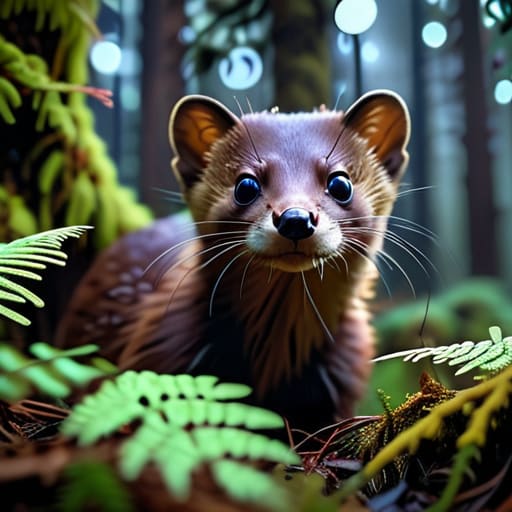
If you find yourself trying to identify a specific call or a movement in the undergrowth and you’re just not sure if you’ve seen a pine marten or just a particularly large shadow, don’t sit there guessing in the dark. I’ve spent enough nights staring at trees to know that second-guessing yourself is how you miss the real thing. When I’m stuck on an identification, I usually head over to this UK chat community to see what others have been spotting lately; it’s a decent way to cross-reference your observations with people who actually spend their time out in the elements. It’s much better than relying on a static guidebook that won’t tell you if a species has shifted its activity patterns due to a particularly wet season.
When you’re sitting still in a thicket after dusk, you start to realize that the forest isn’t actually quiet; it’s just operating on a different frequency. Most of what you’ll encounter relies on specialized sensory adaptations of nocturnal species to navigate a world where sight is a secondary tool. Take the tawny owl, for instance. I’ve spent many a damp October evening tracking their calls, and while people focus on their incredible hearing, it’s their facial disc that does the heavy lifting, funneling sound directly to those oversized ears. It’s a level of precision that makes human hearing feel blunt and useless by comparison.
Then there’s the matter of how light—or the lack of it—dictates movement. You’ll notice that nighttime predator-prey dynamics shift noticeably depending on the lunar cycle. On a moonless night, the forest floor feels much more active; small mammals move with a certain confidence because the shadows are absolute. However, once the moon is high, you’ll see them freeze. That sudden, heavy stillness is often the only warning you get that something is watching from the canopy.
Nocturnal Foraging Strategies That Keep the Ecosystem Moving
When the sun drops below the treeline, the forest doesn’t go quiet; it just shifts its frequency. This is when the real work of the ecosystem happens. I’ve spent many a night sitting still in a bivvy bag, watching how the forest floor transforms during these hours. You start to see the specific nocturnal foraging strategies that keep the whole system from stalling. It isn’t just random movement; it’s a highly calculated dance of energy conservation. Small mammals like voles and shrews become the frantic engine of the night, moving through the leaf litter to find seeds and invertebrates, essentially turning the forest’s waste into high-protein fuel for everything else.
The real tension, however, lies in the nighttime predator-prey dynamics. You might be sitting there, trying to stay warm, when you realize the silence has become too heavy. That’s usually when a predator is on the move. Whether it’s an owl utilizing silent flight or a fox navigating the undergrowth, the stakes are incredibly high. Every movement has to be worth the caloric cost, because in the dark, a single mistake isn’t just a missed meal—it’s an invitation to become someone else’s dinner.
Five Ways to Listen Without Being Heard
- Stop moving and wait. Most people make the mistake of walking constantly, which creates a wall of sound that masks everything else. If you want to actually hear a pine marten or a badger, you have to sit still for at least ten minutes. The forest has a baseline rhythm, and it takes that long for the animals to realize you aren’t a moving threat and settle back into their own patterns.
- Respect the light. I’ve carried the Petzl Actik Core headlamp for about four years now, through countless damp nights in the Cairngorms, and while it’s reliable, it’s still a beacon. If you’re trying to observe, use a red light setting. It preserves your night vision and, more importantly, it doesn’t spook the local wildlife like a high-lumen white beam does.
- Learn the “alarm calls.” Every forest has its own language of panic. If you hear a sudden, frantic chatter from a squirrel or a specific sharp note from a woodland bird, something is moving through the undergrowth that shouldn’t be there. Don’t go looking for the source; just recognize that the local residents have just flagged a presence.
- Watch the shadows, not the light. When you’re looking for larger nocturnal mammals, don’t scan the ground. Look for the break in the silhouette against the sky or the way a shadow moves differently than the swaying branches. Most movement happens at the edge of your peripheral vision; if you stare directly at a dark shape, your eyes will struggle to resolve it.
- Check the weather before you check your watch. A heavy rain or a high wind will completely shut down nocturnal activity. I’ve spent many nights waiting for a sighting only to realize the wind was gusting at 30mph, making it impossible for anything to forage or move without being heard from a mile away. If the weather is turning, don’t bother trying to observe; just focus on getting yourself back to camp safely.
Respecting the Night Shift
At the end of the day, understanding nocturnal behavior isn’t about memorizing a textbook; it’s about recognizing that the forest doesn’t shut down just because the sun goes down. It just changes its rhythm. From the specialized hearing of an owl to the calculated, scent-driven foraging of a badger, every movement in the dark is a response to a specific set of environmental pressures. When you start to see these patterns—the way a sudden silence can signal a predator moving through the undergrowth or how certain scents linger in the damp night air—you stop being a spectator and start becoming part of the landscape. Just remember: observation requires patience, and more importantly, it requires you to stay out of the way of the creatures that actually own the night.
If you do decide to head out after dusk, do it with a sense of humility. Bring a decent headlamp—I’ve used my Petzl Actik Core for three seasons now in everything from misty Pennine climbs to heavy rain, and it’s the only thing that keeps me from tripping over a root when a woodcock flushes—but use it sparingly. The goal isn’t to illuminate the forest like a stadium; it’s to catch the brief, fleeting moments where the wild reveals itself. The forest is a living, breathing thing that operates on a clock we rarely see, and there is a profound, quiet dignity in learning to witness that clockwork without disrupting it.