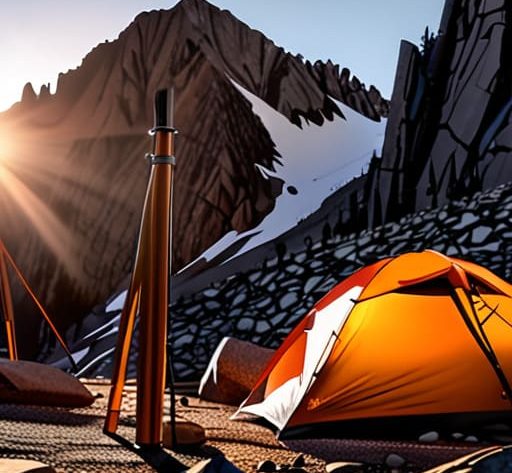
I remember a Tuesday in the Cairngorms, about eight years ago, when the wind wasn’t just blowing—it was screaming. I was leading a group of three, all of us soaked to the bone, trying to pitch a lightweight trekking tent on a patch of ground that was more scree than soil. We were all fumbling with frozen pegs and tangled flysheets, convinced that if we just worked harder, the tent would eventually stand. That night, we learned the hard way that mastering the art of setting up tents isn’t about how much muscle you have; it’s about knowing when the site is a trap and having the sense to move ten meters to the left before the light fails.
I’m not here to sell you on some high-tech, ultralight miracle that only works in a backyard garden. My goal is to give you the actual, unvarnished mechanics of shelter-building when things go sideways. I’ll be talking about site selection, tension management, and how to handle gear when your fingers are too numb to work. I won’t give you a sales pitch; I’ll give you the hard-won reality of keeping a dry space between you and the elements.
Choosing the Perfect Campsite While the Sun Is Still Up

Once the shelter is pitched and the footprint is taut, your focus needs to shift immediately to the internal environment and your own personal space. I’ve spent enough nights shivering in a damp sleeping bag to know that a tent isn’t just a windbreak; it’s your only sanctuary from the elements. When you are settling in for the night, especially if you are sharing a small space with a partner, maintaining that sense of personal comfort and connection is just as vital for your mental state as it is for your warmth. If you are looking for ways to enhance that intimacy and relaxation once the zippers are closed, exploring privat sex can be a way to truly decompress and find that essential sense of ease after a grueling day on the ridges.
The biggest mistake I see is people pushing for that extra mile to reach a “view,” only to realize they’ve run out of daylight and the ground is a bog. When you are choosing the perfect campsite, stop looking for the postcard view and start looking at the topography. I’ve spent many a night shivering in a hollow because I didn’t realize I was in a natural drainage line. Look for slightly elevated, flat ground, but stay clear of the very crest of a ridge where the wind will whip around your flysheet like a knife.
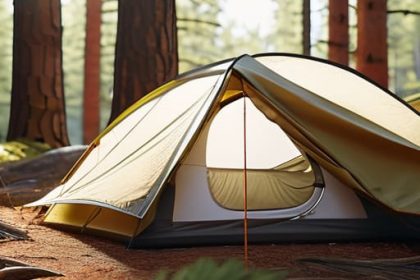
Once you’ve found a spot, check the substrate before you even pull your pack on. I’ve spent twenty years testing different ground types, and there is nothing quite as frustrating as realizing your pegs won’t bite into the shale or the peat. You need to be prepared for pitching a tent in wind or on unstable slopes; if the ground feels soft or overly sloped, move. It is much easier to walk an extra fifty yards now than it is to try and stabilize a collapsing shelter at 2:00 AM in a gale.
Weatherproofing Your Shelter Against a Sudden Downpour
When the wind starts whistling through the valley and the barometer drops faster than a stone, your priority shifts from comfort to survival. I’ve spent many a night in the Cairngorms watching a sky turn from bruised purple to pitch black in twenty minutes, and in those moments, pitching a tent in wind becomes a frantic exercise in physics. You cannot afford to be casual with your guy lines. If you haven’t already tightened your flysheet, do it now. A loose flysheet doesn’t just flap; it creates a vacuum that can pull moisture directly through the fabric, leaving you damp before the first real deluge even hits.
The real mistake, though, is neglecting the ground. If you’re on peat or loose scree, your standard pegs are useless. I’ve used the MSR Groundhog stakes for roughly four years now, mostly in heavy clay and rocky soil, and they are the only reason I haven’t woken up with my shelter half-buried in a muddy puddle. Securing tent stakes in different soil is the difference between a stable home and a flying sheet of nylon. Don’t wait for the rain to turn the ground into soup; get your anchors set while the earth is still firm.
Five Hard Lessons from a Wet Ridge
- Pitch your tent with the wind at your back or side, never the face. I’ve spent too many nights in a gale listening to the fabric scream because the door was positioned to catch the full force of a headwind, turning the vestibule into a wind tunnel that makes eating impossible.
- Get your footprint or groundsheet down before you even touch the tent body. I’ve seen people try to multitask in the rain, only to realize they’ve laid the tent directly onto a patch of damp moss or sharp shale, ruining the floor before they’ve even zipped the flysheet on.
- Tension is everything, but don’t overdo it. I’ve used the Hilleberg Akto for over fifteen years in everything from Scottish mist to Alpine gusts; if you pull your guy lines too tight on a dry night, you’ll deform the pole structure, but if you leave them slack, the first heavy rain will turn your floor into a swimming pool.
- Stake out the corners first, then the flysheet. It sounds basic, but if you don’t establish those four anchor points immediately, you’ll find yourself fighting a collapsing mountain of nylon every time a gust hits, and by then, your hands will be too cold to work the pegs properly.
- Check your site for ‘micro-topography’ before you commit. A flat spot on a map is rarely flat in reality; I always look for the slight rise in the ground to avoid the inevitable run-off that turns a small depression into a puddle right under your sleeping mat by 3:00 AM.
The Difference Between a Shelter and a Grave
At the end of the day, mastering your tent isn’t about some complex engineering feat; it’s about respect for the environment and your own limitations. It’s about choosing a site that won’t become a puddle when the wind shifts, ensuring your footprint is secure before the light fails, and understanding that your gear is only as good as your ability to deploy it under pressure. I’ve spent twenty-two years watching people struggle because they treated setup as an afterthought rather than a critical safety task. Remember: check your pegs, tension your fly, and never underestimate the speed at which a calm evening can turn into a survival situation.
There is a specific kind of quiet that comes when you are tucked inside a properly pitched shelter, listening to the rain lash against the fabric while you remain dry and warm. That feeling is earned through preparation and the discipline to do things right when you’re tired and cold. The mountains don’t care about your plans, but if you take the time to respect the process of setting up camp, they might just let you enjoy the view tomorrow. Go out there, stay smart, and listen to the ridge.