I once spent four hours crouched in a damp gorse thicket near the Cairngorms, waiting for a single pine marten, only to realize my “high-tech” thermal monocular was useless because I’d forgotten to account for the thermal bleed of the surrounding rocks. Most people think learning how to spot mammals at night is about buying the most expensive, glowing gadget on the market, but that’s a lie. If you’re standing there blinded by your own white light or staring at a screen that’s too bright for your pupils to adjust, you aren’t seeing wildlife; you’re just disturbing it.
I’m not here to sell you a shiny new piece of kit or promise you a cinematic encounter with a fox. I’m going to tell you how to actually use your senses, how to read the subtle shifts in the undergrowth, and which specific lights won’t turn you into a beacon for every creature in the valley. This is about the boring, essential details—the timing, the positioning, and the patience—that actually make the difference between sitting in the dark and actually seeing something move.
Table of Contents
Detecting Animal Eye Shine Without Scaring the Show
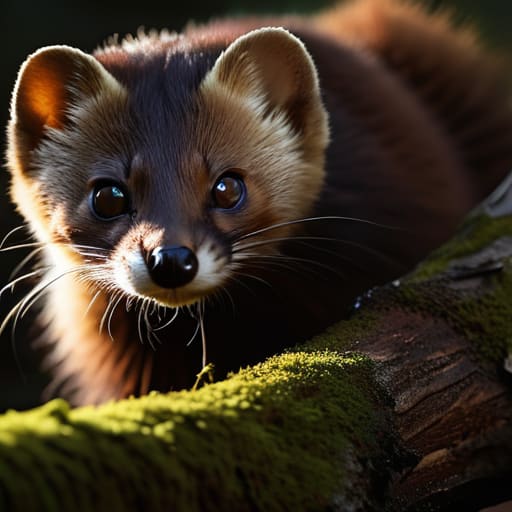
If you’re scanning the treeline and see a sudden, sharp glint, don’t immediately reach for your high-lumen torch. That’s the quickest way to turn a moment of discovery into a frantic scramble as the animal bolts. Most of what you’ll see is the tapetum lucidum reflecting your light back at you, but if you hit them with a white beam, you’ve effectively blinded them for several minutes. I’ve spent countless nights in the Highlands where a single misplaced flash of light meant the difference between watching a pine marten navigate a fallen log and watching a dark patch of forest disappear.
For better results, I recommend using red light for wildlife viewing. I’ve carried my Petzl Actik Core for five years now, mostly in damp, low-light conditions, and the red mode is indispensable. It doesn’t disrupt the animals’ night vision as severely, allowing you to get close enough to actually distinguish a shape. It’s a matter of wildlife observation etiquette as much as practical seeing; if you want to observe behavior rather than just seeing a pair of eyes and then nothing, you have to learn to work within their visual spectrum.
Navigating Nocturnal Mammal Habitats When the Sun Drops
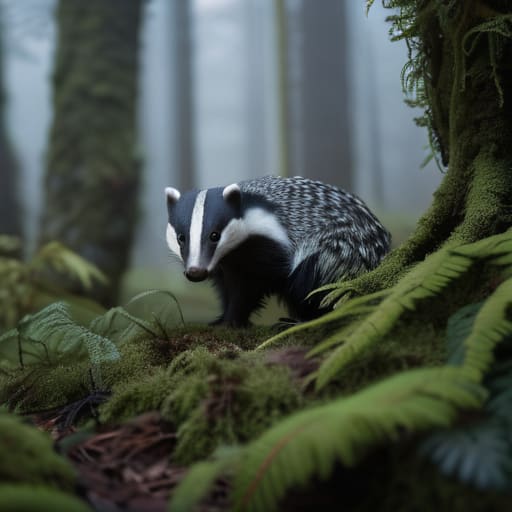
When you’re moving through nocturnal mammal habitats, the biggest mistake is thinking you can just stomp through the undergrowth and expect to see anything. Most of the animals you’re looking for—badgers, foxes, or even a shy pine marten—have ears that pick up a snapping twig from fifty yards away. If you aren’t moving with intention, you aren’t observing; you’re just a loud, vibrating intruder. I’ve spent many a damp evening in the Cairngorms trying to find signs of activity, and I’ve learned that the best way to see anything is to stop moving entirely for ten minutes. Let the landscape settle back into its own rhythm.
Once you’ve found a spot, your approach to light becomes your most important tool. I’ve used the Petzl Tikka with a red-light setting for about five seasons now, mostly on late-season ridge walks where I need to check my map without bleaching out my night vision. Using red light for wildlife viewing is non-negotiable if you want to maintain your natural ability to see shapes in the dark. White light is a blunt instrument that signals your presence to everything within a mile, effectively ending any chance of meaningful nocturnal animal identification.
Five Ways to Actually See Something Before You Head Home
- Stop moving once you find a spot. I’ve spent years watching people stomp through the undergrowth, thinking they’re being quiet, but the vibration alone is enough to send a badger or a fox bolting for a sett. Find a comfortable position, sit on your pack if you need to, and wait. Most mammals will settle back into their routine once they realize you aren’t a moving threat.
- Master the art of the “soft” light. I’ve used the Petzl Actik Core for about four years now, mostly on damp, low-light evening traverses, and while it’s reliable, you shouldn’t lead with it. If you blast a creature with a high-lumen beam, you’ll blind them and they’ll vanish. Use a red-light setting or a very low dim to scan; it preserves your night vision and gives the animals a chance to react to you before you’ve already startled them.
- Listen for the “wrong” sounds. You aren’t just looking for eyes; you’re looking for the absence of sound or the sudden interruption of it. When the crickets or the local birds suddenly go quiet, something is moving through that territory. It’s usually a predator or a larger mammal, and if you’re paying attention to the silence, you’ll often see the movement in the periphery before you ever see the animal itself.
- Use the terrain to your advantage. Don’t just stare straight ahead into the dark. Position yourself near an edge—a hedgerow, a rock outcrop, or the margin of a woodland. Mammals rarely walk through the middle of an open field at night; they use the cover. If you sit with your back to a solid feature and face the transition zone between cover and open ground, you’re much more likely to catch a silhouette.
- Check the wind direction constantly. This is the one most people forget until they’re standing in a silent forest wondering why they haven’t seen a thing. If the wind is blowing from you toward the habitat, you are essentially broadcasting your scent and the sound of your breathing directly to every nose in the vicinity. Always try to approach or sit downwind of where you think the activity is.
## The Cost of Being Too Loud
You can have the most expensive thermal optics on the market, but they won’t matter a bit if you’re stomping through the undergrowth like a lost tourist; spotting anything after dark is less about what you’re looking through and more about your ability to sit still, stay quiet, and realise that the moment you think you’ve arrived, the animal has already decided you’re a threat and vanished.
Bridget Halloran
Respect the Dark
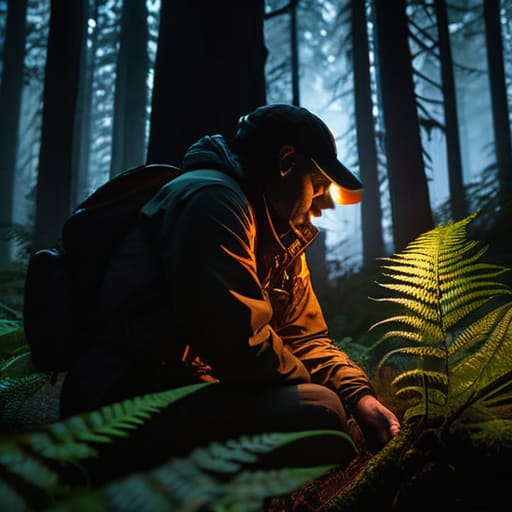
If you’ve taken anything away from this, let it be that nocturnal spotting is less about high-tech gadgets and more about disciplined patience. You need to manage your light discipline so you aren’t blinding the very creatures you’re trying to observe, and you need to be reading the terrain—not just looking for eyes, but listening for the snap of a twig or the sudden silence of insects. Remember, the moment you feel like you’re “hunting” rather than observing, you’ve already lost the thread. Keep your movements slow, your light low, and always, always keep an eye on the clock; the biggest mistake I see is someone staying out twenty minutes too long because they saw a single movement, only to find themselves navigating a technical descent in pitch black with a dying headlamp.
There is a specific kind of quiet that only exists when the sun is down and the rest of the world is tucked away. It’s a heavy, living silence that makes you feel like a guest in someone else’s home. When you finally catch that fleeting glimpse of a fox’s shadow or the amber glint of an owl’s eyes, it feels earned because you didn’t force it. The night doesn’t owe you a show, but if you approach it with humility and the right kit, it might just let you in on its secrets. Just don’t forget to turn back while you still have enough light to find your way home.
Frequently Asked Questions
Is it better to use a red-light headlamp to avoid spooking the animals, or will that just make it impossible for me to see anything?
It’s a trade-off, but don’t go purely red if you’re actually trying to navigate. I’ve used the Petzl Actik Core for three seasons in everything from damp woodland to freezing scree; the red mode is fine for checking a map or a compass without blowing your night vision, but it won’t help you spot a fox in the undergrowth. Use the low white setting for scanning—it’s less jarring—but keep the red handy for when you’re stationary.
What kind of weight and durability should I look for in a pair of binoculars if I'm planning to use them in damp, low-light conditions?
If you’re out in the damp, weight becomes a secondary concern to seal integrity. I’ve carried the Nikon Monarch M7 for three years through heavy mist and constant drizzle in the Lake District; they weigh 595g, which is manageable for a long day, but the nitrogen purging is what matters. If they fog internally because of a temperature drop, you’re just looking at two blurry grey circles. Don’t skimp on the waterproofing.
How can I tell the difference between a fox's eye shine and something larger, like a deer, when the light is hitting them at an angle?
It comes down to height and the “quality” of the glow. I’ve spent plenty of nights scanning ridgelines when the light hits at an angle, and a fox’s eyes are low—usually around knee height—and produce a sharp, concentrated amber pinprick. A deer’s eyes sit much higher, and because of their larger tapetum lucidum, the light seems to bloom or smear more broadly. If the glow is waist-high and feels “wider,” it’s almost certainly a deer.