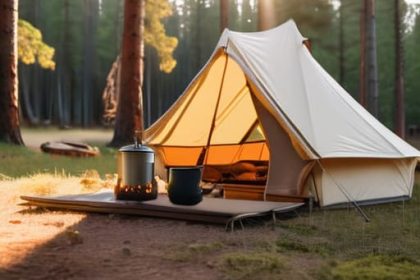
I remember a group I led back in 2014, a couple of bright-eyed lads who had spent a small fortune on the latest ultralight titanium gear but hadn’t spent a single minute reading a topographic map or checking a cloud base. They were so focused on the weight of their packs that they completely ignored the fact that the temperature was set to drop ten degrees the moment the sun dipped behind the ridge. They learned the hard way that knowing how to plan a first overnight trip isn’t about which expensive brand of stove you buy; it’s about understanding the gap between a sunny afternoon and a freezing, sodden night on a plateau.
I’m not here to sell you on a lifestyle or a specific brand of overpriced nylon. My goal is to strip away the marketing fluff and give you the unvarnished reality of what actually matters when you’re miles from the nearest road. I’ll be talking about the boring, essential stuff—layering for actual conditions, timing your movement so you aren’t pitching tents in the dark, and how to read a forecast that isn’t just a generic sun icon. This is about making sure your first experience is a memory you actually want to keep, rather than a survival situation you barely escaped.
Table of Contents
Choosing a Nearby Destination Before the Weather Turns

When you’re starting out, your instinct is to aim for the most dramatic landscape you can find on a map. Resist that. For your first foray, choosing a nearby destination is less about being unadventurous and more about managing your margin for error. I want you within a two-hour drive of a reliable road or a well-marked trailhead. If you’re attempting a remote valley and realize two hours in that you’ve forgotten your stove or the wind has shifted to a gale, you need to be able to bail out without a multi-day logistical nightmare.
I’ve seen too many beginners get stuck because they underestimated the transit time between the trailhead and their campsite. Keep the geography simple. If you’re overcoming travel anxiety for beginners, the best remedy is a short distance between you and a bit of civilization. I spent three years as a ranger in the Lake District, and I can tell you that the most successful first-timers are the ones who pick a site they can reach easily, even if the clouds start dropping by mid-afternoon.
Overcoming Travel Anxiety for Beginners and Staying Grounded

The mental hurdle is often much higher than the physical one. I’ve seen plenty of people stand at the trailhead, staring at a map with a look of pure paralysis, not because they lack the fitness, but because they are terrified of the “what ifs.” Overcoming travel anxiety for beginners isn’t about suddenly feeling fearless; it’s about replacing vague dread with a concrete plan. If you are worried about forgetting something crucial, stop trying to memorize your kit and instead rely on a physical overnight travel essentials checklist. I’ve used a laminated version of my own list for over fifteen years, through everything from mild Lakeland mist to freezing North Wales gale-force winds, and it works because it moves the responsibility from your racing brain onto the paper.
Once you have the list, focus on the logistics of the journey itself. Anxiety thrives in the gaps where you don’t have information. Know exactly where your first campsite is, how much the fuel or train fare will cost, and exactly how much daylight you have left to reach it. If you can control the small variables—the weight of your pack and the timing of your arrival—the larger unknowns become much easier to manage.
The Boring Bits That Keep You Safe

- Don’t trust a sunny morning. I’ve spent twenty years watching people pack for a summer stroll only to find themselves shivering on a ridge by 4 PM because they ignored a shifting pressure system. Check the mountain forecast—not the town one—and if the wind speeds look even slightly higher than you’re comfortable with, pick a more sheltered spot.
- Layering is a science, not a suggestion. I’ve worn my Montane Vortex jacket through three seasons of horizontal rain in the Lake District and it hasn’t failed me yet, but a single heavy cotton hoodie will kill you once you stop moving. Stick to merino or synthetics; you need moisture management, not just warmth.
- Test your kit in the garden before the woods. I don’t care how many five-star reviews a tent has; if you haven’t spent a night in it, you don’t know how it handles a gust or how much effort it takes to pitch in the dark. I spent four nights testing my current lightweight tarp in high winds last October specifically to find its breaking point.
- Respect the daylight, even if you feel energetic. Most beginner mistakes happen in that grey, awkward window between sunset and total darkness when people realize they haven’t actually set up their camp yet. Plan to be settled, fed, and under cover at least an hour before the light fails.
- Pack for the worst-case scenario, not the best. I always carry a lightweight emergency bivvy—I’ve used my old SOL bivvy for six hours in a sudden downpour three years ago when a client twisted an ankle—because the gap between a fun trip and a survival situation is often just one unplanned delay.
The Cost of Optimism
Most people plan their first overnight trip around the best-case scenario, but I plan mine around the worst one. The difference between a successful night under the stars and a miserable, shivering lesson in poor judgment is usually just one optimistic decision made when the clouds were still low.
Bridget Halloran
The Margin Between Success and a Long Walk Back

At the end of the day, planning your first overnight isn’t about checking off a gear list or finding the most Instagrammable campsite. It’s about managing the variables you can control so the ones you can’t—the sudden wind shift on a ridge or the fading light—don’t catch you off guard. You need to pick a destination that isn’t a logistical nightmare, keep your travel expectations grounded, and most importantly, respect the forecast more than your own desire to reach a summit. If you’ve chosen your site wisely and packed the layers you actually need, you aren’t just hoping for a good trip; you are actively engineering one.
There is a specific kind of quiet that you only find when the sun goes down and the only thing between you and the elements is a bit of nylon and a well-placed tent peg. It’s a hard-earned peace, and it’s much sweeter when you know you’re prepared for the reality of the terrain. Don’t let the fear of making a mistake keep you indoors, but don’t let optimism override your common sense either. Get out there, keep your kit light, and listen to the hills—they have a way of telling you exactly what you need to know if you’re paying attention.
Frequently Asked Questions
How much weight can I realistically carry on my back without ruining my knees or losing my pace?
I’ve carried everything from 8kg day packs to 22kg expedition loads, and the math changes when the terrain gets technical. For a first overnight, aim for 10–12kg. I’ve spent three days straight on the Cairngorms with a 14kg pack in sleet, and my knees felt every gram on the descents. If you exceed 15% of your body weight, you aren’t hiking anymore; you’re just managing an injury. Keep it light.
What are the absolute minimum layers I need to avoid hypothermia if the temperature drops unexpectedly at night?
You need three specific layers: a moisture-wicking base (merino is best; I’ve worn the Icebreaker 200 series for three years in damp conditions), a mid-layer for loft, and a windproof shell. Don’t rely on a sleeping bag alone. If you’re damp when the temperature drops, you’re already losing the battle. I’ve seen too many people sit in a dry bag while shivering because they didn’t have a dedicated insulating layer to trap their own heat.
How do I actually read a mountain forecast to tell the difference between a light drizzle and a genuine ridge-line gale?
Stop looking at the icons; they’re useless. Look at the wind speed and gust data, specifically the “feels like” temperature. A 20mph wind in the valley is a nuisance; 40mph gusts on a ridge will strip the heat from your body in minutes. Check the “cloud base” too. If it’s dropping toward the summit, that drizzle becomes a horizontal, visibility-killing soak. If the gusts are hitting 40mph, don’t be optimistic—stay low.