I remember a group I was leading in the Cairngorms back in 2014; we had plenty of streams, but because everyone was obsessed with carrying those expensive, high-tech UV pens that require perfect clarity, they ended up dehydrated and lightheaded by mid-afternoon. People tend to treat hydration like a luxury gear problem rather than a basic biological reality, and frankly, most of the advice you find online is just marketing fluff designed to make you buy more plastic. This isn’t a complete guide to water in the outdoors meant to sell you a lifestyle; it’s about the reality of managing your most precious resource when the weather turns and your energy starts to flag.
I’m not going to give you a list of shiny gadgets that only work in a laboratory. Instead, I’m going to tell you what actually works when you’re standing in a bog or trying to filter silt out of a mountain pool at dusk. I’ll tell you the weight of the gear, exactly how many miles I’ve put it through, and when to stop searching for a spring and just turn back. We’re going to focus on the practicalities of sourcing, treating, and carrying water so that you spend your time looking at the landscape, not staring at the bottom of an empty bladder.
Table of Contents
Hiking Hydration Strategies That Actually Work
Most people approach hydration as a reactive task—waiting until they feel that dry, scratchy sensation in the back of the throat before reaching for a bottle. By then, you’re already behind. In my experience, especially when navigating long, exposed ridges where the wind pulls moisture from you faster than you realize, you need proactive hiking hydration strategies that rely on a schedule rather than thirst. I’ve found that sipping small amounts every twenty minutes is far more effective for maintaining steady output than gulping a litre every three hours, which usually just results in a heavy stomach and a frequent need to stop.
When it comes to gear, I don’t care much for the marketing hype surrounding “smart” bottles. I’ve relied on the Sawyer Squeeze for over four years now, using it in everything from silt-heavy streams in the Highlands to clearer mountain runoff. It’s a lightweight piece of kit, weighing about 85g, and while it’s a staple in my pack, you have to be disciplined. Using portable water filtration systems is your primary line of defense for preventing waterborne illnesses, but no filter replaces the discipline of actually carrying enough capacity to get you to the next source.
Preventing Waterborne Illnesses Before They Start
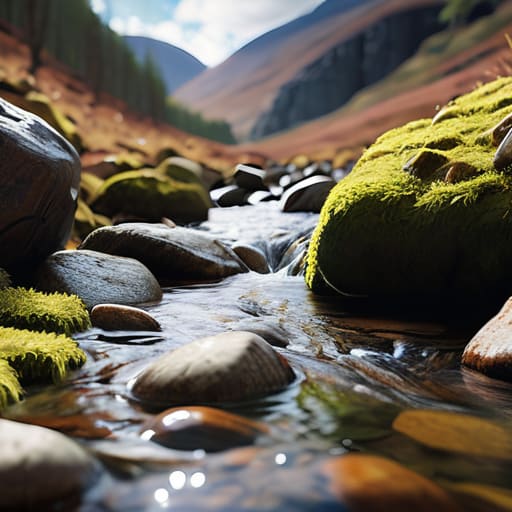
I’ve spent more time than I care to admit sitting by a stream, watching a group realize that “clear” doesn’t mean “clean.” I remember a trip in the Cairngorms back in 2014 where a client insisted a mountain spring was safe because it looked pristine; three days later, we were managing dehydration and stomach cramps in a tent during a gale. That is the reality of preventing waterborne illnesses. You cannot rely on your eyes. Whether you are dealing with microscopic Giardia or something more recent in the runoff, the visual clarity of the water is entirely irrelevant to its safety.
When choosing between different wilderness water purification methods, I tend to look at the trade-off between weight and reliability. I’ve carried the Sawyer Squeeze for six years now, through everything from silty glacial melt to heavy mountain runoff; it’s reliable, but you have to be diligent about cleaning it, or it’ll clog the second you hit a silt-heavy stream. If you are moving through areas with high livestock presence, I always suggest a two-step approach: a filter for the heavy lifting, followed by a chemical treatment for the peace of mind. Never assume the mountain is doing the cleaning for you.
Five Rules for Not Running Dry When the Weather Turns
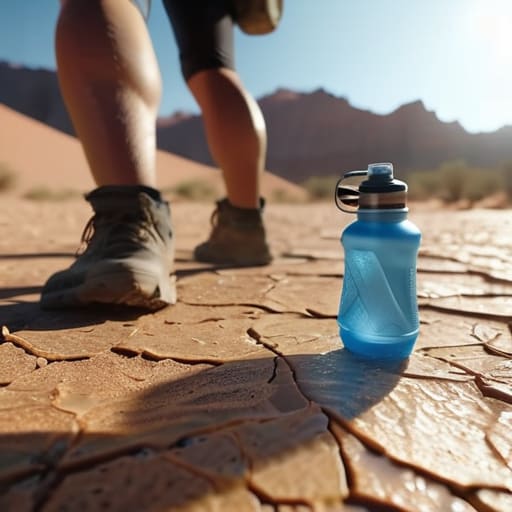
- Always carry more than your calculated need for the planned route. I’ve seen too many people plan for a six-hour push in mild weather, only to have a sudden drop in temperature and a headwind turn that into a ten-hour slog; if you’re stuck in a bivouac because the mist rolled in, that extra liter is the difference between a long night and a medical emergency.
- Treat every source as if it’s contaminated, regardless of how clear it looks. I spent nine years as a ranger watching people collect water from streams that looked pristine but were downstream from sheep grazing; “clear” doesn’t mean “safe,” and a bout of Giardia will end your trip much faster than a blister will.
- Don’t wait for thirst to dictate your drinking schedule. By the time your throat feels parched, you’re already starting to descend into dehydration, which affects your decision-making—and in my experience, poor decisions on a ridge are usually preceded by a lack of fluids and a lapse in concentration.
- Test your filtration system in a controlled environment before you’re halfway up a mountain. I’ve used the Sawyer Squeeze for over four years in everything from silt-heavy lowland streams to mountain runoff, and while it’s a workhorse, you need to know exactly how much force it takes to squeeze it and how to clear it before you’re relying on it in a gale.
- Carry a lightweight backup method, like chemical purification tablets. They weigh next to nothing and don’t rely on mechanical parts that can freeze or break; I keep a small strip of Katadyn Micropur in my first aid kit because if my primary filter fails in the middle of a multi-day trek, I’m not going to spend the night praying for rain.
The Cost of Being Optimistic
I’ve seen too many people treat water management like an afterthought, only to realize halfway up a ridge in a sudden downpour that they’ve run dry and the temperature is dropping. You don’t wait until you’re thirsty to think about your next liter; you plan your hydration around the terrain and the clock, because by the time the thirst hits, your decision-making is already starting to fail.
Bridget Halloran
The Last Sip Before the Descent
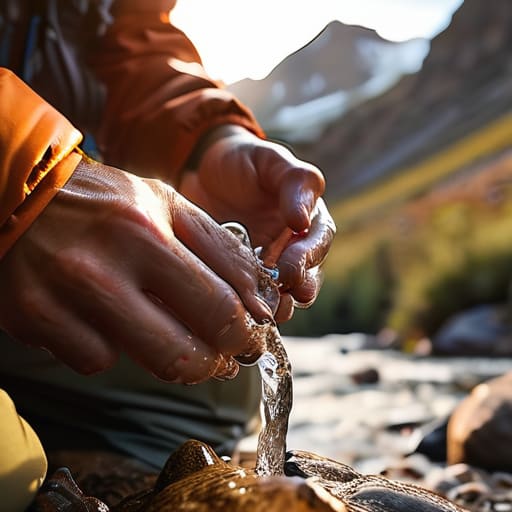
At the end of the day, managing your water isn’t about following a complex system; it’s about respecting the physics of your own body and the environment around you. You need to have your filtration method ready before you’re too exhausted to operate a small valve, and you need to be drinking before the headache sets in. Whether you are carrying a lightweight squeeze filter that I’ve relied on for every high-altitude trek over the last three seasons or a heavy-duty pump for silt-heavy streams, the principle remains the same: never assume a source is safe just because it looks clear, and never assume you have enough time to find a spring once the light begins to fail. Water management is decision management, and the best decisions are the ones made while you still have the energy to execute them.
There is a specific kind of quiet that comes when you finally settle into your tent after a long day, the sound of a trickle nearby, and the knowledge that you are properly hydrated and safe. The mountains don’t care about your itinerary or how much gear you’ve bought, but they do respond to your preparation. If you treat your water supply with the same respect you give a changing weather forecast, you remove one more variable from the equation of survival. Go out there, find the high ridges, and watch the raptors circle, but do it with a full bladder and a full canteen.
Frequently Asked Questions
How much weight should I actually be carrying in extra water for a single-day ridge walk versus a multi-day trek?
For a single-day ridge walk, don’t overpack. I’ve carried 2kg of water on a dry scramble only to realize it was dead weight I didn’t need; stick to 1–1.5 litres if you’re moving fast. For multi-day treks, weight is a different calculation. I carry a base of 2 litres and rely on my Sawyer Squeeze to top up at streams. It’s better to carry a lighter, reliable filter than to lug five kilos of water that’ll break your knees by noon.
At what point in a trip does a filtration system become more important than just carrying more liters?
The moment you stop planning your route around known taps and start relying on stream crossings, the math changes. I’ve carried 3-litre bladders on dry ridge scrambles, but the second you’re heading into high-rainfall areas or long, valley-bottom traverses, weight becomes your enemy. I’ve used my Sawyer Squeeze for four seasons of heavy use in peat-stained Scottish burns; it’s lighter than carrying an extra kilo of water and keeps you from making that one optimistic decision that ends in a week of fever.
How do I know when a water source is actually safe to use if the weather has been particularly heavy or stagnant?
If the rain has been relentless for forty-eight hours, assume every stream is a soup of runoff and animal waste. I’ve seen clear-looking pools turn toxic after a storm because the silt masks what’s actually happening upstream. If the water is stagnant, don’t even bother looking at it; it’s a breeding ground. My rule is simple: if it’s been heavy rain, treat it like it’s contaminated. Never trust a “clear” look.