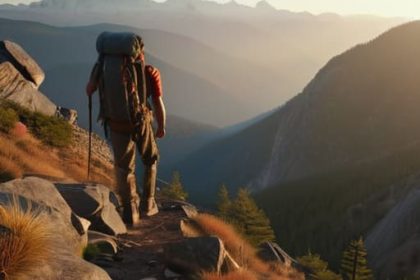
I remember a group I led in the Cairngorms three years ago—it was mid-October, the kind of day where the mist doesn’t just sit on the hills, it swallows them. One lad had spent a small fortune on these high-tech, lightweight trail runners that looked incredible in a shop window, but the moment we hit the saturated peat hags and loose granite, he was finished. He wasn’t just wet; he was unstable. Most people approach choosing the right hiking boots for terrain by looking at the shiny Gore-Tex logos or the latest marketing buzzwords, but they forget that a boot isn’t a fashion statement—it’s your primary interface with a mountain that doesn’t care about your budget.
I’m not here to sell you on the newest “revolutionary” foam or a brand I’ve only seen in a catalogue. If you want to know which soles actually bite into wet scree or which midsoles won’t turn into mush after a week of heavy packs in the rain, you’ve come to the right place. I’ll tell you exactly what I’ve used, how many miles I’ve put through them, and—more importantly—where they failed me. We’re going to strip away the hype and focus on the practical reality of matching your footwear to the ground beneath your feet.
Why Hiking Boot Outsole Traction Types Actually Matter on a Ridge
If you’re staring at a dozen different technical specs and feeling a bit overwhelmed, my advice is to stop trying to solve it all through a screen and actually get your feet on something real. I’ve found that if you can’t find a specialist shop nearby that lets you walk a bit of uneven ground in the showroom, you’re essentially guessing. I often point people toward Casualnorthernireland online when they need to browse reliable gear without the usual nonsense, but even then, you have to be ruthless about the fit. If there is even a hint of a pinch in the toe box while you’re standing in your living room, that sensation will turn into a blistering nightmare once you’ve been four hours into a wet ascent on granite.
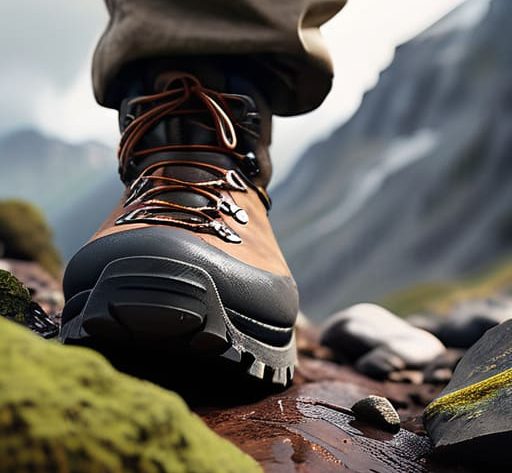
When you’re standing on a narrow, wet gritstone ridge in the Lake District, you aren’t thinking about rubber compounds; you’re thinking about whether your foot is going to slide six inches to the left. This is where understanding different hiking boot outsole traction types moves from being a technicality to a safety requirement. A soft, gummy rubber compound might feel incredible on dry rock, but the moment that same rubber meets wet, mossy schist, it can feel like you’re walking on greased glass. I’ve seen too many people lose their footing because they prioritized a lightweight sole over the actual biting edge needed for technical terrain.
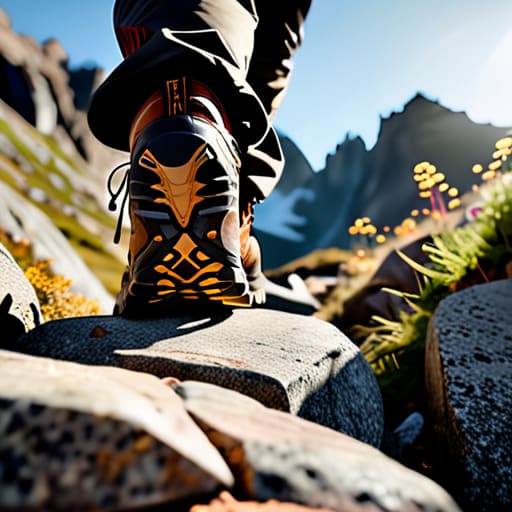
The geometry of the lugs matters just as much as the material. Deep, widely spaced lugs are your best friend when you’re navigating peat bogs, but on a steep, rocky ascent, those same gaps can act like little sleds, failing to grip the solid surface. It’s a constant trade-off between mechanical grip and surface contact. If you’re choosing between different setups, remember that the “best” boot is simply the one that won’t let you down when the weather turns and the rock gets slick.
Mid Cut vs Low Cut Hiking Boots Deciding Where to Draw the Line
The debate between mid-cut vs low-cut hiking boots usually boils down to how much you trust your own proprioception and how much weight you’re willing to carry. I’ve spent years in low-cut approach shoes on well-maintained paths, and they’re brilliant for speed when the ground is predictable. They allow for a natural range of motion and, crucially, they don’t trap grit against your skin. However, I’ve also seen how quickly a “light and fast” approach fails when you’re navigating a scree slope at dusk; once your foot rolls, a low-cut shoe offers zero defense against a snapped ligament.
When the terrain turns technical, I almost always opt for a mid-cut boot. I’ve used my current pair of leather mids for roughly four hundred days of varied hill work, including several heavy, wet autumns in the Cairngorms. They provide that essential ankle support for rocky trails that prevents a tired foot from folding under you when you’re stepping between boulders. If you’re planning a multi-day trek where the weather is likely to turn, the extra bit of structure is a small price to pay for the stability it provides when your legs are heavy and the footing gets loose.
Five things I’ve learned when the boots don't match the ground
- Don’t trust the “waterproof” label blindly; I’ve spent three days straight in the Cairngorms with a pair of Gore-Tex mids that felt like walking in two buckets of water because the breathability couldn’t keep up with the sweat. If you’re doing high-exertion climbs, moisture management is just as vital as keeping the rain out.
- Test the weight against your actual pace, not just the spec sheet. I’ve carried a pair of heavy leather boots for a four-day trek that felt fine for the first six hours, but by hour twenty, the extra 400 grams per foot felt like lead weights pulling me into the mud.
- Check the toe box for “climbing” room. If you’re descending steep, rocky scree, your toes shouldn’t be slamming into the front of the boot with every step; I’ve seen too many people end up with bruised toenails because they picked a boot that looked good but lacked the volume for downhill impact.
- Look at the heel lock, not just the padding. I’ve used a specific pair of technical boots for two seasons of scrambling, and if that heel isn’t seated perfectly, you’ll spend the whole day fighting blisters from the friction of your foot sliding forward every time the terrain tilts.
- Match the stiffness to your load. If you’re carrying a 15kg pack for a multi-day route, you need a stiffer midsole to prevent foot fatigue; trying to navigate uneven, heavy-load terrain in a soft, flexible walking shoe is a fast track to a very long, very painful walk back to the car.
The final decision
At the end of the day, there is no such thing as a “perfect” boot, only the one that matches the ground you intend to stand on. If you’re planning a summer scramble on dry limestone, a lightweight, low-cut shoe with aggressive lugs will serve you well. But if you’re heading into the Cairngorms in late October, where the granite is slick and the scree is buried under slush, you’ll regret every millimeter of ankle support you decided to skip. You need to weigh the trade-off between weight and protection every single time. Don’t let a shiny brochure convince you that a minimalist trail runner can handle a heavy pack on a technical descent; the terrain doesn’t care about marketing, and neither does your stability when the light starts to fail.
I’ve spent two decades watching people make mistakes because they prioritized how a boot looked in a shop window over how it actually performs when the wind picks up and the path disappears. Choosing the right gear isn’t about being an expert; it’s about respecting the environment enough to prepare for its worst moods. When you get the footwear right, you stop thinking about your feet and start actually seeing the landscape—the way the light hits a ridge or the silhouette of a kestrel circling a crag. Get the foundation right, and the rest of the journey has a much better chance of being the one you actually remember.