I remember standing in a sodden, waist-deep peat bog back in 2014, trying to explain to a very frustrated group of walkers why we couldn’t simply “cut across” that field to save twenty minutes. They weren’t being malicious; they just thought a map was a suggestion rather than a legal boundary. People often think they need a law degree or a massive, expensive guidebook to navigate the landscape, but a complete guide to access and rights of way shouldn’t be about memorizing statutes. It’s actually about common sense and knowing exactly where the public’s permission ends and a farmer’s livelihood begins.
I’m not here to give you a lecture on legislative jargon or repeat what a government brochure tells you. Instead, I’m going to give you the practical reality of what it means to move through the hills without causing a row or finding yourself on the wrong side of a fence. I’ll tell you how to read a map for actual paths, how to handle the grey areas of access, and how to respect the land so it stays open for everyone. No fluff, just the stuff that keeps you moving and out of trouble.
Table of Contents
Mapping Public Footpaths Knowing Where You Actually Belong
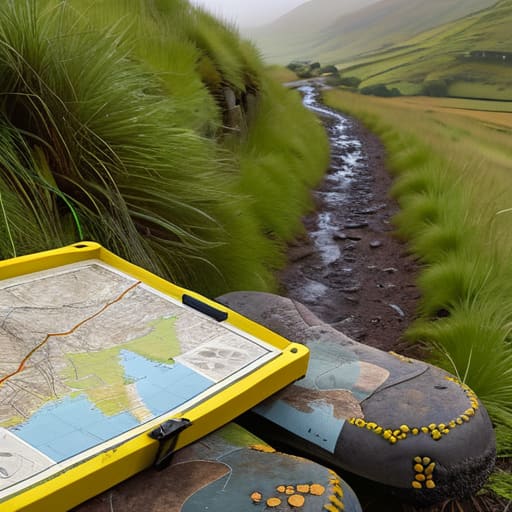
I’ve spent more hours than I can count staring at OS maps in the rain, trying to figure out if a dashed line meant a clear path or a scramble through a peat hag. There is a massive difference between understanding waymarked paths and actually knowing the legal reality of where you are standing. A bright yellow arrow on a post tells you where the path is intended to go, but it doesn’t always tell you the nuances of public rights of way legislation. If you rely solely on a trail marker without checking your map, you might find yourself drifting onto private grazing land or, worse, into a sensitive nesting area I’ve been tracking for years.
When you are mapping public footpaths for a long route, you have to look beyond the lines. I always check the distinction between a public footpath—where you have a right to walk—and open access land. On the latter, you have more freedom, but the rules change depending on the terrain and local management. I’ve seen too many groups get stuck in a confrontation with a farmer because they mistook a desire line for a legal route; it’s an awkward way to spend an afternoon, and it rarely ends well for the hiker.
Understanding Waymarked Paths and the Reality of the Terrain
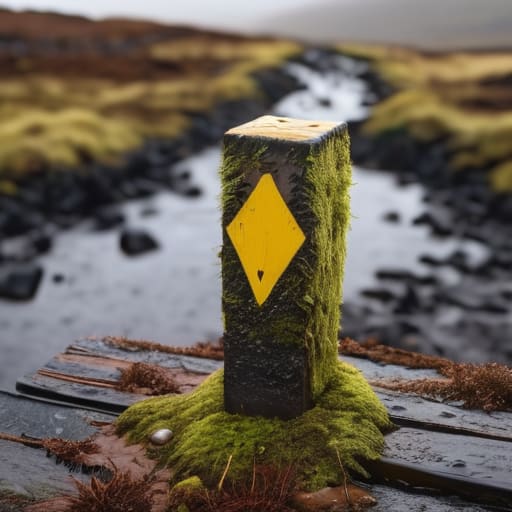
A waymarker—that little yellow arrow on a post or a painted stripe on a stone—is a promise, but it isn’t a guarantee of comfort. When you are understanding waymarked paths, you have to remember that the person who put that sign up wasn’t thinking about how a boggy peat hag or a loose scree slope feels under a heavy pack at 4:00 PM in a drizzle. A path might be legally designated, but that doesn’t mean it’s easy. I’ve seen plenty of hikers follow a clear line on a map straight into a drainage ditch because they assumed a “path” meant something resembling a sidewalk.
You also need to respect the distinction between a managed track and the more rugged stretches of open access land. On a waymarked route, you are generally expected to stick to the established line to minimize erosion and protect the ground. If you start wandering off-track to avoid a puddle, you might inadvertently be stepping into sensitive nesting sites or damaging delicate flora. It’s about finding that balance between following the intended route and being mindful of how your presence affects the landscape.
Five Rules for Staying on the Right Side of the Law (and the Locals)
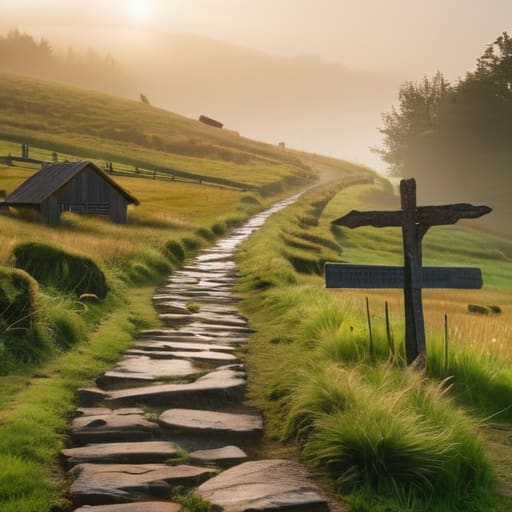
- Don’t rely on a single app to tell you where you can walk. I’ve used the OS Maps app for about four years now in everything from gale-force winds on the Cairngorms to humid valley walks, and while it’s decent, digital signals fail when you actually need them. Always carry a physical 1:25,000 paper map; it doesn’t run out of battery when the temperature drops.
- Learn to read the gate, not just the sign. If a gate is closed, it’s usually for a reason—livestock, nesting birds, or erosion control. I’ve spent years repairing footpaths that were completely destroyed because people thought they knew a “shortcut” through a sensitive area. If there’s a sign saying ‘Keep to Path,’ it isn’t a suggestion; it’s a way to prevent the landscape from turning into a bog.
- Respect the “Right to Roam” limitations. Just because you have access doesn’t mean you have permission to camp wherever you please. I’ve had many conversations with landowners that could have been avoided if people understood that access rights are about movement, not necessarily about setting up a tent and leaving cooking stains on a hillside.
- Watch your noise and your light. When you’re navigating a ridge at dusk or setting up camp, keep the noise down. I’ve spent a decade logging raptor nests, and I can tell you that a group of hikers shouting or using high-lumen headlamps right next to a nesting site can disrupt a bird’s entire breeding cycle. Be a ghost in the landscape.
- If you find a broken stile or a gate that won’t latch, don’t just walk away. It sounds small, but if you leave a gate open, you’ve potentially let sheep onto a road or into a field they shouldn’t be in. I’ve spent many a rainy afternoon fixing what people left behind; if you can’t leave it as you found it, you’re part of the problem.
The Cost of Getting it Wrong
“People treat access rights like a suggestion, but when you’re five miles from the nearest road and the mist is dropping, knowing exactly which line is a public path and which is a farmer’s private field is the difference between a long walk and a very uncomfortable conversation with the law.”
Bridget Halloran
Respecting the Line Between Access and Impact
At the end of the day, navigating rights of way is about more than just staying on the marked line to avoid a lecture from a landowner; it is about understanding the delicate balance between our freedom to roam and our responsibility to the land. We have covered the necessity of checking your maps before the light fails, the distinction between a waymarked path and a mere desire line, and the legal reality of where public access actually stops. If you can master the basics—knowing your maps, staying on the established tracks when through farmland, and respecting the boundaries that keep local communities and wildlife undisturbed—you are already ahead of ninety percent of the people I see stumbling around the hills. The goal is to leave no trace of your presence, ensuring that the paths remain open and usable for the next person who comes looking for a bit of peace.
The hills don’t care about your itinerary, and the landscape certainly doesn’t care about your sense of entitlement. But when you approach the outdoors with a sense of informed stewardship, you find that the landscape opens up in a much more rewarding way. There is a profound, quiet satisfaction in walking a ridge or a valley knowing you belong there, not because you are forcing your way through, but because you have taken the time to understand the rules of the terrain. So, check your compass, double-check your boundaries, and then get out there. The mountains are waiting, and if you respect them, they will continue to offer you everything they have.
Frequently Asked Questions
What happens if I accidentally wander off a marked path and end up on private land?
If you realize you’ve strayed onto private land, don’t panic, but do stop. Don’t try to “shortcut” your way back through a field; that’s how you trample crops or disturb nesting birds. The best move is to backtrack immediately to the last point you were certain of. If you’ve crossed a fence or a gate, close it behind you. It’s about minimizing your footprint and avoiding a confrontation when you’re already feeling lost.
How do I tell the difference between a legitimate public right of way and a farm track that looks like one?
The easiest way to tell is to look for the physical markers, but don’t trust them blindly. A proper right of way usually has a fingerpost or a waymarker at a junction. If it’s just a well-trodden line through a field, check your OS map. Farm tracks often look more “official” because they’re wide and solid, but they frequently lead straight to a locked gate or a working yard. If the map doesn’t show a line, it isn’t a path.
If a gate is locked or a stile is broken, am I legally allowed to climb over or go around it?
If a gate is locked or a stile is broken, the law doesn’t change just because the infrastructure has. You still have the right to follow the path, but you must do so responsibly. If a gate is locked, look for a gap in the fence or a nearby kissing gate; don’t climb over a fence if there’s a better way. If a stile is broken, be careful—it’s a trip hazard, not an invitation to scramble.