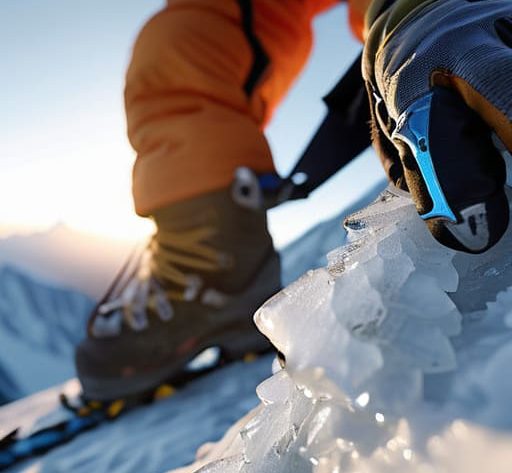
I remember a Tuesday in late November, somewhere on a north-facing slope in the Cairngorms, when the wind was screaming and the visibility had dropped to about three meters. I was leading a group of three, and one of them had spent a small fortune on the latest carbon-fiber mountaineering tools, only to stand there, frozen, staring at their feet because they hadn’t a clue how to use crampons and ice axe in anything other than a controlled training park. There is a specific, hollow sound when a metal spike misses a solid hold and strikes nothing but unreliable, slushy snow, and it’s a sound that tells you exactly how quickly a mountain trip can turn from an adventure into a rescue operation.
I’m not here to sell you on the most expensive, lightweight kit on the market or give you a lecture that sounds like a technical manual. Instead, I’m going to give you the practical, unvarnished reality of using these tools when the terrain gets steep and the weather turns sour. We’ll talk about the actual mechanics of a secure plant and the specific footwork that keeps you upright, based on twenty-two years of seeing what works and what fails when the daylight starts to fade.
Table of Contents
Mastering Crampon Attachment Methods Before the Slope Gets Steep
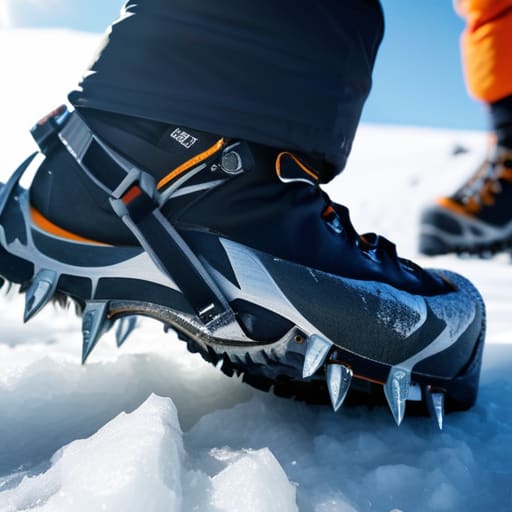
You can have the most expensive technical gear in your pack, but it’s useless if it’s dangling from your boot halfway up a slope. I’ve seen too many people reach a crux only to realize their heel lever hasn’t clicked into place or their toe bail is sitting crooked. When it comes to crampon attachment methods, the most important thing isn’t strength; it’s the tactile sensation of the metal seating against the sole. I’ve spent the last four seasons using the Petzl Vasak models on everything from slushy scree to hard-packed névé, and I’ve learned that if you don’t feel that specific mechanical snap, you aren’t ready to step onto the ice.
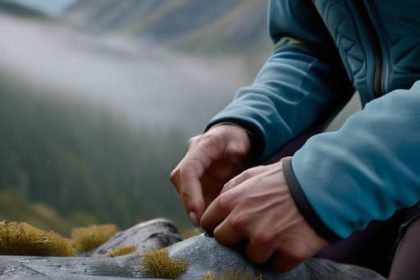
Before you ever leave the trailhead, you need to practice these adjustments in the parking lot or on a flat patch of grass. This isn’t just about convenience; it’s a fundamental part of winter mountaineering gear usage. If you’re fumbling with straps while the wind is gusting at thirty knots and your fingers are numb, you’re making a mistake. You need to be able to tighten a binding or adjust a strap by feel alone, without needing to stare at your feet while your balance shifts.
Essential Walking on Glacier Techniques for Staying Level
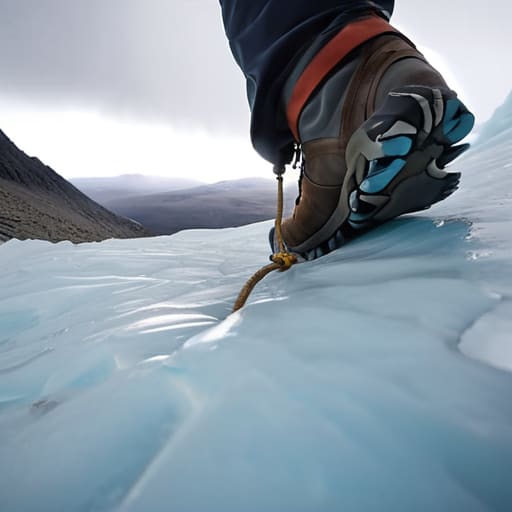
When you’re moving across a glacier, the terrain might look deceptively flat, but you are essentially walking on a minefield of hidden crevasses. I’ve spent a dozen seasons traversing icefields in the Cairngorms, and the biggest mistake I see is people treating glacier travel like a standard fell walk. You cannot simply walk in a line; you need to be roped up, maintaining a tension that allows the team to catch a fall before it becomes a catastrophe. This is a fundamental mountaineering technique for beginners to master: understanding that your rope is your only lifeline when the ground literally disappears beneath your feet.
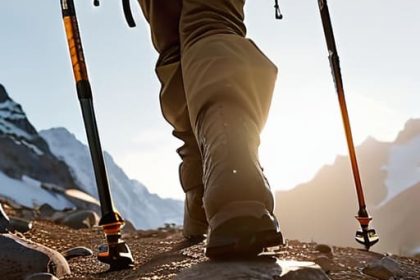
Your footing needs to be deliberate. I’ve carried the Petzl Vasak crampons for over five years now, using them in everything from slushy spring approaches to hard, wind-scoured ice, and they taught me that you never trust a single point of contact. Always aim for a flat-foot technique—often called French technique or piolet traction—where you engage as many points as possible to distribute your weight. If you find yourself losing balance, you need to be ready to transition immediately into a self-arrest with ice axe maneuver. It isn’t something you practice once; it’s something you drill until it’s muscle memory.
Five Real-World Rules for When the Terrain Stops Being Forgiving
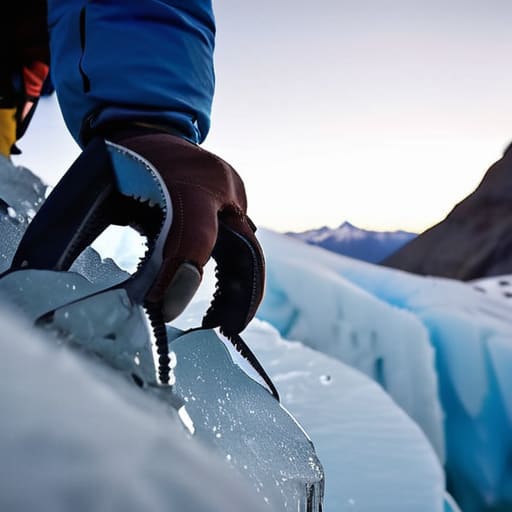
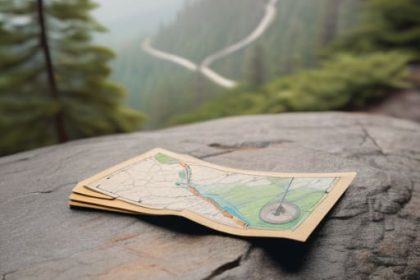
- Check your bindings every time you stop. I’ve seen enough people lose a crampon halfway down a descent because a bit of grit or a loose strap worked its way free during a heavy step. Every time you pause to check your map or take a drink, run your hands over the straps. It takes ten seconds; a lost crampon takes a rescue team.
- Learn to use the ‘piolet canne’—the cane position—before you think you need the axe for something dramatic. If you’re walking on a moderate snow slope, the axe should be used as a third point of contact, held by the head, not swung like a weapon. I’ve spent twenty years watching people treat an ice axe like a walking stick, and it’s usually the moment they panic that they realize they haven’t actually mastered the weight distribution.
- Don’t rely on a ‘self-arrest’ you’ve only practiced on a flat practice slope. I’ve carried my current mountaineering axe—a Petzl Glacier, which I’ve used in everything from slushy spring approaches to hard, wind-scoured névé for three seasons now—but knowing how to swing it into the snow is one thing; reacting when you’re actually sliding is another. Practice the motion until it is a reflex, not a thought process.
- Match your steel to your boots. I’ve spent far too many days in the mountains watching people try to strap semi-automatic crampons onto mountaineering boots that aren’t stiff enough to support them. If your boot flexes too much under your weight, the crampon will pop off or, worse, cause your ankle to roll the moment you engage a front point. If the boot isn’t rigid, the crampon is a liability.
- Respect the ‘stop’ command. If you feel a slip starting, your instinct is to scramble, but scrambling is how you lose control. You need to plant the axe, drive the pick in, and drop your weight into the arrest position immediately. In my experience, the difference between a controlled stop and a catastrophic slide is usually about half a second of hesitation.
The Cost of Optimism
I’ve seen too many people treat an ice axe like a walking stick and crampons like an afterthought, only to realize when the wind picks up and the ice turns blue that they aren’t actually prepared—they’re just lucky. In my twenty-two years, luck has never been a reliable way to get off a mountain.
Bridget Halloran
The Margin Between Safety and Disaster
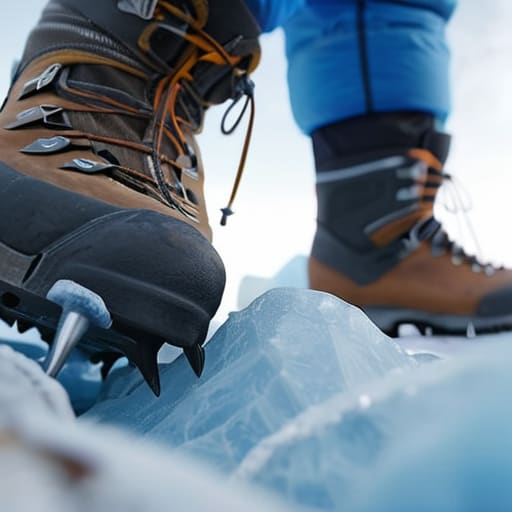
At the end of the day, knowing how to swing an ice axe or kick a step into a frozen slope is only half the battle. The other half is the tedious, unglamorous work of checking your bindings every time you stop for a drink and ensuring your crampon points haven’t become choked with ice. I’ve spent twenty-two years watching people get into trouble not because they lacked the strength, but because they neglected the small details—a loose strap here, a poorly seated heel there. If you haven’t practiced these movements on low-level, non-technical terrain until they feel like second nature, you aren’t ready for the high ridges. Mastery comes from repetition, not from reading a manual when the wind is already howling at forty knots.
There is a specific kind of quiet that settles over the mountains when you are moving with confidence, knowing your gear is an extension of your own body rather than a foreign object strapped to your feet. It is a hard-won feeling, earned through hours of training and the willingness to turn back when the conditions dictate it. Don’t chase the summit at the expense of your competence. Respect the tools, respect the terrain, and most importantly, respect the gap between a successful ascent and a rescue call. The mountains will always be there; make sure you are too.
Frequently Asked Questions
How do I know if my boots are actually compatible with my specific crampon model before I'm halfway up a face?
You don’t guess this. I’ve seen too many people realize their heel welt is too shallow or their toe box too narrow when they’re already shivering in a bivvy. Check your boot’s technical specs for “crampon compatibility”—specifically if they have a dedicated heel welt or a toe shank. If you aren’t sure, take both to the shop. I’ve used my Scarpa Mont Blancs with my Petzl Vasak crampons for six seasons in mixed conditions; they click in every single time.
At what point during a descent does an ice axe stop being a walking aid and become a necessary tool for self-arrest?
The transition happens the moment the angle exceeds 30 degrees or when the snow surface changes from firm to unpredictable. I’ve seen too many people treat an axe like a walking pole until they’ve already started sliding. If you’re on a slope where a slip would result in a controlled slide rather than a seated stumble, you aren’t “walking” anymore; you’re navigating. If you haven’t gripped that tool firmly by the time the gradient hits 30, you’re already too late.
How can I tell the difference between a manageable slope and one where the snow is too soft or too icy for my current gear setup?
You don’t look at the slope; you look at your feet and your rhythm. If you’re sinking past your ankles, the snow is too soft for your current crampon setup—you’ll just be fighting drag and wasting energy. If your axe is skittering on the surface without biting, it’s too icy. I’ve spent fifteen years reading snow, and if the surface feels unpredictable or “hollow,” that’s your signal to turn back. Don’t gamble on a slope you can’t arrest.