I remember standing in a sodden patch of bracken near the Cairngorms back in ’14, watching a group of hikers hover over a bright orange specimen like they’d just found buried treasure. They had a glossy, high-end field guide open, squinting at a photo that looked nothing like the damp, decaying reality under their boots. It’s that specific brand of misplaced confidence that worries me most—the idea that if you just buy the right book or download the latest app, you’ve mastered how to identify fungi safely. The truth is, a glossy page can’t teach you how to spot the subtle bruising of a stem or the specific way a cap reacts to a sudden drop in humidity, and relying on a digital shortcut in the middle of a damp woodland is a quick way to end up in a hospital bed rather than a campsite.
I’m not here to sell you a subscription to an identification app or a twenty-pound coffee table book. Instead, I’m going to talk about the actual, unglamorous work of observation: the textures, the smells, and the uncomfortable uncertainty that comes with being in the wild. I’ll share what I’ve learned from twenty years of walking these hills, focusing on the practical habits that actually keep you out of trouble.
Table of Contents
Avoiding Poisonous Mushroom Mistakes When Hunger Hits
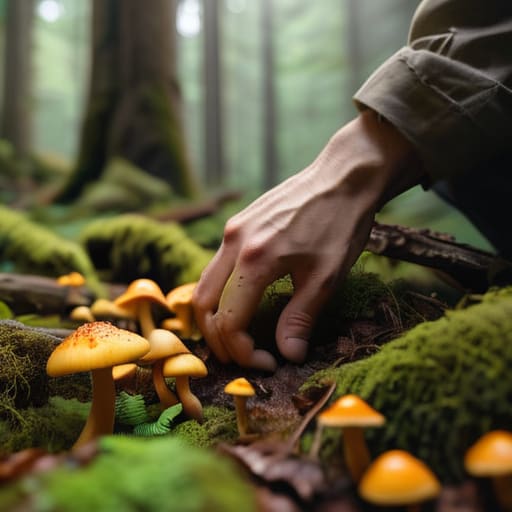
There is a specific kind of dangerous tunnel vision that sets in around hour six of a long trek. Your blood sugar drops, your legs feel like lead, and suddenly that patch of Chanterelles looks less like a botanical specimen and more like a way to stop the stomach cramps. This is exactly when people start making the kind of optimistic mistakes that end in an emergency call-out. I’ve seen it happen—the moment hunger overrides the discipline of your training.
When you are tired and depleted, you lose the ability to look for the subtle, identifying toxic fungi features that separate a meal from a hospital visit. You stop checking the stem, you stop looking at the gill attachment, and you start seeing what you want to see. My rule is simple: if you haven’t had the mental bandwidth to perform a full, methodical check, you don’t eat it. Avoiding poisonous mushroom mistakes isn’t just about knowledge; it’s about maintaining the discipline to stay hungry when your brain starts cutting corners.
Edible vs Poisonous Mushroom Characteristics You Cant Ignore
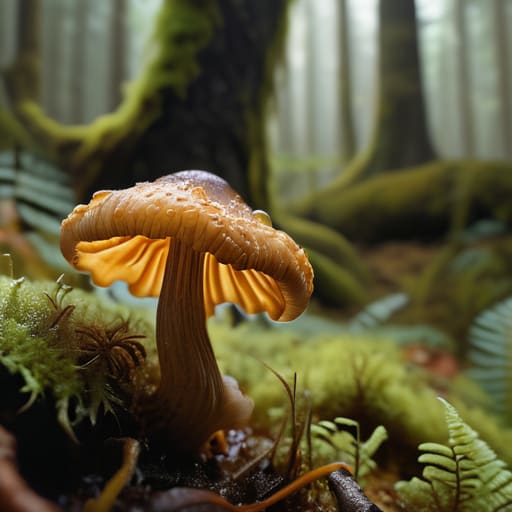
Look, I’ve seen enough people stare at a patch of ground with hungry eyes to know that a field guide doesn’t stop your stomach from growling. But when you’re looking at edible vs poisonous mushroom characteristics, you have to stop looking for what you want to see and start looking for what is actually there. Most beginners make the mistake of looking for a single “tell”—a specific color or a certain shape—as if nature follows a simple checklist. It doesn’t. A mushroom might look exactly like a Chanterelle, but if you haven’t checked the gill structure or the stem base, you’re just gambling with your evening.
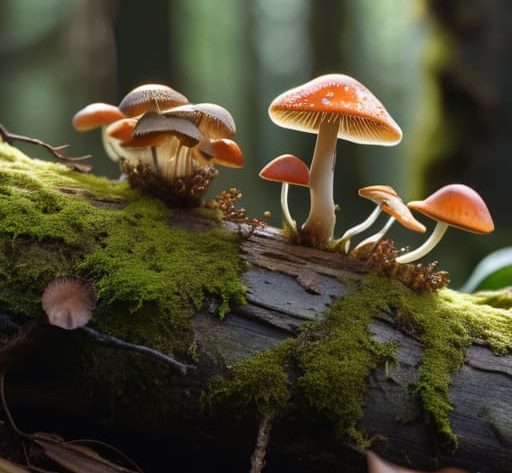
The most important part of identifying toxic fungi features isn’t the cap; it’s the details people overlook because they’re in a hurry. I always tell my groups to check the spore print and the way the flesh reacts when bruised. If a mushroom changes color rapidly when you nick it, that’s a signal, not a suggestion. You need to be looking at the attachment of the gills to the stem and the presence of a volva at the base. If you can’t confirm every single one of those physical markers, leave it in the dirt.
Five Rules for When the Field Guide Isn't Enough
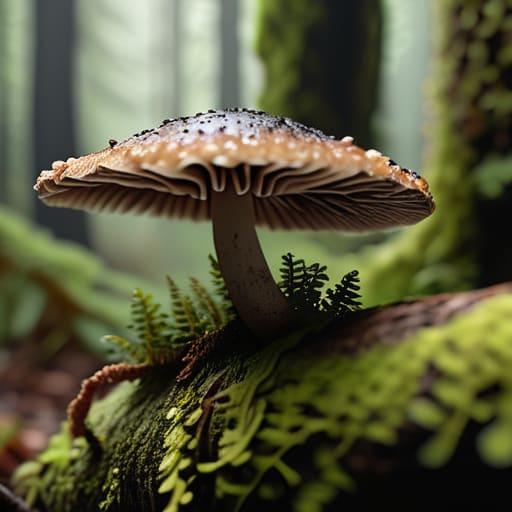
- Forget the “one bad sign” myths. I’ve seen people tell beginners that if a mushroom has a ring or a certain color, it’s safe. That is dangerous nonsense. There is no single physical characteristic that separates the edible from the toxic; you have to look at the whole organism, from the cap down to the mycelium in the soil.
- Use your eyes, not your stomach. If you find yourself staring at a specimen and thinking, “it looks close enough,” you’ve already lost. In my twenty-two years, I have never seen a single case of someone being poisoned because they were too cautious, but I’ve seen plenty because they were too impatient.
- Get a physical book, but don’t treat it like gospel. I carry a battered copy of a local spore print guide in my pack—I’ve had it with me through rain and sleet for six years—and while it’s vital, a book can’t account for a specimen that’s been partially eaten by a slug or degraded by a heavy frost. If the specimen doesn’t match the book perfectly, it doesn’t exist to you.
- Spore prints are non-negotiable. If you think you’ve identified something, lay the cap on a piece of paper and wait. A color mismatch in the spore print is often the only thing that separates a pleasant meal from a hospital visit, and no amount of “gut feeling” is worth more than a confirmed spore color.
- Learn the habitat, not just the fungus. Many species are incredibly picky about whether they grow under beech, birch, or pine. If you find a mushroom that looks right but is growing in a forest where that species shouldn’t exist, leave it alone. The environment tells as much of the story as the mushroom itself.
The Danger of a Half-Finished Thought
I’ve seen people stare at a specimen for ten minutes, convinced they’ve found a feast, only to realize they’ve ignored the very detail that makes it lethal. In the woods, ‘almost certain’ is just another way of saying you’re making a mistake; if you haven’t checked the gill attachment, the spore print, and the substrate, you aren’t identifying a mushroom, you’re just guessing with your life.
Bridget Halloran
The Weight of a Single Decision
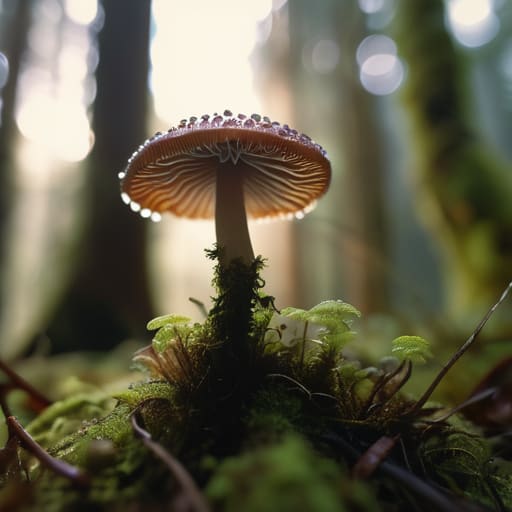
At the end of the day, safe foraging isn’t about memorizing every single species in the forest; it is about respecting the limitations of your own knowledge. We have talked about the physical markers—the gills, the spore prints, the stem structures—and the danger of letting hunger cloud your judgment when the light starts to fail. If you find yourself staring at a specimen, trying to force it into a category because you really want it to be a Chanterelle, stop. You have to be willing to walk away. The most important skill you can develop isn’t identification, it is the ability to say, “I am not certain enough to eat this,” and actually meaning it when you say it.
There is a specific kind of quiet that settles over the woods when you stop looking for things to take and start simply observing what is already there. I’ve spent twenty years watching the landscape change, from the way the light hits a mossy bank to the way a particular fungus signals the turn of a season, and there is more reward in that observation than in any single meal. Don’t let the desire for a “harvest” turn the woods into a grocery store; keep it a place of study. If you approach the forest with humility instead of entitlement, it will give you far more than just a handful of mushrooms—it will give you a way to truly belong to the landscape.
Frequently Asked Questions
If I find a mushroom that looks identical to an edible one but the gills are a slightly different shade, is it worth the risk?
No. Absolutely not. If you’re looking at a specimen and thinking, “It’s probably fine, the gills are just a different shade,” you’ve already made the kind of optimistic mistake that lands people in A&E. In my twenty-two years, I’ve never seen a “slight difference” turn out to be nothing. If it isn’t a perfect match, it’s a no. Leave it in the dirt and keep walking. Your stomach isn’t worth the gamble.
How much can I actually trust a digital identification app when I'm out on a ridge in poor light?
You can’t. I’ve seen too many people staring at a screen in a drizzle, trying to force a match because an algorithm said so. An app doesn’t know the difference between a specimen in a textbook and one that’s been battered by a week of Atlantic rain and nibbled by slugs. If the light is failing and the app is giving you a “maybe,” treat that “maybe” as a “definitely not.” Stick to what you know.
Are there specific types of mushrooms that are "safe" for beginners because they have no toxic lookalikes?
The short answer is no. In my twenty-two years outdoors, I’ve learned that “safe” is a dangerous word. Even a mushroom with a single common lookalike can be deadly if you misidentify it under fatigue or low light. I’ve seen people confidently pick what they thought was a “foolproof” species, only to realize they missed a subtle gill structure change. Don’t hunt for easy wins; hunt for absolute certainty. If you aren’t 100% sure, leave it.