I remember sitting in a damp tent in the Cairngorms back in 2012, listening to the wind whip against the flysheet and realizing that my “high-tech” sleeping bag was doing absolutely nothing because I’d forgotten the most basic rule of insulation. I was shivering so hard my teeth felt like they might crack, staring at a thermometer that told me exactly how much of an idiot I’d been. Most people think the secret to how to stay warm at night camping is just buying a more expensive down jacket or a bag with a higher loft rating, but they’re missing the point entirely. You can spend a thousand pounds on gear, but if you haven’t mastered the physics of heat loss or the way moisture moves through your layers, you’re just paying for a very expensive way to freeze.
I’m not here to sell you on the latest marketing hype or a piece of kit I haven’t personally dragged through a bog. In this guide, I’m going to walk you through the actual, unglamorous mechanics of heat retention—from managing your sleeping pad’s R-value to the specific way you should layer your base clothing before you even zip up the bag. I’ll tell you exactly what has worked for me over twenty years of mountain work and, more importantly, what fails when the temperature drops unexpectedly.
Table of Contents
Decoding Sleeping Bag Temperature Ratings Without the Marketing Fluff
If you look at a sleeping bag’s tag and see a number, you aren’t looking at a guarantee of comfort; you’re looking at a survival metric. Most manufacturers use a “limit” rating, which is a laboratory measurement taken in a controlled environment by a stationary, motionless person. In the real world—where you are likely tossing and turning, or where a damp wind is whistling through your tent fly—that number is a lie. I’ve spent fifteen years testing down bags in the Cairngorms, and I’ve learned that if a bag is rated for 0°C, you’d better assume it’s actually a 5°C bag once you’re actually sleeping in it.
To avoid a miserable night, you have to account for moisture management in sleeping bags and how your own breath or sweat affects the loft. If your insulation gets damp, it loses its ability to trap heat, and that’s when you start worrying about preventing hypothermia while camping. Don’t just buy based on the lowest number on the label; buy based on the reality of the ridge you’re actually standing on.
Moisture Management in Sleeping Bags to Avoid the Damp Chill
You can have the most expensive down bag on the market, but if you’re sleeping in damp clothes, you’re essentially sleeping in a refrigerator. I’ve seen it happen more times than I’d like to admit—someone pushes through a long, sweaty ascent, ignores the sweat, and crawls into their bag still wearing their base layers. That moisture has nowhere to go. As it cools, it pulls heat away from your body faster than any loft can replace it. Effective moisture management in sleeping bags starts long before you zip up; it starts with stripping off your damp shell and mid-layers the second you reach camp.
I’ve used my current merino wool base layers for three seasons now, through heavy mist and high-altitude wind, and they remain my absolute standard for preventing hypothermia while camping. Merino stays relatively warm even when it’s damp, unlike synthetic blends that can sometimes feel like a cold, wet sponge against your skin. If you’re feeling particularly optimistic about the weather, I’d suggest a dedicated set of dry thermal underwear for camping that stays strictly inside your sleeping bag. Never, under any circumstances, let your “sleeping clothes” touch the damp ground or your sweaty hiking gear.
Five ways to keep the heat in when the temperature drops
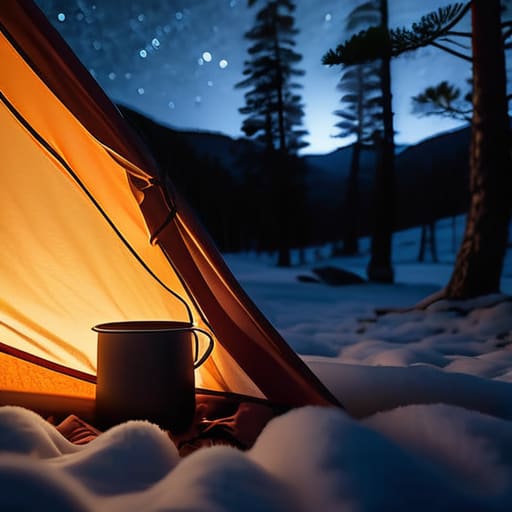
- Manage your sleeping pad’s R-value. I’ve spent many a night on the edge of hypothermia not because my bag was thin, but because I was lying on a piece of foam that let the ground suck the heat straight out of my spine. I’ve used the Therm-a-Rest NeoAir XLite in sub-zero conditions for three seasons now, and it’s the difference between sleeping and just shivering in place. If your mat doesn’t have a high enough R-value for the ground you’re on, no amount of down will save you.
- Eat a high-fat snack right before you crawl in. Your body is a furnace, but it needs fuel to keep the fire going. I always keep a handful of nuts or a bit of cheese in my sleeping bag for that final bit of eating. It gives your metabolism something to work on during those quiet hours between 2:00 AM and 4:00 AM when your core temperature naturally wants to dip.
- Don’t sleep in your hiking clothes. It sounds counterintuitive when you’re freezing, but damp sweat is your enemy. I’ve seen too many people climb into a bag wearing the same socks they’ve been walking in all day; those socks are holding moisture that will turn ice-cold by midnight. Put on a dedicated, dry set of base layers—merino wool is my go-to, and I’ve worn the same two pairs for five years of mountain trips—and keep them strictly for sleeping.
- Use a hot water bottle as a makeshift heater. It’s an old trick, but it works. If you have a sturdy, leak-proof Nalgene bottle, fill it with hot water, wrap it in a spare sock so it doesn’t scald you, and tuck it near your femoral artery or your feet. I’ve used this method during several overnight stints in the Cairngorms when the wind wouldn’t stop howling, and it provides a steady heat source that lasts for hours.
- Keep your gear inside the tent, but your body in the bag. Never leave your extra layers or your down jacket sitting on the tent floor outside your sleeping bag. I’ve learned the hard way that if you need to grab a layer in the middle of the night, you don’t want to be fumbling in the damp air of the tent vestibule. Keep your “emergency” warmth within arm’s reach of your sleeping bag so you can layer up without breaking your thermal seal.
## The Margin for Error
I’ve spent twenty years watching people freeze in sleeping bags that were technically rated for the temperature, simply because they forgot that a damp base layer or a gust of wind on a ridge changes the math entirely; if you aren’t planning for the temperature that actually hits your skin, you aren’t planning at all.
Bridget Halloran
The Final Checklist Before You Zip Up
At the end of the day, staying warm isn’t about owning the most expensive down jacket on the market; it’s about the small, often overlooked details you manage before your head hits the pillow. It is about choosing a sleeping bag that actually matches the reality of the ridge, managing your moisture so you aren’t sleeping in a damp microclimate, and ensuring your insulation isn’t being sapped by a cold sleeping pad. I’ve spent twenty years watching people struggle through freezing nights simply because they forgot to vent their layers or assumed a summer rating would hold up when the wind shifted at 2:00 AM. If you get the basics of layering and moisture management right, you’ve already won half the battle.
The mountains don’t care about your itinerary, and they certainly don’t care about your optimism. They only respond to the reality of the conditions you actually face. But when you have prepared properly—when you’ve accounted for the temperature drop and the dampness—the night stops being something to endure and starts being something to experience. There is a profound, quiet peace in being tucked into a warm, dry bag while the wind howls across the heather outside. Respect the weather, prepare for the worst-case scenario, and you’ll find that the outdoors is a much kinder place to sleep.
Frequently Asked Questions
If my sleeping pad has a high R-value but my sleeping bag is still freezing, am I losing heat through the ground or the air?
If your R-value is high, you aren’t losing heat to the ground; you’re losing it to the air. A good pad stops the earth from sucking the warmth out of you, but it doesn’t stop the ambient temperature from chilling the air inside your bag. I’ve spent many a freezing night in the Cairngorms where the pad was fine, but the loft in my bag had collapsed or the draft was coming through the collar. Check your loft and your seal.
How much does the weight penalty of carrying a heavy down duvet actually matter when the forecast drops unexpectedly?
It matters more than people realize, but not for the reason they think. It’s not about the strain on your knees; it’s about the mental fatigue. I’ve carried a 1.2kg heavy down duvet through three days of sodden peat hags in the Cairngorms, and by the time the temperature plummeted at dusk, I was too exhausted to properly set up my shelter. When you’re shivering and tired, every extra gram makes the “boring” safety tasks feel impossible.
At what point does adding more layers inside the bag become a problem for moisture and condensation?
You hit the limit when you start feeling “clammy” rather than just warm. I’ve spent three nights in a sub-zero tent with too many down layers stuffed inside, and the result was a damp, heavy mess by morning. If you add so many layers that you can’t move your limbs without compressing the insulation, you’re trapping your own body heat and sweat. Once that moisture hits your sleeping bag’s lining, it’s game over.