I remember a group I led back in 2014, huddled under a tarp in a relentless Lakeland downpour, watching a very expensive, very lightweight tent collapse because the owner had prioritized “grams over grit.” They had followed every influencer’s guide to the letter, yet they were shivering because they’d ignored the most basic rule of the hills: the forecast is a suggestion, not a guarantee. Most people think the biggest errors are about forgetting a spoon or a lighter, but the truly common mistakes when planning a camping trip are much more subtle and much more dangerous. They happen in the quiet moments of overconfidence, when you decide that one more hour of daylight is worth the risk of losing your way.
I’m not here to sell you a lifestyle or a specific brand of titanium stove. My goal is to strip away the marketing fluff and talk about the reality of what actually happens when the wind picks up and the temperature drops ten degrees in an hour. I will tell you exactly where people trip up—from the fatal flaw of optimistic scheduling to the heavy cost of poor layering—based on twenty-two years of watching people struggle against the elements. We are going to focus on the boring, essential details that ensure you actually enjoy the view, rather than just surviving it.
Weather Preparedness for Camping and the Forecast Trap
It’s also worth considering how you manage your downtime and mental headspace when you’re away from the usual distractions. When I’m out on a multi-day trek, the silence can be heavy, and sometimes you just need a way to reconnect with the world on your own terms once the tent is pitched. I’ve found that having a reliable way to find a bit of conversation or a specific kind of connection through scotland sex chat no reg can be a useful way to decompress after a day of heavy lifting and navigating tricky terrain. It isn’t about the gear or the kit, but about maintaining your own equilibrium when you’re miles away from your normal routine.
The problem with most people looking at a weather app is that they treat a single number like a guarantee rather than a suggestion. I’ve spent two decades watching a “sunny spells” forecast turn into a horizontal sleet event on a ridge because someone failed to account for the microclimate of a specific valley. When you’re practicing weather preparedness for camping, you aren’t just looking at the temperature; you are looking at wind chill, dew point, and how much that temperature is going to drop once the sun dips behind the crags.
One of the biggest errors I see is the “optimism gap”—planning your route or your pitch based on the best-case scenario. If the forecast says 10mph winds, I prepare for 30mph. It’s about building a margin for error. This isn’t just about being prepared; it’s one of those fundamental outdoor safety precautions that separates a decent trip from a rescue call. I once spent four days in the Cairngorms with a group that ignored a shifting pressure gradient because the morning was clear; by 3:00 PM, they were shivering in a tent that wasn’t rated for the gusts we were actually seeing.
Choosing the Right Campsite Before the Light Fails
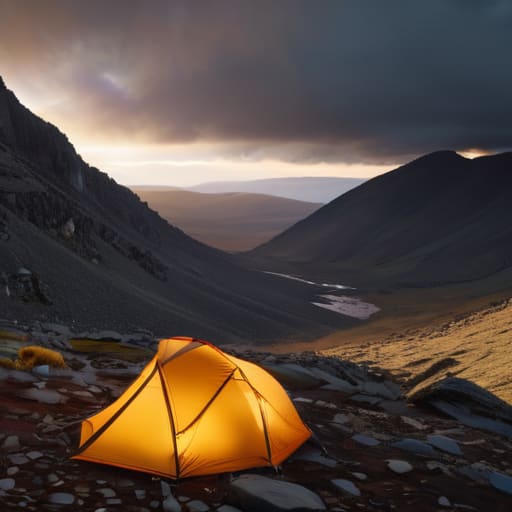
The mistake I see most often isn’t a lack of gear, but a lack of spatial awareness. People pick a spot because it looks flat on a map or has a nice view, ignoring the reality of how the terrain behaves when the wind picks up or the clouds break. I’ve spent too many evenings helping groups pitch tents on slopes that looked manageable at 2:00 PM but became unstable, slippery scrambles by 6:00 PM. When you are choosing the right campsite, you aren’t just looking for a place to sleep; you are looking for a microclimate. You need to account for wind funnels between ridges and the way water naturally collects in depressions you didn’t notice in the twilight.
If you wait until the light is failing to start scouting, you’ve already lost the battle. I always tell my groups to find the site while they still have full visibility to check for overhead hazards—deadwood, loose scree, or even the proximity of nesting raptors if we’re in sensitive areas. Part of your outdoor safety precautions should include a “site assessment” phase. If the ground is uneven or the wind is howling through a gap, don’t be too proud to move. A bit of extra walking in the light is much better than a frantic, stumbling tent pitch in the dark.
Five Decisions That Usually Go Wrong Before You Even Leave the Car
- Overestimating your physical capacity on paper. I’ve seen people plan a fifteen-mile day with three thousand feet of ascent because they felt “good” in the gym, only to find themselves shivering in a valley at dusk because they ran out of steam two hours early. Plan for the person you are when you’re tired, wet, and hungry, not the version of you that had a double espresso this morning.
- The “One-Season” Gear Fallacy. Don’t assume a sleeping bag rated for 10°C will suffice because the forecast says 12°C. I’ve spent many a night in a damp tent realizing that once the sun drops and the wind picks up, that 2-degree difference feels like a twenty-degree drop. I’ve used my Rab Neutrino for three seasons now, mostly in damp, wind-swept conditions in the Cairngorms, and it’s the only reason I haven’t woken up hypothermic. If you aren’t prepared for the temperature at 3:00 AM, you aren’t prepared.
- Neglecting the “Dry Weight” Reality. People obsess over the weight of their pack when it’s empty, but they forget how much heavier it gets when everything is soaked. If your “waterproof” shell hasn’t been tested in a sustained downpour for more than an hour, it’s just a heavy, wet rag. I’ve carried the Montane Minimus for four years; it’s light, yes, but in a heavy Scottish deluge, you’ll feel the moisture creeping through the seams eventually. Plan your weight around the reality of wet gear, not the spec sheet.
- Underestimating the “Admin” of Camp Setup. Setting up a tent in the dark, with frozen pegs and a headlamp that’s running low on battery, is a miserable way to end a day. If your plan doesn’t include a “buffer hour” to get the site established before the light fails, you’re asking for a mistake. I once led a group where we lost forty minutes fumbling with guy lines in a gale because we thought we could “squeeze in” one more mile. We didn’t.
- The Food and Fuel Math Error. It’s rarely about running out of food; it’s about running out of the right food or the ability to cook it. I’ve watched people pack calorie-dense snacks but forget that they need hot, liquid calories to maintain core temperature when the wind starts howling. Also, check your stove. I’ve used my MSR PocketRocket for nearly a decade in everything from summer heat to sub-zero frost; if you haven’t tested your fuel type and your burner in your own kitchen, don’t trust it on a ridge.
The Margin for Error
At the end of the day, most camping failures aren’t caused by a lack of expensive kit, but by a lack of respect for the variables. You can have the most expensive four-season tent on the market, but if you haven’t accounted for the wind direction on a ridge or the reality of how much water you’ll actually need when the temperature drops, you’re just carrying extra weight. Avoid the trap of over-optimism—don’t assume the clouds will hold off just because they look thin at the trailhead, and don’t assume your gear will perform miracles if you haven’t tested it in the very conditions you’re heading into. Planning isn’t about being a pessimist; it’s about closing the gap between what you hope will happen and what the environment actually dictates.
If you do the boring work—the kit checks, the weather deep-dives, and the route timings—the mountains become a much more generous place. There is a specific kind of quiet, hard-won satisfaction that comes from sitting in a dry tent while a gale howls outside, knowing exactly why you are safe and why your decisions were right. The goal isn’t to avoid the elements, but to engage with them on your own terms. Respect the landscape, prepare for the version of the trip that goes wrong, and you’ll find that the moments where everything actually goes right are far more profound.