I once spent three hours huddled under a ledge in the Cairngorms, watching a group of “prepared” hikers fumble with a smartphone flashlight that had died because they’d forgotten it wasn’t a dedicated piece of kit. They had the expensive Gore-Tex and the brand-new boots, but they lacked the one thing that actually matters when the light fails: a realistic understanding of how quickly a ridge becomes a trap. Most people think a complete guide to walking in the dark is about buying the brightest, most expensive headlamp on the market, but that’s just marketing fluff. The truth is much more uncomfortable than a gear list.
I’m not here to sell you on the latest gadgetry or give you a sanitized version of mountain safety. My goal is to provide a practical, no-nonsense complete guide to walking in the dark based on twenty-two years of seeing exactly where things go wrong. I’ll talk about the boring, essential stuff—battery management, light spill, and knowing when to call it a day—rather than the glossy nonsense you see in magazines. If I haven’t personally relied on a piece of kit in a gale or a downpour, I won’t tell you to buy it.
Table of Contents
Essential Night Hiking Gear That Wont Fail You
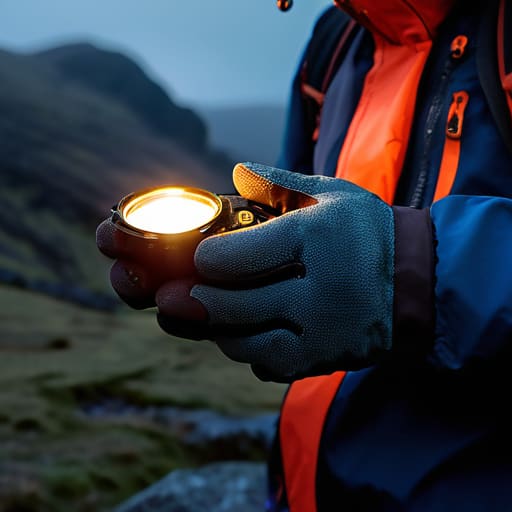
When it comes to essential night hiking gear, I don’t care about lumens or how many features a manufacturer claims; I care about whether the thing works when your hands are numb and the mist is rolling in. I’ve used the Petzl Actik Core for about three seasons now, mostly on late-season ridge walks in the Lake District where the wind doesn’t stop. It’s a reliable weight, but if you’re relying on a single light source, you’re making a mistake. Always carry a secondary, smaller backup—something light like a Nitecore NU25—tucked into a pocket where you can actually reach it.
Lighting is only half the battle; you also need to manage your nocturnal terrain awareness. I’ve seen too many people rely solely on their beam, which creates a tunnel-vision effect that makes you lose your sense of scale. I always carry a small, high-output handheld torch alongside my headlamp. The headlamp is for seeing where your feet go, but the handheld is for using headlamps effectively in tandem with a wider light spread to judge distances and contour lines. If you’re just staring at a bright circle of light, you’ll miss the drop-off right in front of you.
Using Headlamps Effectively Without Losing Your Night Vision
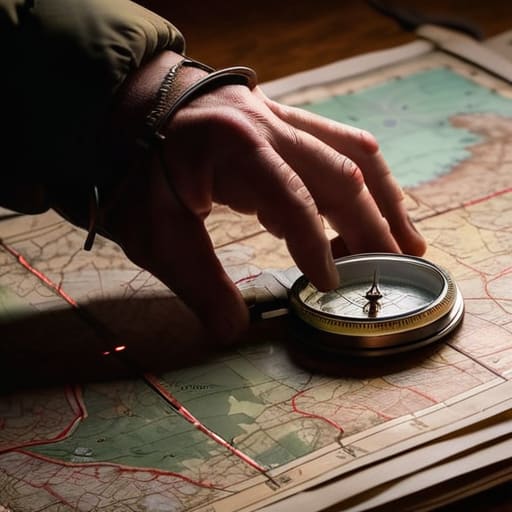
The biggest mistake I see people making is treating their headlamp like a spotlight rather than a tool for navigation. If you’re constantly blasting the highest lumen setting just to see the path, you’re actually blinding yourself. Every time you hit that bright beam, your pupils constrict, and the moment you turn it off, you’re left squinting into a black void. To maintain proper nocturnal terrain awareness, you need to learn the art of using red light. I’ve used my Petzl Actik Core on about forty different night traverses—mostly in the damp, low-visibility conditions of the Peak District—and the red light setting is what actually saves your eyes. It allows you to read a map or check a compass without completely nuking your natural night vision.
When you are actually moving, aim your beam at the ground about three to five meters ahead of you, rather than staring directly into the center of the light. This helps with low light orientation techniques by allowing your peripheral vision to pick up the shapes of rocks or roots before you trip over them. If you find yourself panicking, don’t just whip the light around wildly; that only increases your disorientation. Keep your movements steady and your light low.
The Decisions That Keep You Moving (And the Ones That Get You Stuck)
- Respect the ‘Turn Back’ Time. I’ve seen too many groups push through the last hour of light because they were “almost there,” only to find themselves navigating a scree slope in a total blackout. Set a hard deadline for when you stop ascending, regardless of how much distance is left. If the sun is dipping and you aren’t at your camp or descent point, you turn around. Period.
- Master the Art of the Micro-Adjustment. When you’re walking in the dark, your sense of scale is gone. A small trip becomes a potential ankle sprain because you couldn’t see the root until it was under your boot. Slow your pace by about thirty percent compared to daylight walking. It feels tedious, but it’s the difference between a steady trek and a frantic scramble.
- Don’t Rely on a Single Source of Light. I carry two headlamps in my pack—one primary and one backup—and I’ve used both of them in heavy rain over the last three seasons. If your main light fails or the batteries die in the cold, you aren’t just inconvenienced; you are effectively stationary and vulnerable. Always have a secondary, independent light source tucked away in an easy-to-reach pocket.
- Check the Forecast for ‘Cloud Ceiling’, Not Just Rain. A forecast that says “clear skies” is great, but if you’re heading into the hills, you need to know if that cloud base is dropping. Walking in the dark is manageable; walking in the dark through a low-level mist that has swallowed the terrain is how people get lost. If the ceiling is low, your margin for error disappears.
- Keep Your Map and Compass Within Reach. It sounds basic, but when the light fails, your instinct is to stare at your feet or your headlamp beam. Keep your navigation tools in an accessible pocket, not buried at the bottom of your rucksack. I’ve spent twenty years learning that you should check your position every twenty minutes, even if you think you know exactly where you are.
The Cost of Optimism
Most people don’t realize they’re in trouble until the light has already failed; they make one optimistic decision at 3:00 PM about how much daylight they actually have, and by 5:00 PM, they’re staring at a ridge they can’t navigate and a battery that’s dying faster than the forecast promised.
Bridget Halloran
The Final Check
At the end of the day, walking in the dark isn’t about being a daredevil; it’s about managing the variables you can actually control. You need the right light, you need to know your route by heart before the sun dips below the ridge, and you absolutely must have the discipline to turn back when the margin for error disappears. If your headlamp feels dim or the mist is swallowing the trail, don’t try to power through it just to save face. Most night-time mishaps I’ve seen don’t happen because of a lack of courage, but because of a lack of preparation and a refusal to respect the clock.
There is a specific, quiet sort of magic that happens when the world goes still and the only thing moving is you. When you’ve got your kit sorted and your head is clear, the hills take on a completely different character—one that is much more intimate and far more rewarding. It’s a way of seeing the landscape that most people will never experience. Just remember that the goal isn’t to conquer the darkness, but to move through it with intention. If you respect the terrain and the timing, the night becomes less of an obstacle and more of a companion on the trail.
Frequently Asked Questions
How do I know when to call it a day and turn back before the light completely disappears?
The “golden hour” is a trap. You see a beautiful sunset and think you have another hour of easy walking, but on a ridge, that light vanishes in minutes. I use a rule of thumb: check your watch against your planned route. If you aren’t at your next waypoint with at least forty-five minutes of usable light left, you turn back. Don’t let optimism dictate your descent; let the clock do it.
What should I be looking for in a map or compass when I can't see the terrain clearly?
When the terrain disappears into the black, you aren’t looking at features; you’re looking at data. Forget the pretty colors; you need a map with high-contrast contour lines and clear symbols for things like walls or fences—they’re easier to “feel” with a compass. I’ve used my Silva Expedition compass for over twelve years in everything from sleet to gale-force winds; it’s reliable because it doesn’t skip. If you can’t see the hill, trust the bearing.
How do I manage my layers when I'm moving slower and getting colder in the dark?
The biggest mistake I see is waiting until you’re shivering to act. By then, you’re already behind the curve. When the pace drops and the temperature falls, stop before you sweat. I’ve worn my Rab Microlight for six seasons now, and it’s my go-to for these exact moments. Add that mid-layer, zip the shell, and get moving. If you’re damp from overworking earlier, you’re just inviting hypothermia. Layer up proactively, not reactively.