I remember a group in the Cairngorms back in 2014—mist rolling in thick as wool, visibility dropping to five meters, and the group leader staring at a high-end GPS unit like it was a magic wand. He was so busy fighting with the interface and recalibrating the signal that he didn’t notice the light failing or the ground turning to soup underfoot. People think knowing how to navigate back to camp is about having the most expensive, shiny piece of tech in your rucksack, but that’s a dangerous myth. In reality, the most sophisticated satellite device in the world won’t help you if you’ve lost your sense of situational awareness before you even pull it out.
I’m not here to sell you on a new app or a gadget that promises to do the thinking for you. Instead, I want to talk about the unglamorous, essential skills—the stuff I’ve relied on during twenty-two years of mountain work, from reading a contour line in a gale to knowing exactly when to call the day. I will give you the honest, stripped-back methods for finding your way home when the weather turns and the daylight disappears.
Table of Contents
Marking Trails for Return Trips When the Fog Rolls in
When the visibility drops to ten metres and the world turns a uniform, damp grey, you can’t rely on your eyes anymore. I’ve been caught in this exact scenario on the Cairngorms—fog so thick you feel like you’re walking through wet wool. In these moments, marking trails for return trips isn’t about leaving a breadcrumb trail of stones; it’s about mental and physical anchors. If you are moving away from camp to scout a ridge or check a water source, you need to be deliberate. I always use a “handrail” method—finding a long, linear feature like a stream or a distinct contour line—and keeping it at a fixed bearing.
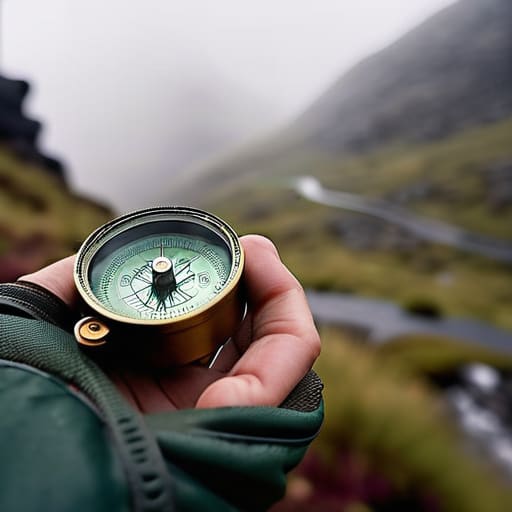
If the terrain is featureless, you have to get disciplined with your tools. I’ve spent the last four seasons using the Silva Expedition compass in heavy mist, and I can tell you that using a compass to find camp is the only thing that stops the creeping panic when the landmarks vanish. Don’t just glance at it; take a bearing, check it again after fifty paces, and verify it. If you can’t see the ground clearly, stop moving. It is much better to sit for twenty minutes and regain your bearings than to commit to a direction that feels right but leads you straight into a peat bog.
Using a Compass to Find Camp When Your Instincts Fail
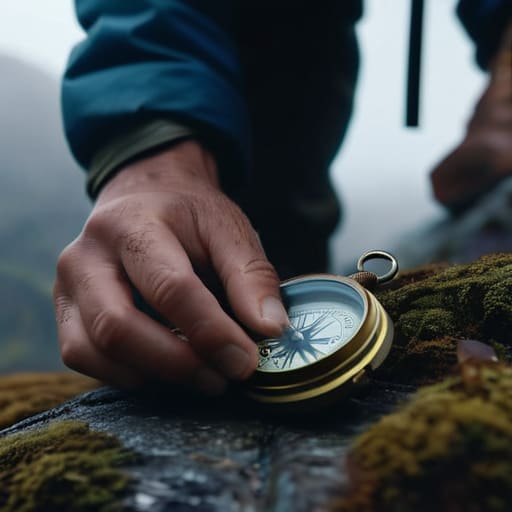
When the fog settles and the landscape turns into a featureless grey smudge, your internal sense of direction—that “feeling” you thought you had—is the first thing to go. I’ve seen it happen to seasoned walkers; they think they’re heading south toward the valley, but they’re actually drifting in a slow, panicked arc toward a cliff edge. This is where using a compass to find camp stops being a theoretical skill and becomes your only lifeline. You cannot rely on identifying natural landmarks when the mist has swallowed the treeline and the crags.
Stop moving the moment you feel that disorientation creeping in. Sit down, get your bearings, and work from a known point. I’ve spent twenty years teaching that a compass isn’t a magic wand; it’s a tool that requires a steady hand and a clear head. If you try to navigate while your heart is racing, you’ll misread the declination or miss your bearing entirely. Take the time to set your course, check your map one last time, and trust the needle over your gut. Your gut is usually just telling you that you’re lost.
Five Hard Lessons from the Ridge
- Trust the map, not your gut. I’ve seen too many people walking in circles because they “felt” like the camp was just over the next rise. When the visibility drops below twenty metres, your instincts are usually just a polite way of being wrong.
- Work with the terrain, not against it. If you’re navigating back in low light, avoid trying to cut across steep, broken ground to save time; you’ll end up disoriented and exhausted. Stick to the established contours or the ridgeline where the features are unmistakable.
- Keep a “breadcrumb” of physical landmarks. I don’t mean leaving piles of stones, but rather noting the specific shape of a particular crag or the bend in a stream during your ascent. If you haven’t noted a distinctive feature on the way up, you’ll struggle to identify it on the way back.
- Manage your light and your energy. If you’re navigating a descent in the dark, don’t burn through your primary headlamp on the way up. I’ve carried the Petzl Actik Core for four seasons now, through heavy rain and freezing mist, and it’s reliable, but even the best battery won’t save you if you’ve mismanaged your timing.
- The “Turn-Back” Time is non-negotiable. Decide on a hard time to stop ascending and start the return journey before you even leave the trailhead. If you hit that time and you aren’t at your destination, you turn around. No exceptions, no “just one more ridge.”
The Cost of Optimism
Navigation isn’t about finding the way forward; it’s about having the discipline to find the way back when the light fails and the map stops making sense. Most people don’t get lost because they can’t read a compass—they get lost because they’re too busy trying to outrun a weather front that was clearly visible two hours ago.
Bridget Halloran
The Decision is the Destination
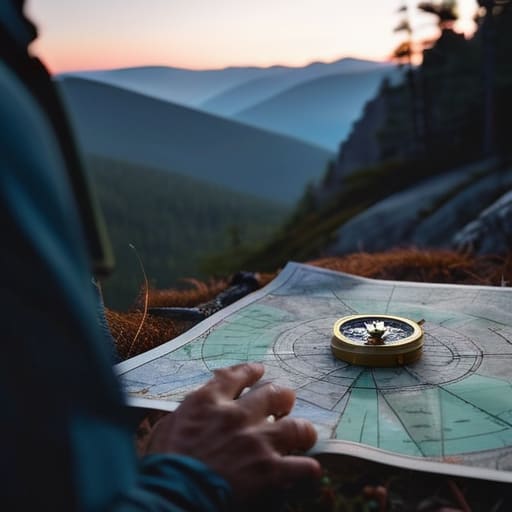
At the end of the day, navigating back to camp isn’t just about the technicalities of a bearing or whether you’ve dropped enough cairns to find your way through a whiteout. It’s about the mental discipline to stop, check your map, and trust your tools over your ego. Whether you are using a compass to correct a drift or marking your trail as the visibility drops, the goal is the same: reducing the margin for error before the light fails completely. I’ve seen too many people try to “push through” a navigation error only to find themselves wandering in circles as the temperature plummets. Don’t let an optimistic mistake become a survival situation.
The mountains don’t care about your summit ambitions or how much you paid for your kit, and they certainly won’t wait for you to find your bearings. But there is a quiet, profound satisfaction in knowing that you can read the landscape, respect the weather, and bring yourself home safely. The most successful hikers I know aren’t the ones who reach every peak; they are the ones who know exactly when to turn around and how to find their way back to the warmth of the tent. Respect the descent, watch the clock, and remember that the safest route is the one you actually execute.
Frequently Asked Questions
How do I know if my compass is actually working correctly if I'm feeling disoriented or fatigued?
When fatigue sets in, your brain starts playing tricks, and you’ll stop trusting the needle. To check the compass, find a known landmark—a distinct peak or a prominent, solitary tree—and sight it. If your bearing doesn’t align with that physical reality, something is wrong. It’s usually just local magnetic interference from your gear or a heavy metal belt buckle, but if the needle won’t settle, stop. Don’t navigate on a guess.
What is the best way to keep my physical maps and navigation tools dry when the weather turns from heavy rain to a freezing mist?
I’ve spent fifteen years pulling sodden, unreadable maps out of backpacks, and it’s a nightmare you don’t want. For maps, forget the flimsy plastic sleeves; use a heavy-duty, waterproof map case with a rigid backing. I’ve used my SilNylon-coated case through three seasons of Lakeland mist without a single leak. For tools, keep your compass in a dedicated, padded waterproof pouch inside your mid-layer. If it’s freezing, moisture is your enemy—keep your gear close to your body to prevent condensation.
At what specific point of light loss or weather change should I stop trying to navigate and just set up an emergency shelter where I am?
The moment you stop feeling certain about your position is the moment you stop moving. If the light is failing and your navigation feels “approximate,” you’ve already lost the battle. I’ve seen too many people try to push through the gloaming only to end up wandering into a peat hag or off a ledge. If the weather turns or the light drops below what your headtorch can reliably manage, stop. Drop the pack, pitch the shelter, and wait.