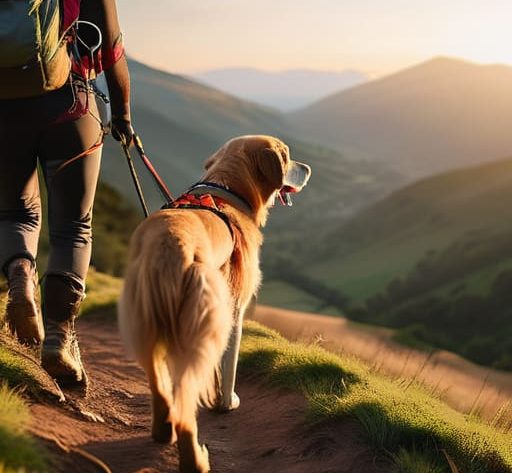
I’ve spent two decades watching people mistake a sunny morning in the valley for a guarantee of safety, and adding a dog to the equation usually doubles that optimism. I once led a group near the Cairngorms where the owner was so focused on his dog’s “adventure” that he completely missed the way the wind was shifting or how the pup was starting to lag behind. They thought they knew how to hike with a dog, but they hadn’t accounted for the sudden drop in temperature or the fact that a tired animal is a reactive animal. A dog isn’t just a companion; they are a variable in your safety equation that you cannot ignore once the light starts to fail.
I’m not here to sell you tactical canine harnesses or expensive GPS collars that you’ll lose in a peat bog. I’m going to tell you what actually matters: reading your dog’s fatigue, managing their water intake in high humidity, and knowing exactly when to turn back before a minor stumble becomes a rescue mission. This is about practical, field-tested reality, not the polished version you see on social media.
Table of Contents
Canine Hydration Tips and Preventing Dog Heatstroke on Trails
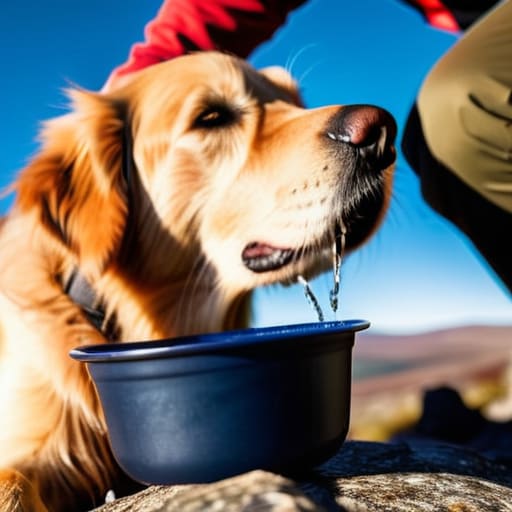
I’ve seen too many people treat their dog’s water intake like an afterthought, only realizing there’s a problem when the animal is already panting heavily and refusing to move. When you’re out on a ridge, the wind might keep you cool, but it won’t stop your dog from dehydrating. My rule is simple: if you aren’t drinking, they aren’t drinking. I always carry a lightweight collapsible bowl—I’ve used my SilNylon one for three seasons now on everything from the Lake District to the Cairngorms—and I make sure to offer water every thirty minutes, even if they seem fine.
Preventing dog heatstroke on trails is less about reactive cooling and more about managing the rhythm of the walk. If the sun is hitting a south-facing slope, the temperature on the ground is significantly higher than what the forecast says. I’ve learned to watch for the subtle signs: a sudden loss of interest in the trail or a change in their gait. If you see those signs, you don’t push for the summit; you find shade, get them drinking, and you turn back. It isn’t about being a hero; it’s about making sure you both get home.
Dog Leash Etiquette in Nature and Managing the Pack
Managing a pack on a narrow ridge or a crowded trailhead isn’t about being a drill sergeant; it’s about situational awareness. I’ve spent enough time on single-track paths to know that a sudden, high-energy lung towards a passing hiker or a nesting bird can turn a calm walk into a chaotic mess in seconds. Practicing proper dog leash etiquette in nature means more than just keeping them tethered; it means reading your dog’s body language before they decide to bolt. If I see that specific, focused stare they get right before a sprint, I’ve already shortened the lead and moved my group away.
When you are navigating more technical ground, your control becomes even more critical. If you are moving through sections that require careful footing, a long, trailing leash is a liability for both you and your dog. I always carry a short, fixed lead for these moments—I’ve used this specific 1.5m webbing lead through three seasons of heavy scree work and it hasn’t failed me yet. Staying close isn’t about restriction; it’s about safety. You need to be able to guide them away from hazards or sensitive habitats without a struggle, especially when the terrain gets steep.
The Three Variables: Terrain, Temperature, and Timing
- Check the substrate before you commit. I’ve seen plenty of dogs—and their owners—get caught out on sharp scree or abrasive granite that shreds paw pads in under an hour. If you’re heading into anything more technical than a well-maintained forest track, you need to be inspecting their feet at every rest stop. I’ve carried a small tin of wax in my kit for fifteen years for this exact reason, and it’s saved more walks than I can count.
- Respect the thermal lag. A dog’s coat might look fine in the midday sun, but once you hit the shadow of a ridge or the sun dips behind a peak, the temperature drop is aggressive. I’ve spent too many evenings watching a client’s dog start to shiver because they thought “it’s summer” meant the chill wasn’t coming. If you’re planning a route with significant elevation, pack a lightweight fleece for them, even if you think it’s overkill.
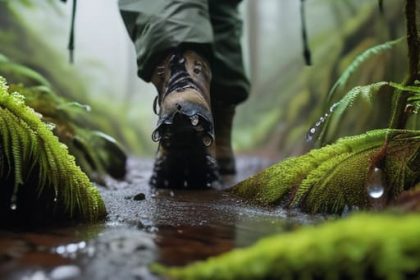
- Audit your footwear—theirs and yours. You cannot lead a dog effectively if you are struggling with your own stability. I’ve spent two decades watching people try to navigate steep descents in “lifestyle” trainers, only to have their dog pull them slightly off-balance and end in a twisted ankle. Ensure your boots have the grip to handle the extra lateral force of a moving animal, and make sure your dog has traction that matches the terrain.
- Manage the “Optimism Gap” with daylight. People often underestimate how much slower a dog makes a group. You aren’t just walking; you’re pausing to let them sniff, waiting for them to navigate a bog, or managing their fatigue. I always calculate my turnaround time based on the dog’s pace, not my own. If the forecast says sunset is at 6:00 PM, your goal should be to be off the ridge by 4:30 PM.
- Carry a dedicated “emergency kit” that isn’t just a first aid box. This means carrying a lightweight, collapsible bowl (I’ve used my SilNylon one for six years straight in everything from the Lake District to the Highlands) and a way to clean wounds. If you’re heading into remote areas, you are the only vet they have. Don’t rely on “it won’t happen to us”—I’ve seen enough torn nails and thorn-stabs to know it’s a matter of when, not if.
The Illusion of Capability
A dog’s enthusiasm is a dangerous metric for success; they don’t understand the way a temperature drop on a ridge feels or how quickly a descent turns into a liability when the light fails, so you have to be the one to make the call to turn back while you still have the daylight to do it safely.
Bridget Halloran
The Final Check
At the end of the day, hiking with a dog isn’t about matching their boundless energy; it’s about managing your own judgment to ensure they stay safe. We’ve covered the necessity of constant hydration to ward off heatstroke, the non-negotiable importance of leash etiquette in sensitive habitats, and how to read your dog’s body language before they reach their limit. I’ve seen too many trips end in a frantic, unplanned descent because someone ignored a panting dog or a mounting heat index. Remember that the most important piece of kit you carry isn’t a fancy GPS or a lightweight bowl—it’s your ability to recognize when the conditions have shifted and the smartest decision is the one that leads you back to the car safely.
There is a specific kind of quiet that settles over a ridge when you’re moving with a dog that understands the terrain just as well as you do. It’s a partnership built on trust and, more importantly, a shared respect for the mountain. When you get the logistics right—the water, the leash, the timing—you stop worrying about the “what ifs” and start actually seeing the landscape. Don’t chase the summit if the clouds are bruising or the dog is flagging; instead, find the joy in the measured pace of a well-planned route. The hills aren’t going anywhere, and they’ll be waiting for you next time, provided you respect the margin for error today.
Frequently Asked Questions
How do I know if my dog's paws are actually suffering from the terrain before they start limping?
Watch for the subtle shifts. It’s rarely a sudden limp; it’s usually a change in gait or a hesitant step when crossing scree or hot grit. If they start licking their paws excessively during a break, or if they’re dragging a foot slightly more than usual, the skin is already compromised. I’ve seen too many people ignore a subtle hitch in a stride, only to find raw, bleeding pads once the light fails.
What's the realistic limit for carrying extra weight, like water and food, without it affecting my own pace and safety?
It’s a sliding scale, but I generally tell people to watch the 15% rule. If your pack weight exceeds 15% of your body mass, your gait changes, your knees pay for it, and your decision-making slows down when you’re fatigued. I’ve carried a 12kg pack through a gale in the Cairngorms—used it for three seasons of heavy-duty trekking—and the fatigue hit much harder than the weight suggested. Prioritise calorie density; don’t carry heavy cans when dehydrated powders do the job.
At what point does the weather forecast become too risky to take a dog into more exposed, high-altitude terrain?
When the forecast shifts from “scattered showers” to “sustained winds” or a drop in temperature that makes you reach for your extra mid-layer, the risk threshold for a dog has already been crossed. I’ve seen too many people underestimate how quickly a ridge becomes a wind tunnel. If the wind speeds are forecast to hit anything that makes your face sting, or if the visibility is dropping, you turn back. Dogs can’t make that decision for themselves.