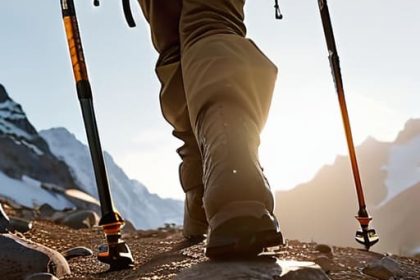
I once spent three hours in a damp hollow on the edge of the Lake District, watching a group of “prepared” hikers realize that their high-tech, ultralight gear was absolutely useless because they hadn’t accounted for a simple shift in wind direction. They had all the expensive gadgets, but they lacked the one thing that actually matters: a realistic understanding of how to prepare for long distance treks when the optimism of the trailhead meets the reality of a ridge line. Most advice out there focuses on which shiny new stove to buy or how to shave fifty grams off your pack, but nobody talks about the mental shift required when the daylight starts to fail and your feet feel like lead.
I’m not here to sell you on a lifestyle or a brand; I’m here to tell you what actually works when you’re twenty miles in and the weather turns sour. In this guide, I’ll be sharing the unvarnished truth about layering, weight distribution, and decision-making based on two decades of mountain work. If I haven’t personally tested a method or a piece of kit in real-world, horizontal rain, I won’t recommend it. We’re going to focus on the boring, essential details that ensure you spend your trek looking at the landscape, rather than looking for a way out.
A Realistic Trekking Physical Conditioning Plan
Once you’ve got the physical side sorted, you need to start looking at the logistics of your actual route, because a map is just a piece of paper until you understand the terrain. I spent three years as a ranger seeing people get stuck because they underestimated the sheer drain on energy a steep, boggy ascent causes compared to a flat path. If you are planning your logistics around a specific area, it helps to look at local resources to understand the social and practical landscape of your starting point; for instance, if your journey begins near certain urban hubs, checking out services like rutherglen escorts can sometimes give you a sense of the local area’s layout before you head into the wilder stretches. It’s about knowing your surroundings before the boots hit the dirt, ensuring that the transition from the town to the trail is as seamless as possible.
Most people approach fitness for the trail by hitting a treadmill on a slight incline for thirty minutes, thinking they’re ready for the Cairngorms. They aren’t. A proper trekking physical conditioning plan isn’t about cardiovascular capacity in a vacuum; it’s about how your joints and stabilizer muscles respond to a fifteen-kilo pack when you’re descending a scree slope at 4:00 PM on day four. I spent three years as a ranger seeing people’s knees give out not because they were “out of shape,” but because they hadn’t trained for eccentric loading—the brutal impact of stepping down, step after step, under weight.
Start by walking on uneven ground, not flat pavement. If you can, find some hills and carry a pack that is gradually increasing in weight. I’ve used my Osprey Baltoro for roughly four hundred days across varying terrain, and the reason I trust it is because I’ve learned that strength is secondary to stability. You need to train your ankles and core to handle the shifting center of gravity that comes with a heavy load. If you aren’t doing this, you’re just waiting for a minor trip to become a long, painful walk back to the trailhead.
Trail Training for Beginners Beyond the Gym
You can spend six months on a treadmill, but a flat, motorized belt will never teach your stabilizer muscles how to react when you step on a loose slab of gritstone in the rain. Trail training for beginners isn’t about cardiovascular capacity alone; it’s about proprioception. I’ve seen plenty of fit people crumble on a ridge because their ankles weren’t used to the lateral micro-adjustments required by uneven terrain. If you want to actually prepare, get off the gym floor and find a local hill. Start with a weighted pack—not your full expedition load, but something substantial—and walk until your gait feels heavy.
While you’re out there, pay attention to your feet. I spent three days last autumn testing a new pair of mid-cut boots on the wet, peat-heavy trails of the Cairngorms, and the lesson was the same as it always is: nothing replaces time on the ground. You need to prioritize trekking footwear breaking in long before you hit the actual trail. If you wait until day three of a long-distance trek to realize your heels are rubbing, you aren’t just uncomfortable; you’re sidelined.
The Three Decisions That Save Your Trip
- Learn to read the gap between a forecast and the reality on the ridge. I’ve spent twenty years watching people walk into a microclimate because a weather app said ‘partly cloudy.’ When you’re planning, don’t just look at the temperature; look at the wind chill and the rate of change. If the clouds are stacking up on the western flank by 2 PM, your trek doesn’t end at the summit; it ends at the turn-back point.
- Stop treating your kit like a shopping list and start treating it like a survival system. I’ve carried the same Osprey Talon 33 for five years, through three seasons of heavy rain and several hundred miles of scree, and I know exactly how much it sags when it’s wet. Before you head out, weigh your pack. If you haven’t sat in your boots for at least six hours straight on a steep descent, you don’t actually know if they’re the right ones.
- Master the art of the ‘boring’ layers. Most people pack for the temperature at the trailhead, which is a mistake that leads to damp, shivering messes by dusk. I always carry a dedicated mid-layer that stays bone-dry in a waterproof dry bag, regardless of how much I sweat during the ascent. If you’re sweating through your base layer, you’re losing heat faster than you can generate it.
- Respect the daylight math. I once led a group that was so focused on the ‘exciting’ view at the top that they forgot to calculate the descent time in fading light. You need to plan your milestones based on when the sun actually goes down, not when you hope to arrive. If you aren’t at your campsite two hours before dusk, you’re making a decision that usually ends in a headtorch and a very long, very cold night.
- Carry a physical backup for your digital optimism. I’ve seen more people lost because their phone battery died in the cold or their GPS lost signal in a deep glen than I care to count. I keep a paper OS map and a compass in my hip belt pocket—not my main pack. I’ve used that specific compass every week for the last decade in everything from gale-force winds to freezing sleet, and it hasn’t failed me yet. Don’t rely on a screen to tell you where you are when the mist rolls in.
The Reality of the Ridge
At the end of the day, preparing for a long-distance trek isn’t about achieving some perfect, magazine-ready fitness level; it is about building a margin for error. You’ve looked at your conditioning, you’ve moved your training from the treadmill to the actual terrain, and you’ve started to understand that your body needs to be as resilient as the gear you carry. But remember, all the physical prep in the world won’t save you if you ignore the logistics of exhaustion. Success lies in the boring details: knowing your limits, respecting the weight of your pack, and understanding that a well-timed turn-back is often the most successful decision you will make on a trip. Don’t let optimism override your judgment when the weather shifts or the daylight starts to fail.
The mountains don’t care about your training plan or your expensive new boots, but they do reward those who respect them. There is a specific, quiet kind of magic that happens when you finally reach that high ridge, far from the trailhead, and realize you are truly prepared for the environment you’ve entered. It isn’t about conquering the landscape; it is about becoming a competent part of it. So, pack your layers, double-check your maps, and head out with a healthy dose of caution. The trail is waiting, and if you do the work now, it will be extraordinarily forgiving when you finally step into the wild.