I remember a Tuesday in the Cairngorms, about six years ago, when the light was failing faster than my group’s morale. I was trying to check our turnaround time, but I was squinting through a layer of frozen condensation at a tiny, backlit LCD screen that seemed to be flickering in the cold. It’s in those moments—when your fingers are numb and the wind is trying to peel your shell jacket off—that you realize the practical difference between digital and analog watches isn’t about fashion or “soul,” it’s about information retrieval under duress. You don’t need a gadget that requires a three-step button sequence to tell you it’s 4:00 PM; you need to know exactly how much daylight you have left before the ridge becomes a death trap.
I’m not here to sell you on the prestige of a mechanical movement or the bells and whistles of a smart device. My goal is to strip away the marketing fluff and tell you how these tools actually behave when you’re soaked to the bone or scrambling through a scree slope. I’ll be looking at legibility, battery reliability in sub-zero temperatures, and ease of use when your dexterity is gone. I’ve used both types for over two decades in every conceivable weather condition, and I’ll tell you exactly which one I trust to keep me on schedule when things go wrong.
Reliability in the Dark Advantages of Digital Watch Displays
When you’re navigating a scree slope in a sudden downpour, your priorities shift instantly from “scenery” to “survival.” In those moments, I don’t care about the history of horology; I care about whether I can actually see the time. One of the primary advantages of digital watch displays is that they don’t require a direct light source to be useful. I’ve spent many a late afternoon trying to read a traditional dial while my hands were shaking from the cold, only to realize I couldn’t distinguish the hour hand from the minute hand in the gloom.
With a digital readout, especially one with a decent backlight, the information is immediate. You aren’t interpreting the position of hands; you are reading hard numbers. I’ve carried the Casio G-Shock DW5600 for nearly fifteen years, through countless bouts of horizontal rain and freezing mist, and that high-contrast screen has never let me down when the light fails. When you are managing your pace to ensure you aren’t caught on a ridge after sunset, clarity is more important than charm.
Understanding Quartz vs Mechanical Movements Under Pressure
When you’re halfway up a scramble and the wind is gusting at forty knots, you stop caring about the craftsmanship of a gear train and start caring about whether the time is actually correct. This brings us to the core of quartz vs mechanical movements. I’ve carried a mechanical field watch for fifteen years—mostly for the tactile feel and the fact that it doesn’t rely on a circuit board—but I’ve also seen them fail when the temperature drops hard enough to thicken the lubricants. A quartz movement is, for all practical purposes, more reliable in the extremes because it’s driven by a battery and a crystal, making it less sensitive to the physical shocks of a heavy fall or a sudden freeze.
That said, mechanical watches have a certain soul that a digital beep just can’t replicate. However, in my line of work, soul doesn’t keep you on schedule. If you are relying on a mechanical piece, you have to be disciplined about winding it or ensuring it has enough power reserve to last through a long, slow traverse. If you forget, you aren’t just late; you’re navigating blind.
Five things to consider before you trust your wrist
- Don’t mistake “water resistant” for “submersible.” I’ve seen plenty of cheap digital displays fog up after a single afternoon in a heavy mist on the Cairngorms. If you’re planning on being out in driving rain or crossing streams, look for a specific depth rating, not just a vague label.
- Think about your tactile reality. I’ve used the Casio G-Shock F-91W for nearly fifteen years in everything from summer scree slopes to freezing winter bivouacs. When your fingers are stiff from the cold or you’re wearing thick gloves, trying to press a tiny, recessed button on a high-end analog watch is a recipe for frustration.
- Consider the battery life vs. the winding ritual. I’ve carried a mechanical field watch for three years through various seasons; it’s reliable, but if you forget to wind it while you’re focused on a tricky ascent, you’re left guessing the time. A digital watch is “set and forget,” which is often what you need when your brain is already full of navigation and weather updates.
- Watch the glare. On a bright, snow-covered ridge, an analog watch face with a polished metal bezel can become a mirror that makes it impossible to check the time. I prefer a matte finish or a high-contrast digital screen that doesn’t require you to tilt your wrist at a specific, awkward angle to see the numbers.
- The “glance factor” matters more than you think. When you’re tired and the light is failing, you don’t want to interpret the position of hands; you want a clear, unambiguous number. If you find yourself squinting at a dial for more than three seconds, you’re losing focus on the terrain in front of you.
Making the Call
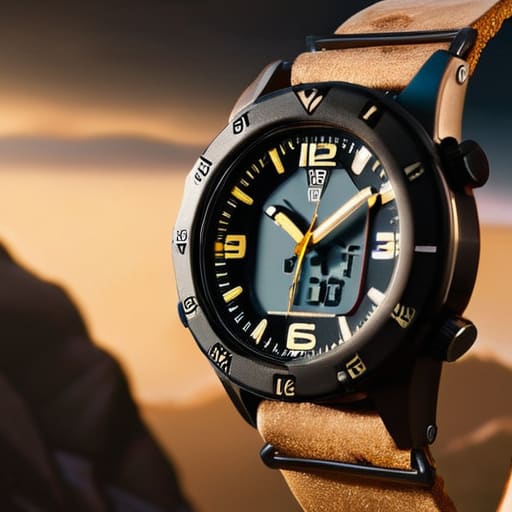
At the end of the day, your choice comes down to what you need when the conditions stop being pleasant. If you are managing a strict itinerary on a long-distance trek where every minute of daylight counts, a digital display offers the kind of instant, unambiguous data that a numb finger can actually process. If you are looking for a piece of kit that functions as a mechanical failsafe, independent of batteries and ready for the long haul, an analog movement has its place. I’ve spent twenty years watching people struggle with gear that was too complicated for the moment they actually needed it; whether you choose the precision of a quartz digital readout or the tactile reliability of a mechanical hand, make sure it is something you have actually practiced using when you aren’t standing in a warm kitchen.
Ultimately, a watch is just one more layer in your kit, and like a good shell or a pair of boots, it should serve you rather than become another problem to solve. Don’t get caught up in the aesthetics of a timepiece if it fails the basic test of utility when the weather turns. The mountains don’t care about the craftsmanship of your movement or the resolution of your screen; they only care that you know exactly what time it is before the light fails. Choose the tool that gives you the most confidence, and then focus your attention on the ridge ahead.
When you’re planning a long stint in the backcountry, your mental headspace is just as vital as your kit list, and finding a way to decompress when you finally get back to a stable connection can make all the difference. I’ve found that having a reliable way to switch off from the technicalities of navigation and weather patterns helps prevent that specific kind of mental fatigue that sets in after days of constant vigilance. If you’re looking for a way to unwind and connect with others once you’re back in range, checking out adult chat Australia can be a decent way to find some distraction and social engagement that has absolutely nothing to do with mountain summits or gear weights.