I once watched a group of very capable hikers, well-equipped for a summer trek, huddle under a lightweight bivvy bag that was clearly designed for a sunny afternoon in the Lake District, not a sudden gale on a granite ridge. They were shivering, soaked, and staring at a piece of nylon that had more holes than a sieve because they’d prioritized gram-counting over actual protection. Most gear guides will try to sell you on the latest ultralight tech, but when you’re deciding how to choose an emergency shelter, the spec sheet is often the least important thing in your pack. If it can’t stand up to a sustained 40mph wind or keep the condensation from turning your sleeping bag into a sponge, it isn’t a shelter—it’s just a very expensive, very thin piece of rubbish.
I’m not here to parrot marketing fluff or tell you that every new piece of kit is a life-saver. Instead, I’m going to break down what actually matters when the light is failing and the weather turns. I’ll look at the weight, the deployment speed, and how these shelters actually perform when the conditions get ugly. We’ll focus on the practicalities of staying dry and warm, because at the end of the day, the right choice is the one that keeps you from becoming a statistic.
Table of Contents
Emergency Bivvy vs Tarp Choosing Your Line of Defense
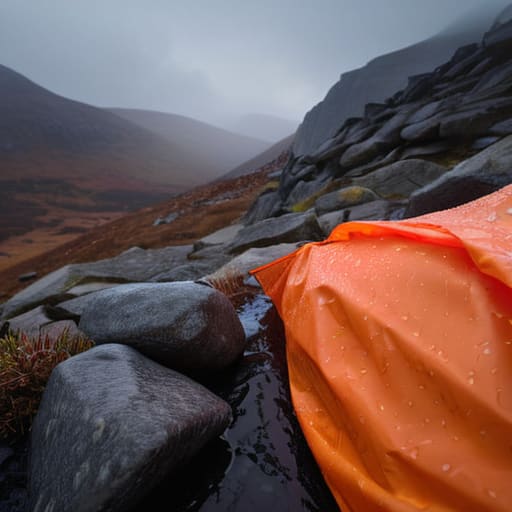
The choice between an emergency bivvy vs tarp usually comes down to how much you trust your ability to manage your own microclimate. I’ve spent a decade pulling people out of scrapes where they’d tried to sleep under a thin sheet of silnylon in a gale, and they were shivering long before the sun came up. A bivvy bag is your primary line of defense when things go wrong fast. It’s compact, it’s easy to deploy when you’re exhausted, and it provides a physical barrier against the wind. I’ve used my SOL Emergency Bivvy in heavy sleet across the Cairngorms for over forty hours of unplanned stationary time; it’s not a palace, and the condensation can get claustrophobic, but it keeps the core temperature from plummeting.
A tarp, on the other hand, is about versatility and space. If you have the time and the steady hands to pitch it properly, it offers much better weather protection for hikers who need to sit up, cook, or manage gear. However, a tarp offers zero protection if you can’t get it tensioned correctly. If you’re chasing ultralight survival gear to shave grams, remember that a tarp requires stakes, cord, and skill—none of which are easy to manage when you’re hands-deep in a ridge-line storm.
Weather Protection for Hikers When the Forecast Fails
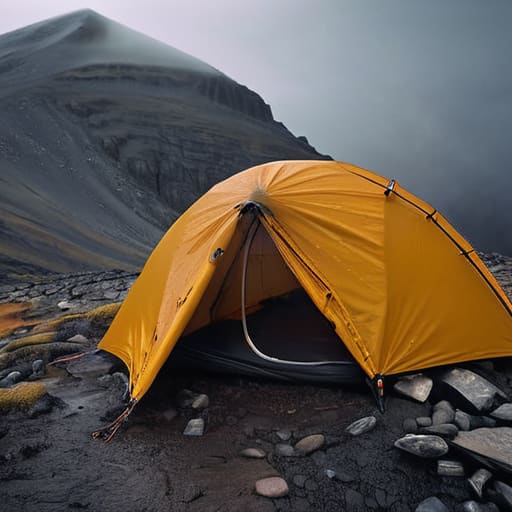
When the clouds drop and the temperature plunges, most people realize too late that their “waterproof” shell is actually just a heavy, breathable sponge. If you’re caught in a sudden whiteout or a driving rainstorm on a ridge, your shelter isn’t just about staying dry; it’s about managing the microclimate between your skin and the fabric. I’ve spent many a night in a minimalist camping shelter where the biggest threat wasn’t the wind, but the condensation from my own breath turning my sleeping bag into a block of ice. You have to account for the fact that wind resistance and durability are non-negotiable when you’re pinned down on a lee side that isn’t actually lee.
I’ve carried various bits of ultralight survival gear over the last decade, and I’ve learned that a shelter is only as good as its ability to handle the specific way a storm hits. A tarp offers better ventilation, which helps if you’re sweating through a climb, but an emergency bivvy provides that vital, immediate barrier when the wind is trying to peel you off the mountain. If you choose the tarp, ensure you have the skill to pitch it before the rain starts horizontal; otherwise, you’re just sitting in a very expensive, very cold puddle.
Five Real-World Checks Before You Commit to a Shelter

- Don’t trust the weight alone; I’ve carried 200g ultralight shelters that turned into nothing more than a glorified tea towel the moment a gust hit a ridge in the Cairngorms. If the fabric denier is too low for the terrain you’re actually walking in, you aren’t buying a shelter, you’re buying a future problem.
- Check the footprint and the stakes. I’ve spent far too many nights in horizontal rain trying to secure a shelter with ground that was more peat than soil, and if your kit doesn’t include robust, versatile pegs, you’ll find yourself sitting in a puddle while your “emergency” gear flies away.
- Consider your ability to get inside it while shivering. If a shelter requires a complex, ten-minute dance of poles and tension lines to set up, you’ve already lost the battle against hypothermia; I always test my gear in the garden in the dark to see if I can actually deploy it when my fingers are numb.
- Look at the ventilation, not just the waterproof rating. A shelter that keeps the rain out but traps your breath is just a high-tech sauna, and once that condensation starts dripping on your sleeping bag, you’re heading toward a much more serious situation than you planned for.
- Match the shelter to your specific “worst-case” scenario. If you’re a fast-and-light scrambler, a bivvy might be the right call for the weight savings, but if you’re planning long, slow traverses in unpredictable weather, you need the internal space of a tarp to manage your layers without getting soaked from the inside out.
The Weight of a Bad Decision
“I’ve seen too many people obsess over saving fifty grams on a kit list, only to end up shivering in a lightweight bivvy that offers zero breathability when the mist rolls in and the temperature drops ten degrees in twenty minutes. An emergency shelter isn’t a piece of lightweight gear you hope you never use; it’s the thin, physical line between a long night in a sleeping bag and a hypothermia call-out that nobody wants to make.”
Bridget Halloran
The Final Decision
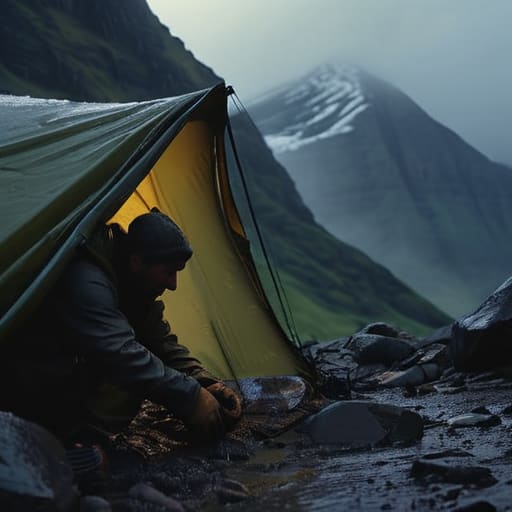
At the end of the day, choosing a shelter isn’t about finding the lightest piece of kit or the one with the most impressive marketing jargon. It is about matching your gear to the specific reality of your environment. If you are moving fast through technical terrain, a lightweight bivvy might be your lifeline; if you are hunkering down in a valley to wait out a gale, a more robust tarp setup offers the space you need to stay dry and move your limbs. I have spent twenty years watching people struggle because they chose gear for the sunny walk they planned rather than the storm they actually encountered. Whatever you pick, make sure you have practiced setting it up in the dark and in the wind, because the first time you use it shouldn’t be when your hands are shaking from the cold.
The mountains don’t care about your gear list, and they certainly don’t care about your optimism. They only respond to the reality of the conditions you find yourself in. My advice is to respect the gap between a manageable hike and a survival situation by preparing for the worst-case scenario before you even leave the trailhead. When you carry the right shelter, you aren’t just carrying extra weight; you are carrying the ability to stay calm when the weather turns. The best gear is the stuff that works exactly when you stop being able to think clearly.
Frequently Asked Questions
If I'm planning on solo winter traverses, is the extra weight of a heavy-duty bivvy bag worth the protection, or should I stick to a lighter tarp setup?
For solo winter traverses, forget the tarp. I’ve spent too many nights watching a lightweight setup fail when the wind turns from a breeze to a gale. If you’re solo in winter, you aren’t just looking for shelter; you’re looking for a microclimate. I’ve used the Carinthia Expedition bivvy for six seasons in sub-zero, wind-blasted conditions; it’s heavy, but it keeps the heat in when you’re too exhausted to move. Weight is secondary to staying alive.
How do I actually test if a shelter is windproof enough for a ridge line before I'm stuck in a gale?
You don’t test it on a ridge; you test it in your garden or a local park on a Tuesday evening. I’ve spent fifteen years watching people realize their “ultralight” shelter is actually just a glorified tea towel the moment a real gust hits. Find a day with a steady breeze, pitch it, and sit inside. If you feel the fabric snapping violently or see the walls bowing inward, it’ll fail you when the temperature drops.
At what point does the weight of my emergency kit start to compromise my ability to move quickly when the weather turns?
It’s a trade-off that usually bites you when you’re tired. I’ve seen people carry a heavy, multi-person shelter “just in case,” only to move so slowly they’re caught on a ridge after sunset. If your kit adds enough weight to change your gait or makes you hesitate on a scramble, it’s too heavy. Aim for a kit that lets you move decisively. Speed is often your best survival tool when the clouds drop.