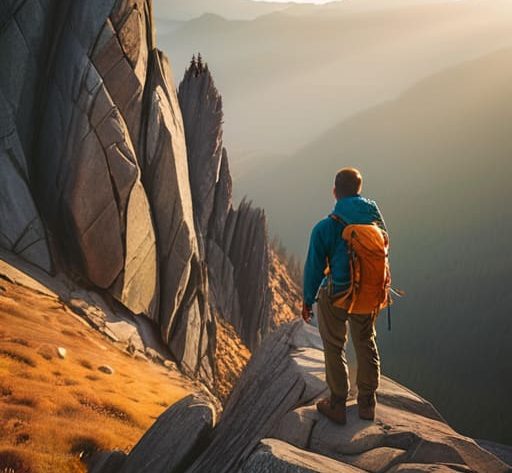
I was standing on a granite ridge in the Cairngorms three years ago, watching a guy try to navigate a sudden mist bank using nothing but a shiny new GPS unit and a sense of misplaced confidence. He had all the expensive gadgets, but he hadn’t actually listened to the mountain, and he certainly hadn’t planned for the moment the visibility dropped to five meters. Most of the advice you see online about safe hiking practices for solo travelers feels like it was written by someone who has only ever walked on paved paths in bright sunshine. They tell you to buy more gear, but they rarely talk about the mental discipline required to turn back when your ego is telling you to push for the summit.
I’m not here to sell you a subscription to a satellite messenger or a lightweight titanium spork. What I want to do is talk about the unglamorous, sometimes frustrating realities of moving through the landscape alone. I’ll be sharing the specific, hard-won lessons I’ve gathered from twenty-two years of leading groups and watching weather systems turn predictable afternoons into emergencies. We are going to focus on the decisions that actually matter—the ones made hours before the trouble starts.
Communicating Your Itinerary to Others Before the Trail Starts
One thing I’ve learned from two decades of watching people misread the terrain is that your gear is only as good as your ability to manage your own physical limits. When you’re out there on your own, you don’t have a partner to notice that your pace is flagging or that your decision-making is getting sloppy due to fatigue. I always tell my groups that self-awareness is your most vital piece of kit. If you’re looking for more practical ways to build that confidence and understand the specific challenges of navigating remote areas, checking out the resources at tsladies online can provide some really useful perspectives on finding your footing. It isn’t about being fearless; it’s about being thoroughly prepared so that when the weather turns, you aren’t left guessing.
I’ve spent more time looking at maps in the back of an ambulance than I care to admit, and more often than not, the first question the rescue team asks isn’t about your injury—it’s about who knew where you were. When you’re out there by yourself, your itinerary isn’t just a plan; it’s your lifeline. I don’t mean a vague text saying, “Heading to the Lakes today.” That’s useless. You need to provide a specific route, including your intended entry and exit points, and—most importantly—a hard deadline for when someone should actually start worrying.
If you haven’t reached your destination or checked in by that specific time, that is the trigger for them to call for help. This is a fundamental part of communicating itinerary to others effectively. I always tell my clients to leave a written copy with a person who isn’t even hiking that day, someone who has no intention of heading into the wind to find you. It’s about removing the guesswork for the people left behind. Good trail safety for single hikers relies on the assumption that you might not be able to reach your phone when things go sideways; make sure the plan is already in someone else’s hands before you even lace up your boots.
Navigating Trails Alone Safely When the Daylight Fades
The biggest mistake I see people make is treating daylight like a suggestion rather than a hard deadline. You can be halfway up a climb, feeling strong and capable, but the light doesn’t care about your momentum. When you are navigating trails alone safely, you have to respect the “dimming” period. I’ve seen too many people try to push through that final hour of dusk, only to find that once the shadows stretch, your depth perception vanishes and every rock looks like a ledge. If you aren’t at your intended camp or waypoint by the time the sun hits the horizon, you need to stop.
This is where your essential gear for solo trekkers becomes your lifeline rather than an afterthought. I’ve carried the Petzl Swift RL headlamp for three seasons now, through everything from heavy mist in the Cairngorms to bone-dry summer evenings, and it’s never failed me. Don’t just rely on a phone torch; you need a dedicated light source with enough lumens to actually see the ground in front of you. Always carry a secondary, smaller light in a different pocket. When the light fails, your ability to make calm, rational decisions disappears almost instantly.
The Three Decisions That Usually Go Wrong
- Trust your gut on the weather, not the app. I’ve spent twenty years watching people stare at a sunny screen while the wind speed on the ridge is actually doubling every hour. If the clouds start stacking up or the temperature drops faster than the forecast predicted, you turn back. It isn’t a failure; it’s just good math.
- Manage your energy like a bank account. When you’re solo, you don’t have a partner to split the load or keep the pace. I’ve used the Osprey Talon 30 for about four years now, mostly on long, heavy-pack days in the Lake District, and I’ve learned that if you push too hard in the first three hours, you’ll be paying for it with exhaustion when you actually need your wits about you.
- Carry a physical backup for every digital tool. I don’t care how good your GPS or smartphone is; batteries hate the cold, and screens crack. I always carry a laminated map and a compass I’ve used daily for five seasons. If you can’t navigate when the electronics die in a downpour, you aren’t solo hiking—you’re just lost.
- Pack for the worst-case scenario, not the sunny morning. I always carry a lightweight emergency bivvy—the SOL Emergency Bivvy, which I’ve used in several unplanned overnight stays during heavy mist—because the gap between a “quick walk” and a “night on the hill” is much smaller than most people think.
- Set a hard turnaround time and stick to it. If your plan was to be off the summit by 1:00 PM to avoid the afternoon wind, and it’s 12:45 PM and you’re still a mile out, you stop. That one optimistic decision to “just push a bit further” is exactly how I ended up walking people off hills in the dark.
The Margin Between Success and Trouble
At the end of the day, solo hiking isn’t about bravery; it’s about the discipline of the small, unglamorous decisions. It’s about leaving that itinerary on the kitchen table, respecting the hard stop of a turnaround time, and knowing exactly when a darkening sky means you should be heading for the valley rather than pushing for the summit. Most of the trouble I’ve seen doesn’t start with a massive storm, but with someone deciding that one more hour of light is worth the risk of losing their way. If you manage your time, your communication, and your expectations, you’ve already won half the battle.
There is a profound, quiet sort of clarity that comes from being alone on a ridge, hearing nothing but the wind and the occasional cry of a buzzard. It is a way of being in the world that most people never quite grasp. But remember, the mountains don’t care about your goals or your grit; they are entirely indifferent to your presence. Respect that indifference by being prepared, being cautious, and knowing that the most successful hike is always the one where you walk back into your car exactly when you planned to, feeling tired but entirely in control.