I remember a Tuesday in the Cairngorms, about six years ago, sitting in a sodden tent while the wind tried to peel the flysheet off. I was staring at a handful of lukewarm, silt-heavy water from a stream, wondering if my current setup was actually going to clog the moment I needed it most. Most gear guides make learning how to choose a water filter sound like a complex math equation involving micron ratings and flow rates that don’t actually matter when you’re shivering at dusk. They sell you on the high-tech specs, but they rarely talk about how a filter performs when you’re exhausted, freezing, and trying to draw water from a peat bog that’s more mud than liquid.
I’m not here to repeat a manufacturer’s brochure or tell you that the most expensive pump is the best one. I’m going to tell you what actually works when the weather turns and the terrain gets difficult. I’ll break down the weight, the reliability in cold temperatures, and how much effort it actually takes to use them when you’re running low on daylight. This is about practical, honest advice so you can stop worrying about the kit and start focusing on the ridge ahead.
Table of Contents
Beyond the Hype Comparing Water Purification Methods

When you’re looking at different water purification methods, the marketing brochures tend to blur the lines between “making water safe” and “making water drinkable.” Most people think a simple squeeze filter is a magic wand, but it’s important to understand what you’re actually doing. I’ve used a hollow-fibre pump for over five years in the Cairngorms, and while it’s excellent for removing bacteria and protozoa, it won’t touch viruses or heavy chemical runoff. If you’re planning a trek near old mining sites or heavy agricultural runoff, a standard mechanical filter isn’t enough; you’re essentially just passing the problem through a very fine sieve.
I don’t bother with the debate of reverse osmosis vs carbon filters when I’m out on a multi-day ridge walk—osmosis systems are far too heavy and complex for a pack meant for moving quickly. However, I do rely on a small carbon-based component in my setup to improve the taste and help with removing contaminants from drinking water like tannins that turn a clear stream into something that looks like weak tea. If you want pure, chemical-free water, you need to know exactly what you’re trying to kill, not just what the box says it can do.
Removing Contaminants From Drinking Water Before They Hit Your Gut

When you’re standing by a stream that looks crystal clear, it’s easy to let your guard down. But clarity is a liar. I’ve seen plenty of hikers fall ill because they mistook a mountain trickle for something safe, forgetting that upstream runoff—whether from sheep feces or a dying grouse—can turn that water into a biological hazard in minutes. Removing contaminants from drinking water isn’t just about getting rid of grit; it’s about tackling the microscopic stuff that actually shuts your system down.
If you are looking at different water purification methods, you need to decide what you are actually fighting. Most portable hollow-fibre filters are brilliant for bacteria and protozoa, but they won’t touch viruses or heavy metals. I’ve used my Sawyer Squeeze through four seasons of heavy silt and mountain runoff; it’s reliable for the basics, but it won’t provide the chemical-level scrub you’d find in more complex potable water filtration systems. Unless you are dealing with industrial runoff or saltwater, you can usually skip the complexity of reverse osmosis vs carbon filters, but never skip the step of ensuring your filter is rated for the specific threats in your local watershed.
The Practicalities: What Actually Matters When You're Thirsty
- Don’t get blinded by flow rates. A filter that claims to process two litres a minute sounds great on a spec sheet, but I’ve spent many an hour in the Cairngorms trying to squeeze water through a tiny straw-style filter while my hands were numb and the light was failing; if the flow rate is too slow, you’ll find yourself making desperate, poor decisions about when to stop and refill.
- Consider the sediment, not just the bacteria. I’ve used the Sawyer Squeeze for five seasons now, through everything from clear mountain tarns to the silt-heavy, tea-coloured streams of the Highlands; if you don’t have a way to pre-filter through a buff or a fine cloth, you’ll be spending your evening back at camp meticulously cleaning a clogged membrane instead of resting.
- Weight is a lie if the durability isn’t there. A ten-gram filter is useless if it cracks the first time you drop it on a granite slab or if the housing fails after a week of heavy use; I weigh my kit against the reality of being tired, cold, and clumsy—if it feels too fragile for a real mountain environment, leave it in the shop.
- Think about your “fail state.” When a filter fails, it usually fails by clogging or by leaking; I always carry a backup method—usually chlorine dioxide tablets—because I’ve seen too many people realize their primary system is broken only when they are already dehydrated and the sun is down.
- Match the filter to your typical terrain. If you are mostly doing well-trodden paths near established water sources, a lightweight squeeze filter is fine, but if you are planning multi-day traverses in areas where water is scarce or highly turbid, you need a system with more volume and a more robust mechanical filtration process.
The Cost of an Optimistic Decision
I’ve spent too many nights in a damp tent watching a client shiver because they thought a clear mountain stream was a guarantee of safety; when you’re choosing a filter, don’t look at the marketing photos of sunlit lakes, look at how it handles the silt-heavy, grey runoff of a storm when you’re exhausted and just need to drink.
Bridget Halloran
Don't Let Your Gear Decide for You
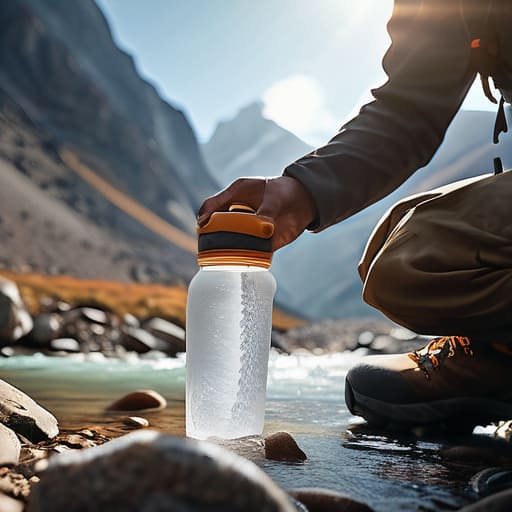
Ultimately, choosing a filter isn’t about finding the most expensive piece of tech; it’s about matching the tool to the reality of your route. If you are planning a fast-and-light scramble where every gram counts, a lightweight squeeze filter is your best friend. But if you are heading into high-altitude terrain or areas where the water is thick with glacial silt, you need something more robust that won’t clog after the first ten liters. I’ve spent too many evenings sitting in a damp tent, nursing a stomach ache because I chose a filter based on a weight spec rather than the actual turbidity of the streams on my map. Remember to weigh the trade-offs between flow rate, filtration depth, and how much maintenance you are actually willing to do when you’re tired and cold.
At the end of the day, the goal of all this gear-obsessed thinking is simple: to get you back to the trailhead safely so you can do it all again. The mountains don’t care about your kit list, but they certainly care about your preparation. When you have the right system in place, you stop worrying about the small, invisible threats in the water and start noticing the things that actually matter—the way the light hits a ridge or the sudden, silent shadow of a peregrine passing overhead. Trust your preparation, respect the environment, and keep your eyes on the horizon rather than just your feet.
Frequently Asked Questions
How much weight am I actually adding to my pack if I choose a gravity system over a squeeze filter?
You’re looking at an extra 300 to 500 grams, minimum. I’ve used the Sawyer Squeeze for six seasons on long-distance treks; it’s a tiny, lightweight thing you can tuck into a side pocket. A gravity system requires bags, hoses, and a heavier setup to create the necessary pressure. If you’re moving fast and solo, that weight adds up. But if you’re setting up camp for three days, that extra weight is a fair trade for not having to spend twenty minutes squeezing every liter.
Will a standard hollow-fibre filter actually clear the silt out of a glacial stream, or am I going to end up with a clogged piece of kit halfway through my route?
The short answer is no. A hollow-fibre filter is designed for bacteria and protozoa, not sediment. If you try to pull silt-heavy glacial water through one, you’ll clog those microscopic pores in minutes. I’ve spent three days in the Cairngorms with a Sawyer Squeeze that nearly died because I was too impatient to let the grit settle. Always let your water sit in a bottle first, or use a pre-filter like a coffee filter or a buff.
If I'm planning a multi-day trek in freezing conditions, how do I stop my filter from cracking or losing its effectiveness?
The biggest mistake I see is leaving a filter in a pack overnight when the temperature drops. If the water inside freezes, it expands and cracks the internal membranes; you won’t see the damage until you’re miles from camp and it fails. I’ve used my Sawyer Squeeze through four days of sub-zero nights in the Cairngorms, and the only way it survived was sleeping with it inside my sleeping bag. Keep it warm, or don’t rely on it.