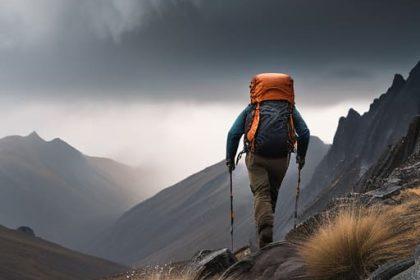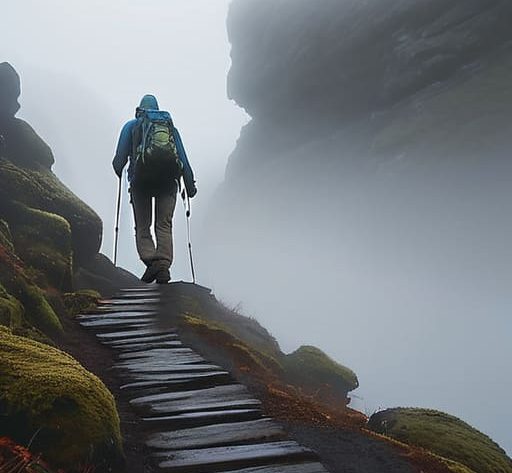
I remember standing on a ridge in the Cairngorms three years ago, watching a group of hikers stare blankly at a high-end GPS unit as if it were a magic wand. The mist hadn’t just rolled in; it had swallowed the world whole, turning a clear path into a featureless grey void in less than ten minutes. They were waiting for a signal that wasn’t coming, completely ignoring the compass in their hands and the basic reality of the terrain. Most people think learning how to navigate in poor visibility is about buying the most expensive satellite tech on the market, but that’s a dangerous fallacy. In reality, technology is just a secondary layer; your actual safety depends on how you interpret the ground when you can no longer see the horizon.
I’m not here to sell you on a new gadget or give you a theoretical lecture from a classroom. I’m going to tell you exactly what I’ve learned from two decades of walking people off hills and through whiteouts. We’re going to talk about the unglamorous, essential skills—the kind of stuff that involves stopping before you’re lost and understanding how to read a contour line when your eyes are playing tricks on you. This is about the practical, boring, and vital steps that bridge the gap between a difficult day and a mountain rescue.
Table of Contents
Using a Compass in Fog Before You Lose Your Way
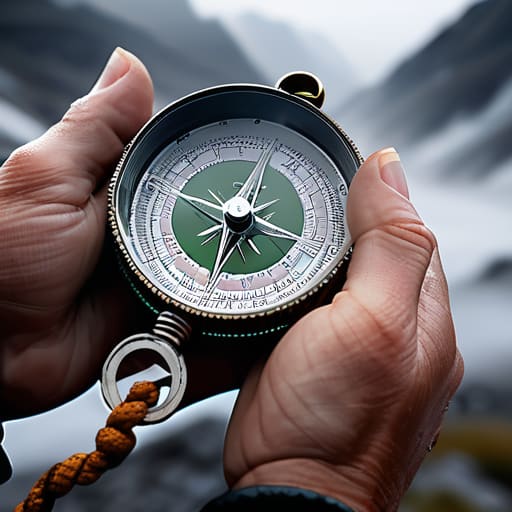
The moment the mist swallows the ridge, your world shrinks to the three feet of ground directly in front of your boots. This is when people make the mistake of trying to “feel” their way along a path, trusting their gut rather than their tools. I’ve seen too many groups wander aimlessly because they waited until they were truly lost to pull out their kit. Using a compass in fog isn’t about finding a new route; it’s about confirming you are still on the one you intended to take.
Before you lose that sense of direction, stop. Find a handrail—a stream, a fence line, or a distinct contour—and use it to verify your bearing. If you are moving through high plateau or heavy cloud, you should be practicing constant terrain association methods, checking your map against whatever small features remain visible. I’ve used my Silva Expedition model for over six years in everything from damp Lakeland mist to freezing Scottish rain, and it’s the only thing I trust when the landmarks vanish. Don’t wait for the panic to set in; once the disorientation starts, your ability to make a logical decision drops significantly.
Preventing Disorientation in Whiteout With Steady Terrain Association Metho
When the snow starts falling thick enough to erase the horizon, you lose the ability to judge distance by sight. This is where most people make that one optimistic mistake—trying to “push through” to the next ridge because they think they can see it. In a true whiteout, you have to stop relying on your eyes and start relying on your map through terrain association methods. I spent three days last February on a plateau in the Cairngorms where the world was nothing but a featureless white void; I survived by keeping my hand on the map and constantly checking my position against the last known contour lines I’d crossed.
You cannot afford to be reactive. To succeed with preventing disorientation in whiteout conditions, you must move in short, deliberate bursts. Pick a feature—a specific rock, a dip in the ground, or a change in slope—and confirm it against your map before you move to the next. If the ground becomes too featureless to distinguish from the sky, stop. It is better to sit tight and wait for a break in the weather than to wander aimlessly into a crevasse or off a ledge because you thought a slope was leveling out when it was actually dropping away.
Five ways to stop a wrong turn from becoming a crisis
- Trust your instruments over your gut. I’ve seen enough people walk in circles because they “felt” like the path should be to the left, even when the compass said otherwise. When the clouds drop and the landmarks vanish, your internal sense of direction is the first thing to fail. If the needle says you’re heading East, you are heading East. Don’t argue with it.
- Slow your pace to match your visibility. If you can only see five metres ahead, you shouldn’t be moving at a hiking clip. I’ve spent many an afternoon crawling along a ridge line in a thick mist, taking one deliberate step at a time. It’s frustrating and it’s slow, but it’s the only way to ensure you don’t accidentally step off a ledge or wander into a peat hag while trying to maintain momentum.
- Use “aiming off” to manage your uncertainty. If you know you need to hit a specific stile or a bend in a stream, don’t aim directly for it. Aim slightly to one side of it—say, fifty metres to the left. When you hit the feature, you’ll know immediately whether you need to turn left or right to find your target. It’s a small mental adjustment that prevents you from walking straight past your goal and into the void.
- Check your bearings more often than you think you need to. Don’t wait until you feel lost to pull out the map. I make it a habit to check my position every ten or fifteen minutes, even if I think I know exactly where I am. It’s much easier to correct a two-degree error while you’re still on the path than it is to find your way back once you’ve drifted a kilometer into the wrong valley.
- Know your “turn-back” point before you reach it. This isn’t about gear; it’s about the decision. Before you start the ascent, decide at what point the visibility or the light makes the situation too risky. I’ve had to turn groups back at 2:00 PM because the cloud base was dropping too fast, and I’ve learned that the most successful leaders are the ones who aren’t afraid to admit the day is over. It’s better to be disappointed on the descent than to be a casualty on the ridge.
The cost of a single wrong turn
I’ve spent two decades watching people walk themselves into trouble not because they lacked a map, but because they lacked the discipline to stop when the clouds dropped. In low visibility, your biggest enemy isn’t the fog; it’s that small, quiet voice in your head telling you that you’re ‘fine’ and can make it to the next ridge before you actually need to check your bearings.
Bridget Halloran
The decision to turn back
At the end of the day, navigating in the fog isn’t just about knowing how to hold a compass or reading a contour line; it is about managing your own psychology. You have to use those tools—the compass, the map, and the terrain association—to build a bridge of certainty before the visibility drops to nothing. If you find yourself constantly checking your bearings because you no longer feel sure of your position, that is your signal. Don’t wait for the whiteout to become total or for the light to fail completely. The most important navigational skill I have learned in twenty-two years on these hills is knowing when to stop moving and reassess before a small error becomes a search and rescue operation.
There is a specific kind of quiet that comes with being on a ridge when the clouds descend, and it can be incredibly seductive to push just one more mile toward the summit. But the mountains aren’t going anywhere, and they don’t care about your itinerary. Respect the gap between a manageable mist and a dangerous whiteout. When you choose to turn back because the weather has turned, you aren’t failing the hike; you are mastering the environment. That is the mark of a real mountain leader, whether you’re leading a group or just leading yourself home.
Frequently Asked Questions
What happens if my compass starts acting up because of local magnetic interference or gear I'm carrying?
If your needle starts dancing or refuses to settle, stop immediately. I’ve been caught out by a compass swinging wildly because I had my heavy-duty knife and a steel multi-tool too close to my chest during a descent in the Cairngorms. It’s a simple fix: move your metal gear, your phone, or even your heavy backpack at least a meter away. If it still won’t behave, you’re dealing with local mineral interference, and you’ll need to rely on your map and terrain.
At what point do I decide that the visibility is too poor to continue and that it's time to turn back?
The moment you start questioning if that shape is a boulder or a landmark, you’ve already gone too far. I’ve seen too many people try to “push through” because they’re only twenty minutes from the summit, only to spend six hours lost in a descent they can’t navigate. If your pace drops because you’re second-guessing every step, or if the fog is swallowing your hand in front of your face, turn around. The ridge isn’t going anywhere.
How do I manage my group's morale and keep them focused when the fog makes everything feel disorienting and stressful?
When the fog rolls in and the group starts looking at each other with that wide-eyed, panicked stare, stop. Don’t keep pushing. I’ve seen too many people walk straight into a crisis because they were too embarrassed to admit they were lost. Gather everyone, get them out of the wind if you can, and be blunt. Tell them exactly what the plan is. Clarity is the only thing that kills panic. Control the pace, keep the conversation steady, and don’t let anyone make an optimistic decision just to get moving again.