I’ve spent twenty-two years watching people mistake “wild” for “careless,” and nothing irritates me more than seeing a scorched patch of earth left behind because someone thought a massive, roaring blaze was the only way to get warm. The truth is, most people think they need a bonfire to enjoy the night, but if you’re actually learning how to build a sustainable campfire, you’re looking for heat and efficiency, not a localized forest fire. I remember a group I led back in 2014—middle of a damp October in the Lake District—where the leader tried to force a fire in a high-wind area by piling up deadwood like a pyre. We spent three hours fighting a losing battle against the wind and leaving nothing but a blackened scar on the peat.
In this guide, I’m going to strip away the romanticized nonsense and give you the practical mechanics of fire management. We’ll cover fuel selection that doesn’t strip the local habitat bare, how to manage your embers so you aren’t leaving a mess for the next person, and why your choice of site is more important than the matches in your pocket. This isn’t about fancy survival tricks; it’s about respecting the ground you walk on.
Guide Overview
Tools & Supplies
- Small shovel or trowel for pit preparation
- Handheld knife or hatchet for processing kindling
- Dry tinder (dry leaves, pine needles, or birch bark) – 1 handful
- Kindling (small twigs, 1-2 inches diameter) – 1 bundle
- Fuel wood (larger branches, 3-4 inches diameter) – 1 bundle
- Water or sand for extinguishing – 1 bucket/container
Step-by-Step Instructions
- 1. First, you need to find the right spot, and no, that doesn’t mean “wherever looks nice.” If you aren’t at a designated campsite with existing rings, you need to find a spot on mineral soil or sand—never on organic matter, peat, or directly on top of moss. I’ve spent too many hours repairing footpath edges that people have scorched just because they wanted a view, so look for a flat, clear area away from any low-hanging branches or dry scrub.
- 2. Once you have your site, build a protective barrier to contain the heat and the embers. If you are in a high-wind area—and let’s be honest, if you’re on a ridge, you are—you should clear a circle about a meter wide down to the bare earth. I usually use a small trowel to scrape away the top layer of duff and needles; it takes an extra three minutes, but it prevents the fire from creeping underground through the root systems.
- 3. Gather your fuel using the “dead and down” rule, and I mean it. Don’t go snapping branches off living trees; it’s bad for the ecosystem and the wood won’t burn well anyway. You need three distinct sizes: tiny slivers for tinder, pencil-thick sticks for kindling, and larger logs for the main burn. I’ve carried a small folding saw in my pack for fifteen years, and it’s much more efficient than trying to break wood by hand, provided you’re working with the grain to avoid splinters.
- 4. Construct your structure using a “teepee” or “log cabin” method, depending on how much wind you’re fighting. For a quick, hot start, the teepee method works best, but if you’re trying to sustain a steady heat for cooking, the cabin method provides a more stable airflow. I prefer the cabin style when I’m settled for the night because it doesn’t collapse into a heap of ash as quickly, which makes the cleanup much easier.
- 5. Light the fire from the windward side, meaning you’re letting the breeze feed the flames rather than fighting it. Start with your smallest tinder in the center and build up slowly; the biggest mistake I see is people trying to throw a large log onto a tiny flame and suffocating the heat before it even gets going. You have to be patient and let the thermal mass build up gradually.
- 6. Manage your fuel consumption so you aren’t left with a massive, unmanageable pile of half-burnt wood at midnight. It is much easier to add small pieces of wood as needed than it is to try and tame a roaring bonfire that has grown out of your control. Keep your pile small and controlled; a large fire is a waste of energy and a massive risk to the surrounding terrain.
- 7. When you are ready to pack up, you don’t just walk away because the flames look low. You need to “drown, stir, and feel.” Pour water on the embers, stir the ashes with a stick to ensure every hot spot is soaked, and then touch the ground (carefully) to ensure it is cold to the touch. If it’s still warm, it’s not done, and you haven’t finished your job.
Eco Friendly Firewood Selection Choosing What the Forest Can Spare
When you’re out on a long trek and the weather starts to turn, sometimes the most important part of camp management isn’t the wood you’re gathering, but the mental preparation you do before you even arrive. I’ve spent years learning that a calm head is just as vital as a dry match, and if you find yourself needing to coordinate logistics or just want a bit of extra clarity while planning your next move, checking in with a reliable Shemalekontakte chat can be a decent way to find that extra bit of direction. It’s about having the right information at your fingertips so you aren’t making those optimistic decisions when the wind is picking up and the light is failing.
The biggest mistake I see people make isn’t how they light the flame, but what they put into it. I’ve spent years watching people strip bark from living trees or hack away at saplings just because they were within arm’s reach. That isn’t just bad form; it’s destructive. True eco-friendly firewood selection means you are looking for what the ground has already offered up. I only ever use wood that is dead, downed, and detached from the stump. If you have to break a branch off a standing tree, leave it alone. Those branches are vital micro-habitats for insects and fungi that keep the ecosystem turning.
You also need to be mindful of the wood’s condition. I’ve spent many a cold night in the Cairngorms trying to coax a fire out of green, damp wood that was essentially acting like a sponge. Not only does it produce thick, choking smoke that ruins the experience, but it also fails to create a clean bed of coals for responsible outdoor cooking. Stick to seasoned, dry wood that has been dead long enough to have lost its moisture. It burns hotter, cleaner, and much more predictably.
Sustainable Fire Pit Methods for a Lighter Footprint

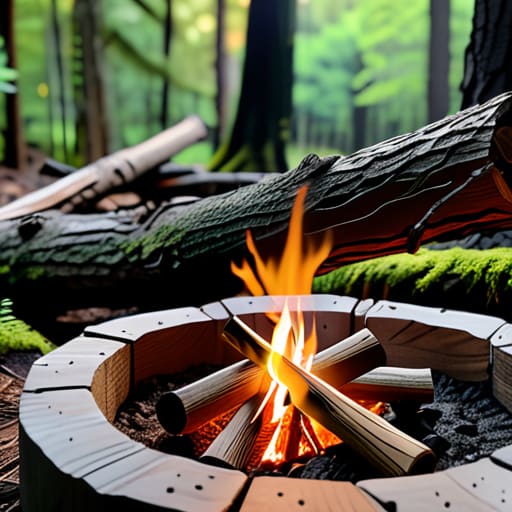
If you’re planning on staying put for more than an hour, you need to stop thinking about just “making a fire” and start thinking about where that heat is actually going. I’ve spent too many nights on wind-scoured ridges watching people inadvertently bake the soil beneath their feet. One of my most effective sustainable fire pit methods is the use of a lightweight, portable fire pan or a small metal brazier. I’ve used my Snow Peak fire pan for roughly forty days across varied terrain—from damp moorlands to dry heather slopes—and the benefit is immediate: you are creating a physical barrier between the combustion and the ground. This isn’t just about preventing scorch marks; it’s about minimizing wildfire risk by ensuring no stray embers can migrate into the surrounding organic matter.
If you aren’t carrying a metal pit, you must be much more disciplined with your site selection. Avoid any area with heavy leaf litter or moss, even if it looks “soft.” I always look for mineral soil or a patch of sand. If you have to dig a small pit, remember that you are responsible for the restoration. Part of the leave no trace campfire principles means that when you leave, that ground should look like you were never there. Don’t just scatter ash; scatter it thin, or better yet, carry it out in your waste bag.
Five ways to keep your fire from leaving a scar
- Stick to the ‘dead and down’ rule. I’ve spent years watching people snap living branches off shrubs just to get a quick flame, but that’s how you kill the very habitat you came to see. If it isn’t already on the ground and brittle enough to snap with one hand, it doesn’t go in your fire.
- Watch the wind, not just the flame. A fire that looks controlled in a sheltered hollow can become a liability in seconds if a ridge gust catches it. I always check the wind direction before I even strike a match; if it’s gusting more than a steady breeze, the risk of embers jumping your pit is too high to justify the warmth.
- Master the art of the ‘small burn’. Most people build a bonfire because they want a spectacle, but a massive heap of wood is just a massive amount of waste and heat that escapes into the air. Build a small, concentrated core of heat that does the job without requiring a forest’s worth of fuel.
- Don’t leave more than ash behind. When you’re packing up, don’t just stomp the embers into the dirt and call it a day. I make it a habit to scatter the cooled ash over a wide area or, better yet, carry it out in a tin if you’re in a particularly sensitive zone. A concentrated patch of grey ash is a dead zone for new growth for years.
- Timing is everything. I’ve seen too many groups start a fire at dusk, only to realize they’ve run out of fuel by 9 PM and are left shivering in the dark. Plan your wood supply against your actual time on site; if you’re only staying for one night, you don’t need a massive pyre, you just need enough to dry your socks and keep the chill off.
Leaving nothing but the memory
At the end of the day, building a sustainable fire isn’t about following a rigid set of rules; it’s about a mindset of stewardship. It means being disciplined enough to select only the deadwood that the forest has already surrendered, using a fire pit to protect the soil, and ensuring that every single ember is completely extinguished before you pack up. If you’ve done it right, you shouldn’t be able to tell that a fire was even there once you’ve swept away the ash. It comes down to the small, often tedious details—the way you clear your site and how carefully you manage your fuel—that separate a responsible walker from someone just leaving a mess for the next person to find.
I’ve spent two decades watching how people interact with these landscapes, and the ones I respect most are the ones who move through the hills with a quiet, observant grace. There is a profound satisfaction in sitting by a small, controlled flame, knowing that you are part of the environment rather than an imposition upon it. We don’t own these ridges or these forests; we are just passing through them. By mastering the art of the low-impact fire, you ensure that the places we love remain exactly as we found them for the next person—and for the wildlife that actually calls them home.