I’ve spent twenty-two years watching people crumble on steep ascents, and most of them weren’t lacking “spirit”—they were just following the wrong advice. You don’t need a high-tech gym membership or a specialized $150 smart-watch to figure out how to build hiking fitness; you need a decent pair of boots and the discipline to train for the terrain you actually intend to walk on. I’ve seen too many people spend months on a flat treadmill, only to find themselves gasping and stumbling the moment they hit a real ridge in a headwind. The mountain doesn’t care about your cardio stats if your stabilizer muscles haven’t been introduced to an uneven slope.
I’m not here to sell you on a miracle supplement or a complicated six-week bootcamp. Instead, I’m going to give you the unvarnished truth about building a body that can actually handle a heavy pack and a sudden change in weather. We’ll talk about the specific, often boring movements that prevent injury and the gradual progression required to make the hills feel like home rather than an adversary. This is about practical, field-tested preparation that ensures you’re still moving steadily when the light starts to fail.
Table of Contents
Building Cardiovascular Endurance for Hikers Before the Season Starts
You don’t need to be a marathon runner to enjoy a long ridge walk, but you do need a heart and lungs that won’t quit when the gradient hits 30 degrees. I’ve seen too many people find themselves gasping for air on a steady ascent, which leads to fatigue, which leads to poor foot placement and rolled ankles. To build genuine cardiovascular endurance for hikers, stop focusing solely on flat-road jogging. Your body needs to learn how to manage oxygen under load. I’ve found that consistent, steady-state sessions—long walks or slow cycles where you can still hold a conversation—are far more effective for building that base than frantic, short bursts of speed.
If you have access to a gym or even just a decent set of stairs at home, stair climbing workouts are your best friend. It’s repetitive and, frankly, a bit boring, but it mimics the vertical reality of the hills far better than a treadmill ever will. I’ve spent the last three winters using a weighted vest on my local stairwell to prep for the spring season; it builds that specific kind of lung capacity you need when the air gets thin and the weather turns.
Leg Strength Training for Mountains Beyond the Gym Floor
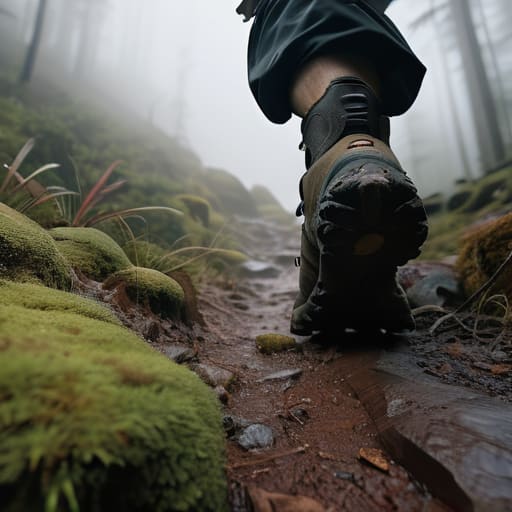
You can have all the cardiovascular endurance for hikers in the world, but if your quads give out on a 15% gradient, you’re in trouble. I’ve seen too many people reach the summit only to find the descent is where the real danger lies; that’s when the fatigue sets in and the knees start to buckle. To prepare properly, you need leg strength training for mountains that mimics the actual eccentric loading of going downhill. I don’t care much for heavy squats in a sterile gym; I want lunges, step-ups, and single-leg stability work. I’ve spent the last three seasons using a weighted vest for my morning walks—about 6kg, used in varying wet conditions—to prep for heavy days, and it makes a world of difference for hiking injury prevention.
Don’t just focus on the big muscles, either. True stability comes from your midsection; core stability for trekking is what keeps you upright when a gust of wind hits you on a narrow ridge or when you’re adjusting a heavy pack. If your core is weak, your gait falters, and that’s when ankles roll.
The Practicalities: Training for Reality, Not Just the Treadmill
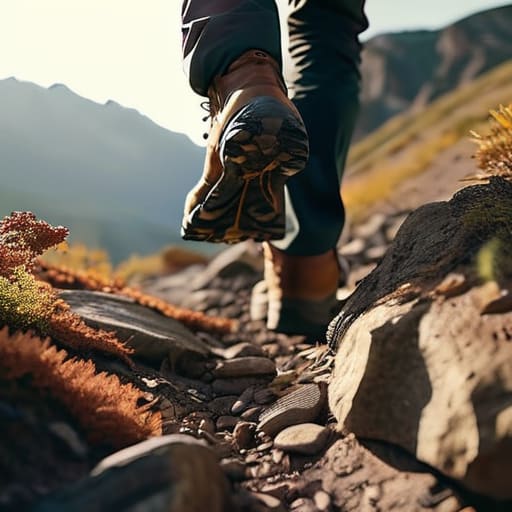
- Get your pack on early. I’ve seen too many people arrive at a trailhead with great gym strength but zero structural tolerance for a twenty-kilo load. I’ve used my Osprey Talon 33 for four years, mostly on three-day traverses in the Lake District, and the best way to train is to gradually increase the weight in your actual kit while walking on uneven ground. Your stabilizer muscles need to learn how to react to a loose stone or a muddy slope under load, something a flat gym floor will never teach you.
- Stop ignoring the descent. Everyone focuses on the climb, but it’s the downhill that wrecks your knees and leaves you too shaky to navigate safely when the light starts fading. Incorporate eccentric movements—like lunges or step-downs—into your routine. If your quads are trashed by the time you reach the bottom, you’re going to make a poor decision about your footing, and that’s when people trip.
- Master the art of the “active recovery” walk. You don’t need to be redlining your heart rate every single day. On the days between heavy sessions, get out for a low-intensity stroll on varied terrain. It keeps the joints lubricated and builds that low-level aerobic base that helps you keep moving when the weather turns and the pace inevitably slows down.
- Train for the “vertical hour.” A mountain isn’t a flat path; it’s a series of unrelenting gradients. Find the steepest hill or the longest set of stairs near you and work on sustained, rhythmic climbing. I don’t care if you’re doing it in a park or a stairwell, as long as you are teaching your body to manage its breathing while fighting gravity.
- Practice your pacing in different weather. It’s easy to feel fit when it’s a mild Tuesday in May, but fitness is relative to the environment. If you can, do some of your training in the wind or the rain. It teaches you how much more energy you burn when you’re fighting a headwind or navigating through heavy mud, which helps you set a more realistic expectation for your actual mountain days.
The Cost of Unpreparedness
You don’t build fitness to reach the summit faster; you build it so that when the cloud base drops and the wind picks up, your body isn’t too exhausted to make the right decision about turning back.
Bridget Halloran
The Reality of the Ridge
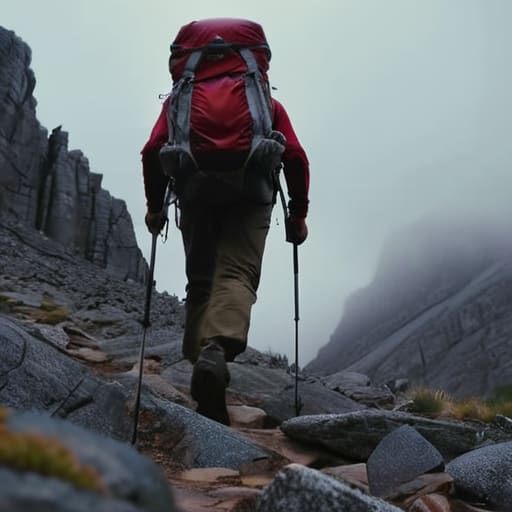
At the end of the day, fitness isn’t about hitting a specific number on a treadmill or lifting a certain weight in a temperature-controlled gym. It’s about building a reservoir of energy so that when the wind picks up at 800 metres and the temperature drops ten degrees in twenty minutes, you aren’t too exhausted to make the right decisions. You need the cardiovascular base to keep your breathing steady, the leg strength to manage uneven terrain under load, and the core stability to keep your balance when the ground gets soft. If you focus on the boring, repetitive work now—the stair climbs, the weighted walks, and the steady aerobic sessions—you are essentially buying yourself a margin of safety for when the weather turns.
I have seen many people reach the summit only to realize they have nothing left for the descent, and that is when things get dangerous. Don’t train just to reach the top; train so that you can enjoy the view and, more importantly, get back down safely. The mountains don’t care about your fitness levels, but they certainly notice when you’re lacking them. Build your engine slowly, respect the process, and remember that the most successful hikers aren’t the ones who move the fastest, but the ones who are prepared for the unexpected.
Frequently Asked Questions
How much weight should I actually be training with to prepare for a multi-day trek without risking my knees?
Don’t try to mimic your full expedition pack on day one. I’ve seen too many people blow out a meniscus because they thought they were being “prepared.” Start with 20% of your intended load—maybe 4 or 5kg—on flat ground. I’ve used my Osprey Baltoro for three years, mostly with 12kg, and I’ve learned that strength is useless if your joints are inflamed. Increase the weight by no more than 10% each week.
If I only have access to a treadmill, how can I simulate the uneven terrain and descent that actually causes most injuries?
A treadmill is a flat, predictable surface, which is exactly why it can be dangerous if you rely on it too heavily. To mimic the mountain, you need to stop focusing on speed and start focusing on the incline. Set it to the highest grade you can manage and walk at a steady, heavy pace—don’t hold onto the rails. For the descent, you can’t replicate gravity, but you can simulate the eccentric load by doing high-rep, slow-tempo step-downs on a single step at home. That’s what actually prepares your knees for the descent.
How do I know if I'm actually getting fitter or if I'm just pushing through fatigue that's going to lead to a mistake on the hill?
You need to look at your recovery, not just your heart rate. If you finish a training session and feel “good-tired”—where you can still hold a conversation and your mind is sharp—you’re building fitness. If you’re finishing workouts feeling hollow, irritable, or if your resting heart rate is creeping up, you aren’t getting fitter; you’re just accumulating fatigue. On a ridge, that fatigue manifests as poor decision-making. Listen to the fatigue before it makes a decision for you.